



U.S. Wildland Fire Service - Alaska
Formerly the BLM Alaska Fire Service, the U.S. Wildland Fire Service in Alaska provides wildland fire management services for Department of the Interior agencies, Alaska Native lands, and military land in interior Alaska under an agreement with the U.S. Army Garrison Alaska. The USWFS - Alaska leads the Department of the Interior's statewide Fire and Aviation program.
Ensures suppression services are provided on:
- 70.1 million acres - BLM- administered surface lands
- 52.1 million acres - National Park Service lands
- 76.4 million acres - U.S. Fish and Wildlife lands
- 44 million acres - Alaska Native Corporation lands
- 1.6 million acres - Military lands under an interagency service agreement with the U.S. Army Garrison Alaska
- 1.1 million acres - Alaska Native allotments for which the Bureau of Indian Affairs has fire management responsibility (approximately 15,000 non-contiguous parcels 160 acres or less)
The BLM AFS was created in 1982 in the wake of the significant changes in land managers and owners that occurred in the 21 years between 1959 and 1980 with passage of the Alaska Statehood Act, the Alaska Native Claims Settlement Act, and the Alaska National Interest Conservation Act. Prior to the passage of those acts, because BLM had managed most of the federal domain and provided the fire response on all that land, it made sense to keep that responsibility within a single agency rather that develop separate programs for each new land manager. The centralized nature of BLM AFS has allowed all the Interior land managers, including BLM, to focus their efforts and energy on resource management rather than on managing a fire program and developing redundant systems.
The next chapter began in 2026, the U.S. Wildland Fire Service was created. The Alaska Fire Service transitioned from the Bureau of Land Management to the U.S. Wildland Fire Service. The Interior Department is continuing a phased approach to unifying wildland fire management operations and activities that were previously managed by the Bureau of Indian Affairs, Bureau of Land Management, Fish and Wildlife Service, National Park Service, Office of Aviation Services and Office of Wildland Fire under the U.S. Wildland Fire Service. While our organizational changed over the decades, the purpose has remained consistent: protecting lives, communities, and Alaska's extraordinary natural resources through safe, effective, and collaborative wildland fire management.
The USWFS leads the Department's statewide fire and aviation programs, provide fuels management direction, conduct and support fire ecology research, and assist with fire planning and policy interpretation. The USWFS also manages the Alaska Interagency Coordination Center (AICC) and maintains a National Incident Support Cache. The USWFS provides logistical and operational support to agencies, incident management teams, and individual firefighters by operating and maintaining advanced communication and computer systems; overseeing initial and extended attack fire-related resources, and distributing wildland fire information to the public and news media during the fire season.
The USWFS Alaska employs approximately 420 personnel during the fire season including approximately 80 smokejumpers and 25 fire specialists, two Interagency Hotshot crews, and a Type 2 training crew with 20-25 firefighters per crew based at facilities at Fort Wainwright. There are also two Wildland Fire Suppression Modules based in Soldotna and Denali National Park and Preserve. The USWFS Alaska operates the only contract crew program in the Interior, with several 20-person Type 2 hand crews and fire suppression modules based in Alaska villages.
USWFS Alaska firefighting aviation resources include four single-engine water-scooping airplanes, seven helicopters, four smokejumper airplanes, five utility airplanes, two air attack airplanes used to coordinate the aerial suppression efforts, and 11 small uncrewed aerial systems (drones). When needed, supplemental aircraft are hired locally or from the lower 48 and Canada.
The USWFS Alaska operates on an interagency basis, with other employees from the Department U.S. Forest Service (USFS) and State of Alaska's Division of Forestry & Fire Protection. The USWFS Alaska coordinates daily interagency planning, coordination, and sharing of resources, with each agency’s strengths and resources complementing each other. These interagency employees are vital to the USWFS mission.
Two interagency negotiated agreements define roles, responsibilities and expectations; facilitate the exchange of resources and the funding between the cooperating agencies. These agreements provide a mechanism to implement the direction in departmental manuals.
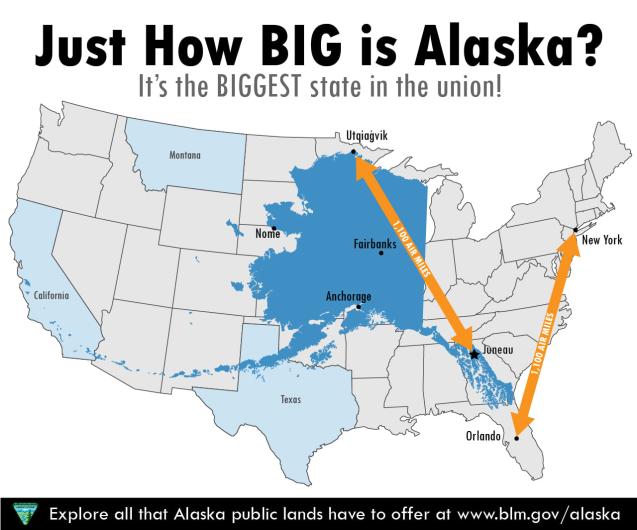
The model works well in Alaska because of the size of the state (586,000 square miles of land), relatively low population (just more than 730,000 people), and land and resource management plans that recognize the role fire has historically played in the environment.
This is in contrast to fire management in the rest of the country where the values at risk are very different, ownership is more complex, and the ability to manage fire’s natural role in the ecosystem is much more difficult.
Here are some of the major components that support wildfire management in Alaska: