


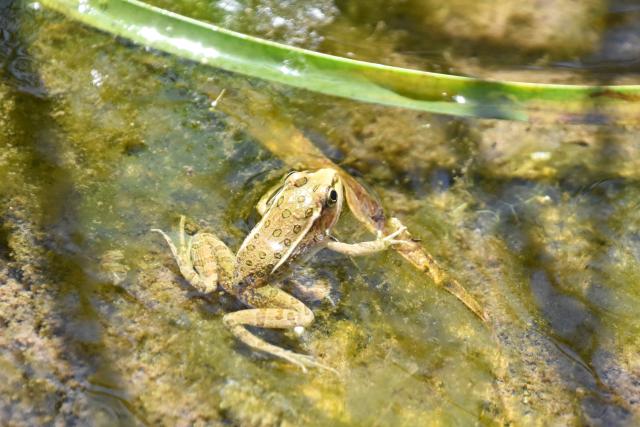
Healthy spring and strong partnerships fuel relict leopard frog comeback
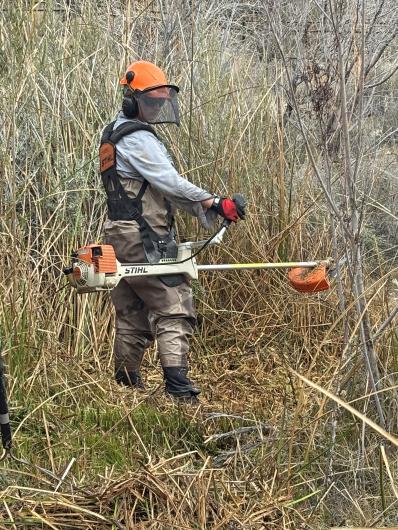
Conservation is a blend of delicate care and tough groundwork! Recently, at Pakoon Spring, dedicated Arizona Fish and Game Department employee Ryn fired up the weedwhacker to clear overgrown vegetation — small action, big impact.
Why the hard work? A healthy spring and thriving partnerships are crucial for the relict leopard frog at every life stage. From eggs to tadpoles to adults, each step of their journey depends on a well‑maintained habitat.
Historically thought extinct in the mid‑20th century, this rare frog was rediscovered in the 1990s in Nevada and Utah. Today, it survives in isolated springs like Pakoon Springs in Arizona on the Grand Canyon-Parashant National Monument, near Lake Mead and along the Virgin River watershed, where it remains vulnerable to habitat loss and invasive species.
In 2022, the Bureau of Land Management, National Park Service, and Arizona Fish and Game Department teamed up to bring the relict leopard frog back to Pakoon Springs, restoring this rare amphibian to its historic range.
Conservation agreements and strategies from state and federal partners are helping stabilize populations, and field crews like Ryn’s are keeping that momentum going.
Huge shoutout goes to our partners for helping us balance nature’s beauty with the necessary groundwork.
Related Stories
- Celebrating 30 Years of California Condor Recovery at Vermilion Cliffs National Monument
- Celebrating National Public Lands Day across the High Desert District in Wyoming
- Fossils, furs and a few sparks at Kemmerer Outdoor Discovery Day
- One Mile Closer
- BLM recruits future workforce at Missouri University of Science and Technology career fair
Office
4001 East Aviator Drive
St. George, UT 84790
United States