


From a wild burro’s ‘crappy’ situation to rescue thanks to the BLM and helpful neighbors
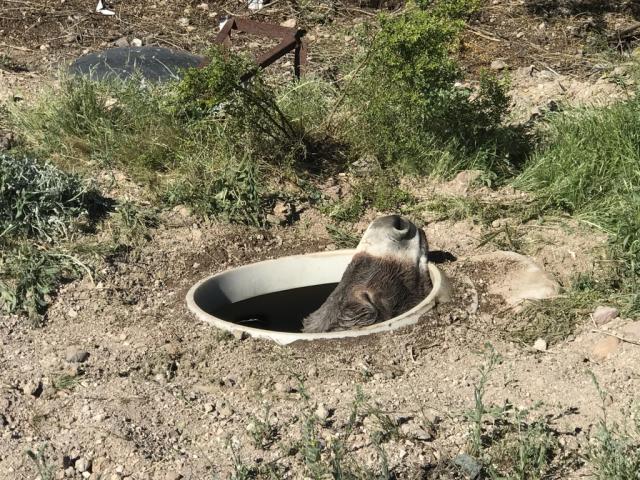
A crappy situation turned into a happy ending thanks to the quick teamwork of the Bureau of Land Management (BLM) and some helpful neighbors in northwestern Arizona.
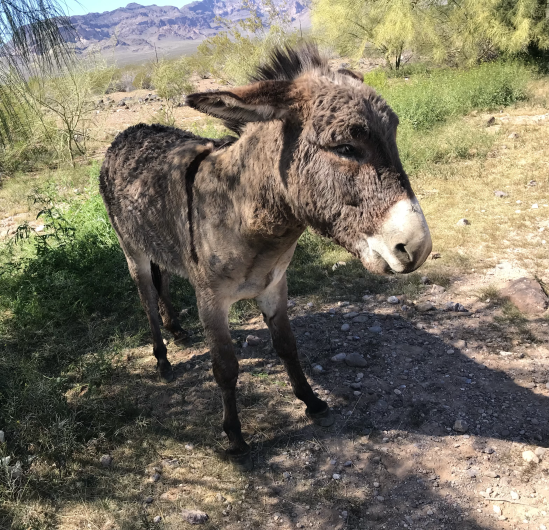
One morning, the BLM’s Kingman Field Office got an unusual report: a wild burro had fallen into a septic tank in an RV park along the Oatman Highway in Golden Valley, Arizona. This area is known for the Black Mountain Herd Management Area (HMA) and home to the largest herd of wild and free roaming burros in the country.
BLM wild horse and burro specialists Chad Benson and Eric Duarte immediately responded and upon arrival found the wild burro struggling to hold its head above the water and raw sewage in the septic tank — the tank was about six feet deep and the burro managed to somehow stand on its back legs and hold its head just outside the septic tanks lid. The burro was clearly exhausted, and the specialist knew they needed to act fast.
Although unknown on exactly how or when the burro fell into the tank, RV park residents believed he’d been stuck in the cold, wet septic tank overnight. While approximately 75 degrees outside during the day, it had been about 40 degrees that night and potentially even chillier in the tank!
Working with the RV park’s maintenance crew, the team decided the best and safest option was to pump the sewage out, carefully cut open the top and use heavy equipment to lift the burro out of the tank. Soon, it would be all hands on deck to rescue the burro.
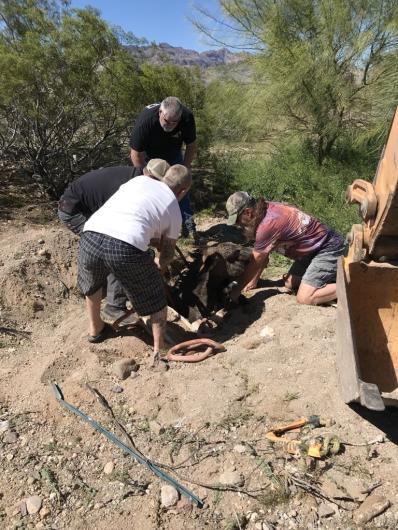
The situation drew a few curious RV park residents, with one resident helping to track down a backhoe to help. The backhoe arrived and the maintenance crew finished cutting the tank. A strap was then carefully placed around the burro and, with help from local residents, safely lifted out.
Since no one is rescued from a well-used septic tank looking their best, the burro was gently rinsed off with a water hose and provided alfalfa and fresh, clean water.
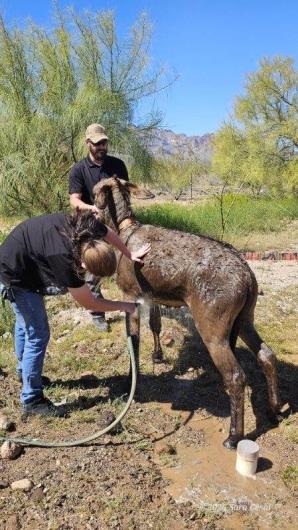
After eating and resting for a while, the burro regained its strength and later that evening wandered back toward nearby public lands, definitely more comfortable and a whole lot cleaner. Thanks to coordinated efforts from BLM staff, the maintenance crew, Kingman Septic, and some very invested RV park residents, this burro got a second chance.
Under the Wild Free-Roaming Horses and Burros Act of 1971, the BLM is responsible for managing and protecting these animals on public lands, an increasingly shared landscape. While the RV park is on private land, it is within the BLM’s largest herd management area in Arizona — the Black Mountain Herd Management Area — and adjacent to nearby public lands. As mentioned above, the area is home to the biggest herd of wild and free roaming burros in the country! It is common for these wild burros from the Black Mountains to wander into residential areas such as Golden Valley and other communities near Bullhead City, Fort Mohave, and Topock.
As Arizona’s cities and communities grow, public lands increasingly border neighborhoods, RV parks, roadways, utility infrastructure, and more. Burros often reside in these areas in search of food and water that local residents readily provide. This causes burros to become habituated and gentle. Wild burros from public lands encounter roads, fences, swimming pools, irrigation canals, and other human-made structures like the RV park’s septic tank. Wild burros are naturally curious, which means they can find themselves in surprising places — and sometimes in trouble.
This rescue is one of many the BLM responds to across the West. Over the years, the BLM has fielded countless calls about wild burros in Arizona.
What should you do if you find a wild burro in a sticky situation like this one on or near public lands?
Do not attempt to capture, feed, or approach the animal. These burros are federally protected and handling them without proper training can cause injury to both you and the animal.
Notify the BLM immediately. Contact your nearest BLM office, preferably via phone call so they can get the information quickly. Local law enforcement or the Arizona Game and Fish Department may also contact the BLM. The BLM has trained personnel and protocols to assess and respond to these kinds of situations safely and humanely.
Provide clear information, including: the location and situation, a description of the burro’s condition and behavior, and your contact information for updates and follow-up.
No matter the circumstances, it’s also important to treat wild burros like you would other wild animals in the outdoors — don’t feed them or get too close. Each year, people are injured from kicks and bites from wild burros, as well as from vehicle accidents that involve wild burros on the roadway. Unfortunately, not every situation ends in a happy ending like this one, but we appreciate the help of the public in responding to them regardless of the outcome.
“Rescues like this highlight the incredible link between the BLM and local communities. When people and wild burros share space, situations can get complicated quickly,” John Hall, BLM Arizona’s Wild Horse and Burro Program lead, said. “We’re grateful for the teamwork that helped bring this burro to safety and for the continued support from the public in protecting these animals.”
With your help, these wild icons of the West can continue roaming safely, even when they take a wrong step into a septic tank.
Related Content
Related Stories
- Using Beavers as Partners in Riparian Habitat Restoration in Las Cienegas National Conservation Area
- Celebrating 30 Years of California Condor Recovery at Vermilion Cliffs National Monument
- Signs of Collaboration: Protecting Tortoises on Arizona Public Lands
- BLM Arizona and Arizona Association of Conservation Districts: A Model Partnership for Landscape Conservation
- Healing Hooves: How a Once‑Wild Burro is Bringing Joy Across Pennsylvania and Competing Nationally
Office
One North Central Ave., Suite 800
Phoenix, AZ 85004-4427
United States