


How a century-old law still builds Arizona’s future through BLM-managed public lands
Picture walking a trail, dropping your kids off at school, or simply knowing your community’s trash has a responsible place to go — and realizing each exists thanks to a century‑old law that helps public land serve public needs. Across Arizona, these everyday experiences share a connection: the Recreation and Public Purposes Act. It’s the public land powerhouse you’ve likely never heard of.
Originally enacted by Congress in 1926, the Recreation and Public Purposes Act, as amended, has helped qualified local government and nonprofit organizations to access Bureau of Land Management (BLM) public lands for important projects that their communities need. Through this law, organizations are able to lease or purchase federal public lands at reduced or no cost to build parks, schools, police and fire stations, and other essential public services.
Of course, the law does not apply to every acre of federal land. Only lands identified for disposal in current land‑use plans are eligible, excluding places like national forests, national parks, wildlife refuges, Indian lands, and other protected or specially acquired sites.
Across Arizona, as communities continue to grow, the need for public spaces grows with them. The Recreation and Public Purposes Act helps meet that demand.
With over 100 active leases covering nearly 28,000 acres, the Act’s footprint stretches across the state — supporting everything from trailheads to classrooms. The BLM has also issued more than 260 patents in Arizona, representing more than 120,000 acres dedicated to long‑term public benefit.
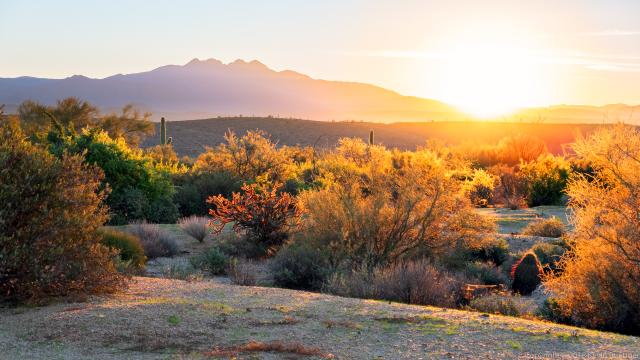
It’s a framework grounded in partnership, and its impact across Arizona is felt in big and small ways every day. Together, the BLM and partners though the Act provide long-lasting value to the public lands that we all share. The BLM works closely with city and county governments, school districts, tribal partners, and other groups to identify lands to develop facilities that directly serve local needs.
The BLM’s history utilizing the Act in Arizona goes back decades. It has long played a defining role in shaping the public spaces many residents and visitors know and love.
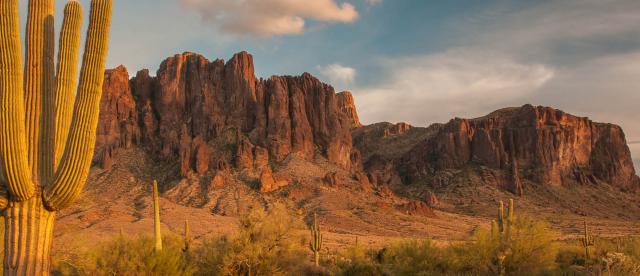
One of the most iconic examples is Lost Dutchman State Park, a story that illustrates just how transformative the Act has been for the state. Named after the legendary Lost Dutchman gold mine, the park sits in the heart of the Sonoran Desert at the base of the Superstition Mountains, about 40 miles east of Phoenix. Many people are familiar with Lost Dutchman State Park — but may not know it was once a BLM‑managed day‑use recreation site in the early 1970s.
Momentum was building to formally establish it as a state park. Legislation was introduced in 1975 to give Arizona State Parks and Trails the authority and funding to acquire the property through the Act. Although that legislation ultimately did not pass, federal policy soon shifted. Congress amended the Act to allow recreational land acquisitions at no cost, opening the door for Arizona to move forward.
That change proved pivotal.
In September 1977, the state obtained about 292 acres through a Recreation and Public Purposes Act patent. Just a few months later in December, the land was formally dedicated as Lost Dutchman State Park. The ceremony drew notable leaders from across the state, including Arizona Secretary of State Rose Mofford representing then-Governor Wesley Bolin.
The park continued to grow under the same federal framework. In 1983, Arizona State Parks got an additional 28‑acre Recreation and Public Purposes Act lease to expand the site, further solidifying the park’s place as a key recreational resource. Today, visitors come to hike, mountain bike, ride horseback, and camp, with trails that connect directly into the Superstition Wilderness and the surrounding Tonto National Forest.
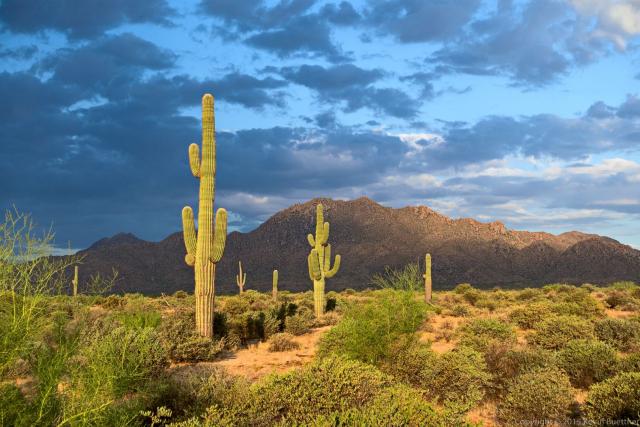
Going back even further, McDowell Mountain Regional Park is a story that started with the BLM. Northeast of Scottsdale, McDowell Mountain Regional Park is now the third‑largest park in Maricopa County’s regional system, encompassing more than 21,000 acres. Known for its dramatic mountain scenery and wide‑open Sonoran Desert landscapes, the park offers an extensive network of trails that draw hikers, mountain bikers, trail runners, hunters, horseback riders, campers, and wildlife lovers.
Planning for the park’s long‑term development dates back more than half a century.
In 1958, approximately 18,273 acres of public land were leased by the Bureau of Land Management to Maricopa County under the act. Five years later, in 1963, the County received its first land patent for what would become McDowell Mountain Regional Park. Over the next two decades — through additional land acquisitions between 1964 and 1987 — the park expanded to nearly 21,099 acres.
Lost Dutchman State Park and McDowell Mountain Regional Park are just a couple examples of the public benefits made possible through collaborative partnerships and forward-thinking land policy. These parks offer diverse recreation and education opportunities for millions of residents and visitors of the Phoenix metropolitan area enabled by the Recreation and Public Purposes Act. This history underscores how long‑standing and impactful the act has been in Arizona and beyond.
Fast‑forward to today, and the Act is still helping communities keep pace with change.
"Phoenix is the fifth-largest city in the United States and is in one of the fastest-growing counties in the nation," said acting Phoenix District Manager Todd Kirsch. As of mid-2025, Maricopa County is estimated to be home to nearly 4.7 million people, according to the U.S. Census Bureau. "There is increasing demand for recreational opportunities on the public lands surrounding the Valley,” Kirsch said. “The state and many local governments across the Phoenix metro have used the Recreation and Public Purposes Act to serve their citizens and visitors with the gift of outdoor recreation."
In 2019, a lease agreement between the BLM and the Maricopa County Board of Supervisors kicked off the expansion of recreational opportunities by the Maricopa Parks and Recreation Department. This advanced the development of the Vulture Mountain Recreation Area near Wickenburg, unlocking more than 1,000 acres for future amenities including a nature center, RV camping, equestrian facilities, and an outdoor amphitheater, according to the Maricopa County Parks and Recreation website. It is set to become the first new regional park in Maricopa County since 2017.
In March, the BLM approved a proposed lease to the City of Buckeye to expand Skyline Regional Park, leasing approximately 640 acres of public land to enhance recreational experiences in the area. The city’s plan envisions new trails, staging areas, restrooms, improved access roads, and added parking to support an increasingly active community near Verrado. It builds on the existing 8,000‑plus‑acre park with more than 20 miles of trails near the White Tank Mountains.
Across Arizona and the country, the Recreation and Public Purposes Act has been used for schools, landfills, and much more. This framework continues to unlock new opportunities for local governments and nonprofits, especially in growing regions near Phoenix, to secure space for parks, facilities, and essential services.
This is part of the BLM’s commitment as part of its multiple-use mission to opening appropriate public lands for responsible private-sector uses — ranging from outdoor recreation to energy and mineral development, livestock grazing, and other authorized activities — that support local communities and economies. In Fiscal Year 2024, BLM‑managed public lands contributed $1.4 billion in economic output and 9,000 jobs to Arizona’s economy, reflecting the enduring value these lands bring to local communities.
Through the BLM’s multiple‑use mission, the Act will continue to help communities build spaces that meet their needs while ensuring responsible stewardship of public lands for future generations.
Related Stories
- National Public Lands Day Paddles, Plants and Caves: BLM Connects Milwaukee Youth with the Outdoors
- Using Beavers as Partners in Riparian Habitat Restoration in Las Cienegas National Conservation Area
- Celebrating 30 Years of California Condor Recovery at Vermilion Cliffs National Monument
- K2-Play Completes Final Phase of North Fruita Desert Trails Master Plan
- BLM Fishing Derby brings Americans Outside for recreation and stewardship in Imperial Valley, California
Office
2020 E. Bell Road
Phoenix, AZ 85022
United States