



Birding Aravaipa Canyon: A morning of songs, color, and creekside adventure
There’s plenty to hear and see, with a playful challenge for photographers...
After learning so much about Aravaipa Canyon during a career as a former Bureau of Land Management (BLM) employee, Geoff Walsh, now BLM Arizona’s Birder in Residence, is eager to return this spring as a volunteer, finally experiencing the canyon in a whole new way.
The BLM manages Aravaipa Canyon Wilderness, located 120 miles southwest of Phoenix, to protect its essential wilderness character and fragile environment while providing the visitor with a world-class opportunity for primitive and unconfined recreation. You must have a permit to hike, backpack, and hunt in Aravaipa Canyon and all the side canyons. Learn more about Aravaipa Canyon permits.
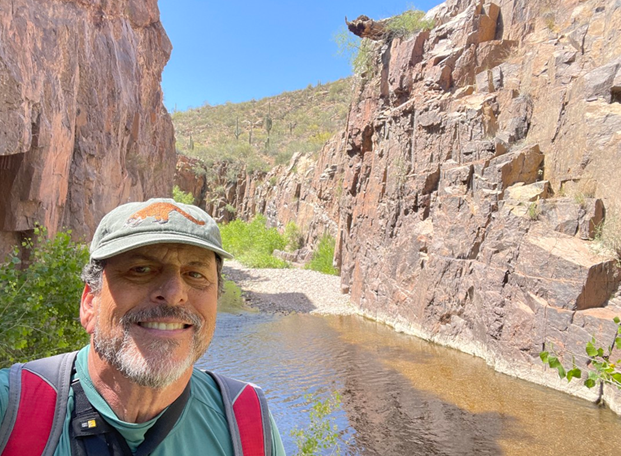
Exploring Aravaipa Canyon Wilderness Area on April 20, 2026
Aravaipa Canyon Wilderness surrounds the east-to-west flow of Aravaipa Creek, where travel is a mix of trail walking, creekside wandering, and wading directly through the water. By April the temperatures rise, and the trees glow with fresh, light green leaves. As soon as I stepped into the west entrance at 7:30 a.m., birdsong filled the canyon. I didn’t see many of the singers at first, but I did manage a great photo of the back of a hooded oriole, which counts as proof of life in my book.
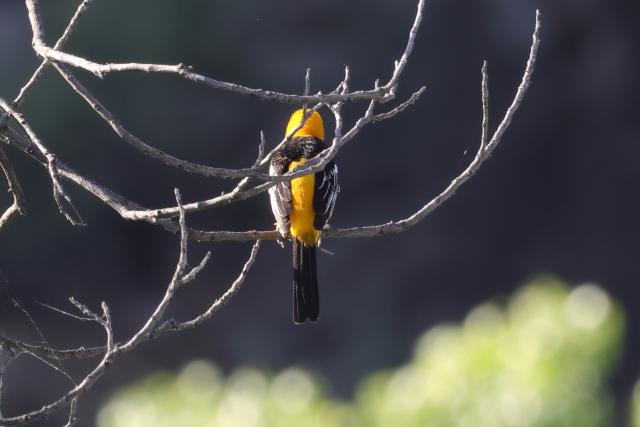
The morning soundtrack featured Gila and ladder-backed woodpeckers, Lucy’s warblers, white-winged doves, gray vireos, northern cardinals, and verdins. According to Merlin, a couple more species chimed in, though I’m not entirely convinced. I did warm up with a solid white-winged dove photo; ’tis the season, after all.

Wading into the canyon
Because so much Aravaipa hiking involves creek crossings, I slipped on my brand-new water shoes at the first crossing, just a few hundred yards from the car. The water felt great. The sand inside the shoes… not so great. But committed is committed, and I wore them for the next three hours of weaving in and out of the creek.
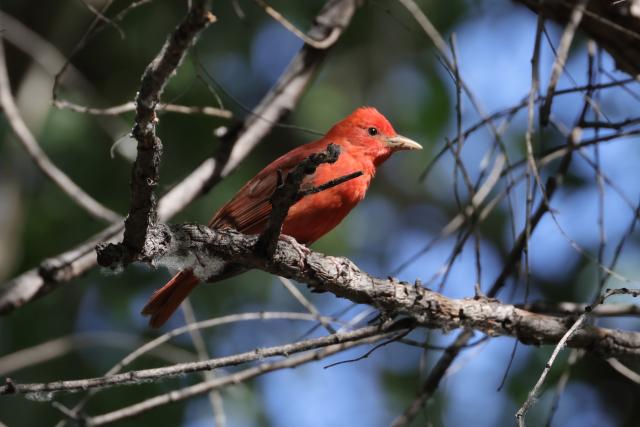
The birdsong was nearly constant. Soon one voice rose above the rest, the scarlet tanager. Like most birds darting between branches and fresh foliage, they are a challenge to photograph. But a scarlet tanager eventually sits still long enough for a patient birder, and I managed a few good shots.
Getting a nice red tanager in right light and out from behind leaves and branches still challenging, but I got a few shots.
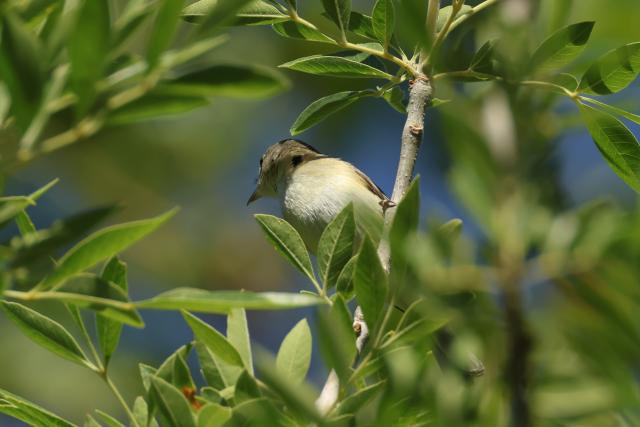
Bell’s vireos, on the other hand, are constantly moving. They enjoy taunting me with their annoyingly buzzy and tricky call. They rarely sit still, but I think I finally captured my first decent Bell’s vireo photo.
Meanwhile, northern yellow warblers were everywhere, sweet voiced, abundant, and difficult to photograph in the dense vegetation. About a mile and a half in, I heard them constantly but couldn’t quite get the camera on one.
Ducks, chats, and canyon walls
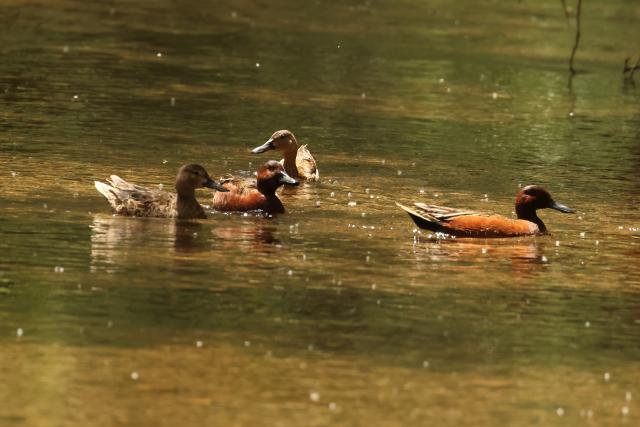
A quiet stretch of creek opened into a resting spot for three pairs of cinnamon teal, small dabbling ducks with rich cinnamon coloring and a somewhat secretive personality.
Around two miles in, a scratchy, chatty call caught my attention. Yellow-breasted chat! They are always a joy to hear but often hidden deep in thickets. I didn’t see one this time. A couple of years ago I got a great photo, but earning another would have cost the rest of the day.
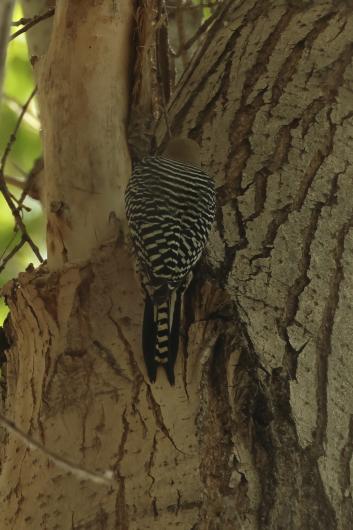
However, higher up on a canyon wall, a ladder-backed woodpecker pecked away but preferred not to look back at me. Soon afterward, the northern yellow warblers reclaimed the soundscape until the unmistakable cascading notes of a canyon wren cut through everything.
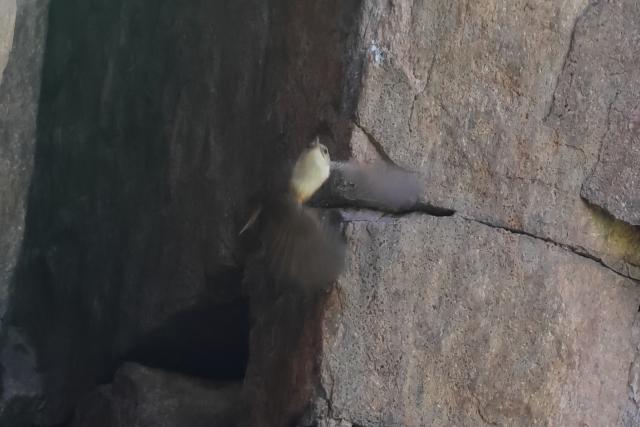
I looked above to see a canyon wren high on a vertical wall. They are often described as one of the most beautiful sounds in nature, the canyon wrens blend beautifully with the rock, but this one revealed itself. I thought I captured a nice still shot — turns out it was a head, bill, and a blur of wings. I’ll keep it anyway.
A familiar friend and an unexpected encounter
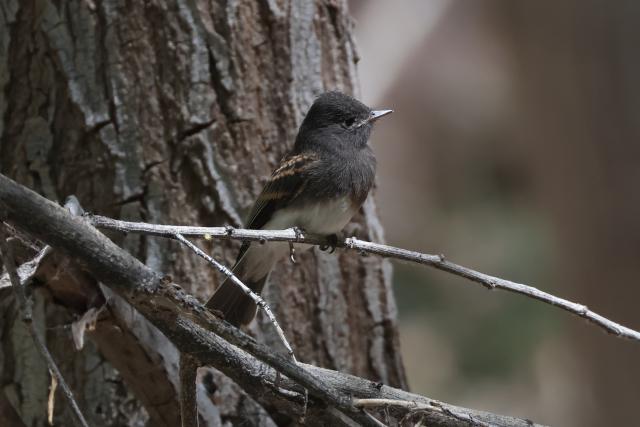
Near the 2.5-mile point, I spotted a familiar companion: a black phoebe. These flycatchers hunt from low perches such as rocks, branches, or anything stable, darting out for insects and returning to their post. They are among the more cooperative photography subjects. At about 10:45 a.m., the phoebe and I shared a sunny stretch of creek while I paused for an early lunch.
At 11:00 I began the return hike, knowing it would take at least two hours. By midday the soundtrack was still dominated by northern yellow warblers and scarlet tanagers. While scanning the trail for rattlesnakes, I crested a small rise and heard a short, frantic rattle.
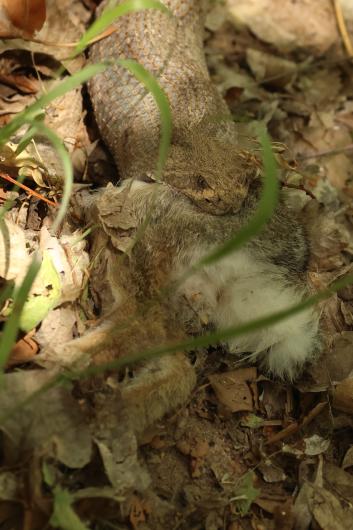
There on the right side of the trail lay a large rattlesnake. “Fat,” I thought for a split second. Then I realized why: the snake had a young rabbit halfway down its throat, hind legs still protruding. A dramatic moment of canyon life. I gave the snake a very wide berth, then took a few respectful photos. I’m sure the rattlesnake doesn’t want an audience while gorging on a tasty rabbit meal.
Soon after, I encountered a deer in a wide, shallow part of the river. The deer wasn’t interested in modeling, but I captured a quick proof of life photo before it slipped into cover.

The final stretch
Heading back through the chat zone, I once again struggled to find the trail, par for Aravaipa, but eventually reconnected with it just in time to see the cinnamon teal again. A few more photos, then onward.
At the last creek crossing around 1:00 p.m., my greatest joy was changing back into dry hiking shoes. From there it was a fast, hot walk to the car, where the air conditioning felt like salvation.
Aravaipa Canyon for a hiker might be for the journey in and alongside the creek. As a birder in the springtime, the journey becomes something more: a chorus of birds that rarely reveal themselves but teach you their songs with every step. That is part of the joy of birding. It offers a challenge, and it reminds you that it is not always about what you see, but what you hear.
Related Stories
- National Public Lands Day Paddles, Plants and Caves: BLM Connects Milwaukee Youth with the Outdoors
- National Public Lands Day Volunteers Revitalize Dean S. Reservoir in Montana
- K2-Play Completes Final Phase of North Fruita Desert Trails Master Plan
- Using Beavers as Partners in Riparian Habitat Restoration in Las Cienegas National Conservation Area
- Celebrating 30 Years of California Condor Recovery at Vermilion Cliffs National Monument