


BLM Launches a Modernized General Land Office Records System
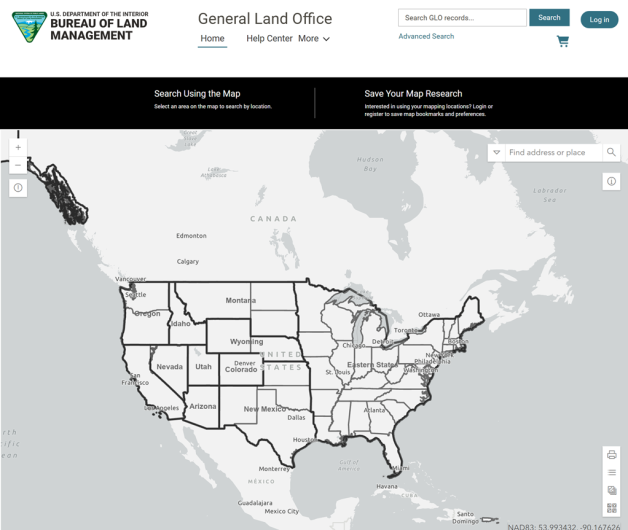
The Bureau of Land Management is taking a big step forward in protecting and sharing some of the nation’s most important historical land documents. The agency is launching the first phase of a modernized General Land Office (GLO) records system, set to go live on July 13, 2026. This upgrade improves both the public GLO Records website and the internal tools BLM employees use every day to review and manage historic land records.
The GLO system stores key documents about land ownership, survey boundaries, mineral rights, and other land transfers in the Public Land States. These records support many BLM decisions and are valuable to researchers, surveyors, industry partners, and government agencies. Keeping this information easy to access—and well protected—is important for honoring our public‑lands history and helping guide decisions today.
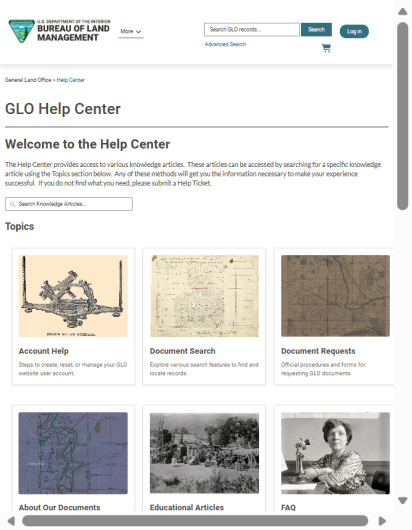
The updated website is designed to make searching for records simpler and faster for the roughly 1,500 people who visit it each day. Users will find easier navigation, clearer educational materials, and new tools to help them locate documents quickly. Improved search features, including map‑based tools, allow people to explore records in more flexible ways. Faster loading times and optional user accounts will give frequent visitors the ability to save searches and bookmarks for a smoother experience.
As project manager Daniel Fleming explains,
The documents hosted by GLO are the foundation records of every decision BLM makes today. Cadastral Survey boundaries, land ownership, rights, limitations, and mineral ownership and status are documented in GLO records. One of the primary objectives of the modernization effort is to improve the efficiency of how GLO records are published so that the volume of information accessible to users can continue to grow. Increasing this access improves the efficiency of BLM’s internal processes and supports more effective research by the roughly 1,500 visitors who access the site each day."
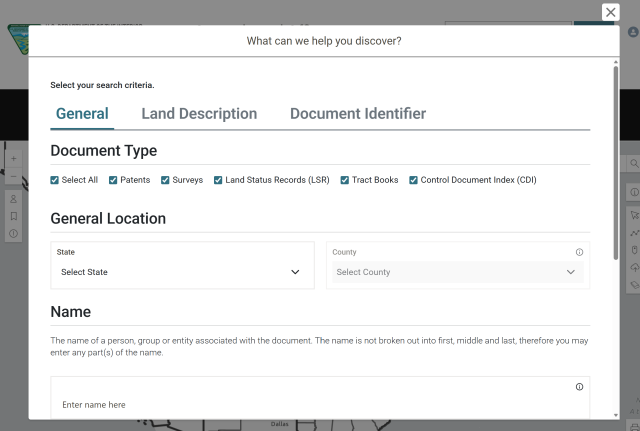
For BLM employees, the updated system brings several older tools together into one modern platform. New features like optical character recognition (OCR) and AI‑assisted metadata generation make it much quicker and more accurate to index documents. Over time, more BLM state offices will be able to help with indexing, which will speed up the work and ensure records are handled with care across the agency.
This modernization effort makes sure that America’s historic land records stay accessible and useful for years to come. By improving both public‑facing tools and internal systems, the BLM is strengthening its ability to manage, share, and protect important land information, from the earliest land patents to the decisions shaping our landscapes today.
Related Stories
Office
5275 Leesburg Pike
Falls Church, VA 22041
United States