


BLM-authorized rights of way on public lands connect Arizona’s economy, communities
As Arizona grows, the systems that keep daily life running have to keep up. Many of those systems trace back to public lands: the places where the Bureau of Land Management (BLM) grants space for pipelines, roads, communication sites, and more that serve Arizona’s communities every day.
Right‑of‑way projects on BLM‑managed public lands help meet the state’s demand by helping keep people connected, supporting emergency response, and ensuring rural and urban communities alike have access to dependable infrastructure. And much more.
A right‑of‑way grant authorizes a person or entity to use a specific piece of public land to build and operate something like a power line, road, pipeline, or communication tower. It doesn’t necessarily mean the land is completely sold or given away. Instead, the BLM grants a company, agency, or utility the legal right to construct, operate, and maintain a facility on that land for a set period of time.
Think of it as a long‑term space or lane on public land that allows essential infrastructure to go where it needs to go. A right‑of‑way grant basically makes sure these systems have a safe, legal, planned‑out place to go, while keeping the land itself in public ownership.
Currently, the BLM has over 5,000 authorized rights-of-way in Arizona, covering more than 550,000 acres.
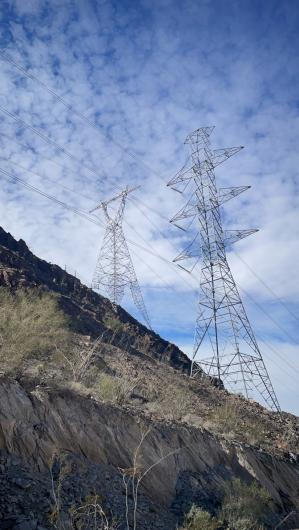
An example of a BLM-authorized right-of-way is the 500-kilovolt Ten West Link transmission line, which allows over 3,000 megawatts of power to flow between high-demand markets in California and Arizona. Traversing three counties in two states, Ten West Link runs over 100 miles along the Interstate 10 corridor from the Delaney Substation near Tonopah, Ariz., to the Colorado River Substation near Blythe, Calif.
Projects like this one expand access to reliable energy, support economic development, and improve grid resilience in a rapidly growing region.
Other rights-of-way grants issued by the BLM also make possible the oil and gas pipelines, irrigation systems, powerlines, roads, and other infrastructure that keep Arizona’s communities supplied, connected, and moving forward. Some rights-of-way improve cellphone service, expand high-speed internet access, and support critical emergency and public safety communication systems. And in 2026, broadband and utility infrastructure is just as critical as roads and bridges, especially as Arizona continues to grow.
Most major rights-of-way projects don’t happen overnight, though. They often require years of careful planning, environmental review, community engagement, and interagency coordination to ensure they provide the greatest possible public benefit. Through its rigorous, multi‑step evaluation process and detailed Plan of Development requirements, the BLM ensures each project is thoughtfully planned, environmentally responsible, and designed to serve the public interest.
The Ten West Link is a prime example.
Although Ten West Link celebrated its official groundbreaking in early 2023, the project had been nearly a decade in the making, with the initial right‑of‑way application submitted to the Bureau of Land Management in September 2015 and the record of decision being signed by the BLM in 2019.
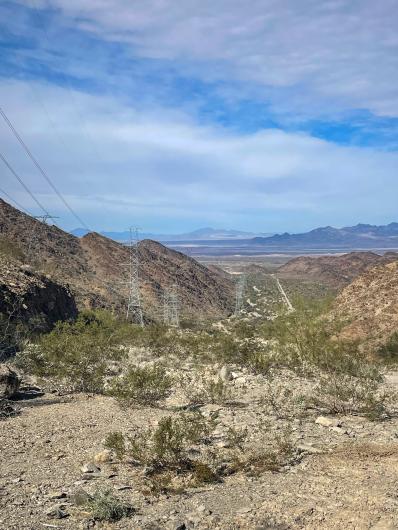
Scoping for the Ten West Link project, for example, began in March 2016, followed by the release of the draft environmental impact statement (EIS) in August 2018, reflecting years of careful study and collaboration. The 300‑page final EIS, prepared in accordance with August 2017 Secretary’s Order 3355, analyzed multiple route alternatives and incorporated extensive stakeholder input.
The alignment in the Ten West Link record of decision was responsive to community and stakeholder feedback, avoiding popular recreation areas, the Kofa National Wildlife Refuge, and tribal lands. It also minimized effects on nearby communities and the U.S. Army’s Yuma Proving Ground, ensuring no adverse impacts to military readiness, while simultaneously supporting future energy development opportunities.
That long‑term effort reflects the BLM’s commitment to thoughtful decision‑making that benefits people, lands, and communities.
These rights-of-way projects ripple outward, strengthening local economies and supporting long‑term prosperity for Arizona communities. Their economic contributions are more than just the money spent on construction or equipment. Those investments are only the beginning. Each project sends waves of economic activity outward, much like water moving across a pond.
The first ripple is the direct impact, like the crews hired, the materials purchased, the equipment brought in, and the services contracted to get the work done.
The next ripples travel even farther. From suppliers and truckers to surveyors and equipment shops, businesses that support the project experience increased demand.
And then there’s the human impact: workers earning wages who spend their paychecks in local communities, supporting grocery stores, restaurants, countless small businesses, and more. For example, construction of Ten West Link was expected to employ hundreds of members of an American electrical workers union, according to a 2023 Department of the Interior news release.
The BLM also assesses annual rental charges for rights‑of‑way located on public lands, ensuring that public resources continue to provide fair return to taxpayers while supporting critical infrastructure. Rental rates vary depending on the type of authorization, whether linear facilities like pipelines and power lines, small site‑type facilities, large site developments, or communications sites.
“These investments don’t just keep essential services running,” said Mark Morberg, who is the BLM Arizona’s deputy state director for lands, minerals, energy and cadastral survey. “They create jobs, expand opportunity, and ensure that Arizona’s growth is matched with resilient, reliable systems that benefit all Americans.”
Together, all these layers make up the project’s total contribution to the economy, continuing long after the initial construction begins. These rights-of-way projects on public lands support not just the systems people depend on, but the communities and economies that grow around them.
In fiscal year (FY) 2024 alone, geothermal and other energy on BLM-managed public lands in Arizona overall contributed over $215 million in economic output and supported 500 jobs. Overall, BLM-managed public lands in Arizona generated over $1.4 billion in total economic output and supported over 8,700 jobs in FY 2024.
Across Arizona, BLM-authorized rights of way play a vital role in strengthening the services, systems, and infrastructure that people rely on every single day. These rights of way are helping lay the foundation for a safer, more connected, and more prosperous future.
Related Content
Related Stories
- Celebrating 30 Years of California Condor Recovery at Vermilion Cliffs National Monument
- Using Beavers as Partners in Riparian Habitat Restoration in Las Cienegas National Conservation Area
- BLM recruits future workforce at Missouri University of Science and Technology career fair
- September Lease Sale Energizes BLM’s Mission and Our Teams
- Signs of Collaboration: Protecting Tortoises on Arizona Public Lands
Office
One North Central Ave., Suite 800
Phoenix, AZ 85004-4427
United States