An official website of the United States government
Here’s how you know
Official websites use .gov
A .gov website belongs to an official government organization in the United States.
Secure .gov websites use HTTPS
A lock (
) or https:// means you’ve safely connected to the .gov website. Share sensitive information only on official, secure websites.
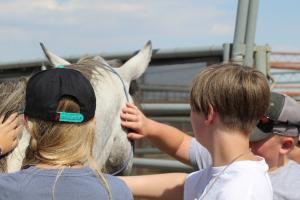
Over the past 10 years, BLM Idaho has placed more than 1,000 wild horses and burros into private care through what is now known as the Forever Branded partnership. Building on the success of Mustang Mania, the program pairs approved trainers with adopted wild horses or burros in January or February, launching a months-long journey of training and preparation for competition at the Branded Bonanza event, scheduled for August 7–9 this year.
One of the ways the BLM manages this fast-paced herd growth is through bait-trap gathers. These types of gathers normally consist of setting up one or more pens on public lands and baiting horses or burros to enter the pen with food, water or some other treat, such as salt.
Looking around the beautiful ranches these herds now called home was stirring. In the native habitat where wild horses live near us the predominant foliage is sagebrush...[but] the horses that have been relocated to off-range pastures were truly living in nirvana, with thick grass, plentiful water, and readily available natural shelter in abundance.
Preston assesses horses in the holding pastures to assign a score measuring their body condition, identifying them by their color, markings, and the identification number they carry on their hip, experience that he gained on the job under the supervision of the veteran PIs who trained him.
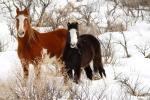
The Bureau of Land Management published new population estimates of wild horses and burros roaming public lands managed by the agency. As of March 1, 2022, the BLM estimated approximately 64,604 wild horses and 17,780 wild burros were on BLM-managed lands, for a total of 82,384 animals.