


It’s a Hard Rock Life for Buffalo FO Archeological Project Volunteers
Uncovering more than 250 years of stories written on the land
You can bet your bottom dollar on an annual Bureau of Land Management Wyoming volunteer archeology project, come what may — actually it’s usually in July. Over 16 years, a total of 135 volunteers have completed 4,740 hours of work on public lands in the Buffalo Field Office. But with snakes, and ticks, and rain, and heat, and cactus, and rocks, and lions and bears, plus the weather in Wyoming, you must wonder: What keeps them coming back?
“One thing I have noticed is that people who volunteer want to continually learn new things,” observed Ardeth Hahn, BLM archeologist with the Buffalo Field Office. “We have returning volunteers year after year, and they get really good at what they do. They help newer volunteers by discussing what we are doing, how we are recording stuff, and bring knowledge from their professions that help us. If it’s just me and Nathan Barnes, our other archeologist in the field office, it’s difficult to get a lot of work done.”
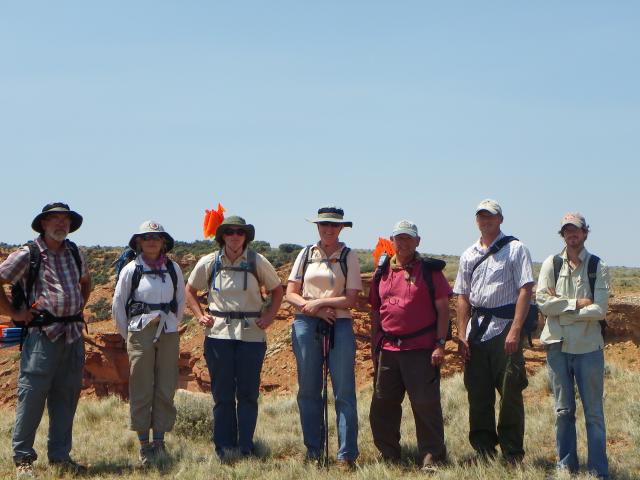
Volunteer archeology projects not only inform planning and resource management for the Buffalo Field Office, they help uncover the way of life on these landscapes throughout the years. By finding sites and recording them, archeologists can put together a picture and better answer questions such about how people used the land over time. Every volunteer is part of helping write or edit chapters of history as they contribute new discoveries.
“These projects are an opportunity for members of the public who volunteer to help protect and begin to educate others on the importance of how we can better protect these archeological resources,” said Hahn. “Any time we can do a project, everyone gets something out of it: volunteers, us, our partners, and even private landowners. It helps teach everyone about managing cultural resources on public lands and why it is important.”
The field office balances protecting these sites with multiple use, but the greatest danger to these sites is vandalism. Archeologists ask anyone who finds ancient or historic sites to avoid sharing photos because geotagging in the image can lead people to those sites to do harm.
But that is also the beauty of volunteering — seeing something that very few have seen since the sites were in use or because the only way to get to the sites are by crossing private land into BLM lands.
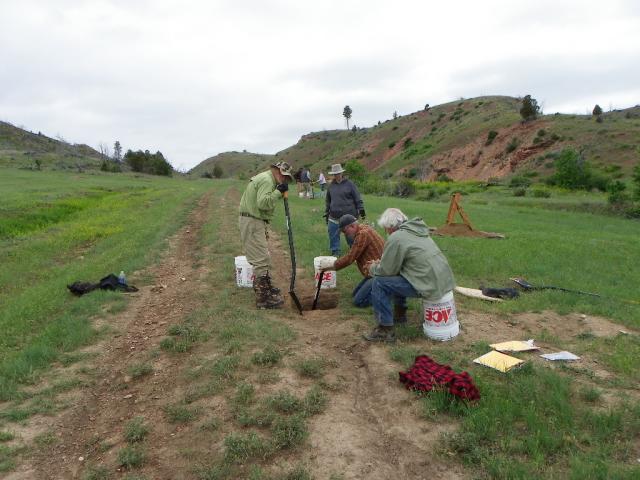
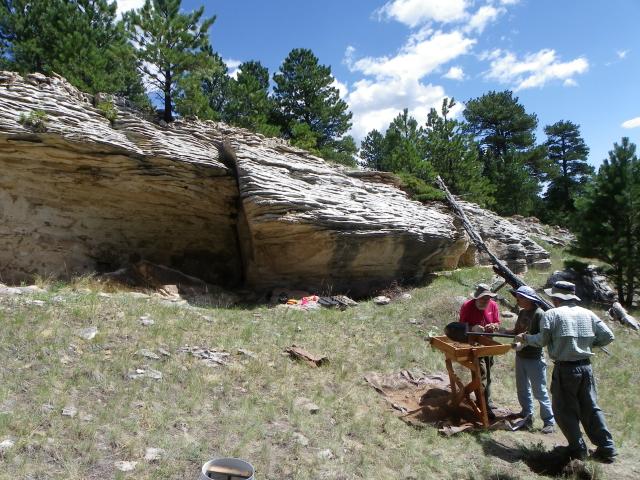
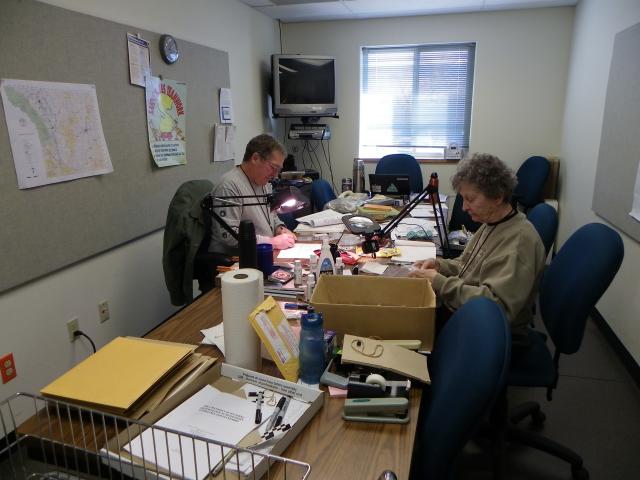
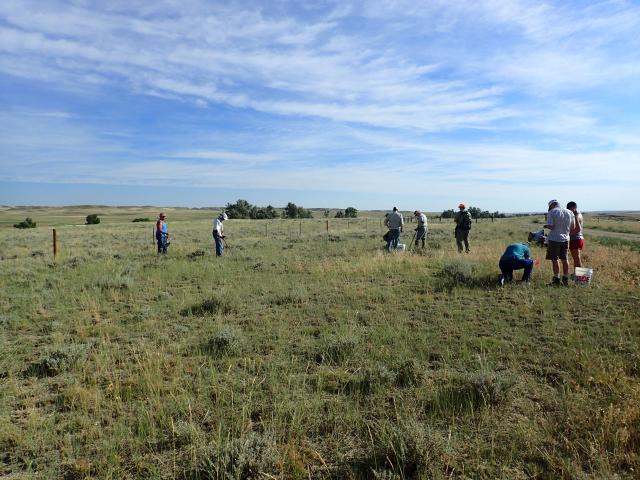
Projects can be different each year. One year was dedicated to artifact curation, some are survey and recording projects where volunteers help create maps and document with digital photographs.
| 
|
| 
|
One of the largest turnouts the field office has ever seen was a metal detecting project in 2017 at a historic battlefield site.
The little-known skirmish between U.S. Army personnel and members of the Sioux and/or Northern Cheyenne Tribes occurred July 20, 1866, near a creek crossing for the Bozeman Trail. Two soldiers were killed, the amount of casualties for the tribes is unknown, but no records had been specific enough to determine where the half-day-long fight occurred. A total of 36 volunteers, both local and out of state, were a part of a Passport In Time project. Their combined 852 volunteer hours helped confirm where the battle took place. Part of that group discovering that story on the landscape were eleven volunteers under the age of 15, with one earning credit toward a Boy Scout archeology badge.
“I am amazed by the dedication and commitment from the volunteers on these projects,” said Casey Freise, acting field manager for BFO. “They play a big part in helping us identify and learn more about cultural resources in the Buffalo Field Office.”
Hole-in-the-Wall is a remote area in the Big Horn Mountains in northern Wyoming, well known for being used by cattle rustlers and other outlaws — such as Butch Cassidy and the Wild Bunch Gang — from the late 1800s through 1901. But there is always more to discover. Throughout that area, unique archeological sites have been found from ancient sites to those around a century old.
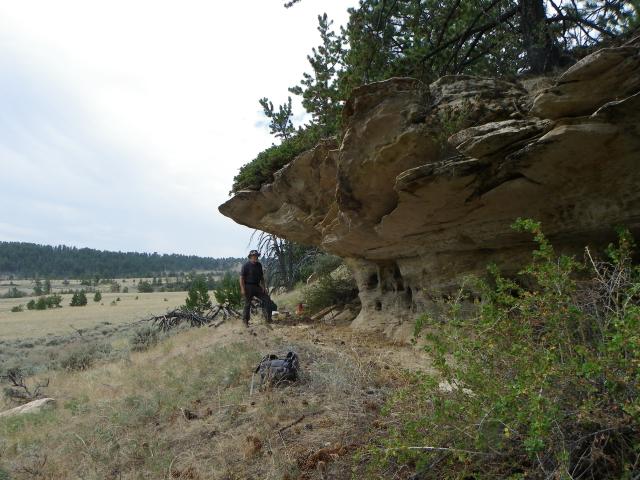
Fast forward to now, eight volunteers spent four full-sun summer days in the wilds of Wyoming. They traveled in, set up camp, and hiked through the Southern Bighorns to document archeological sites including rock shelters, rock art, and areas where people used to make stone tools.
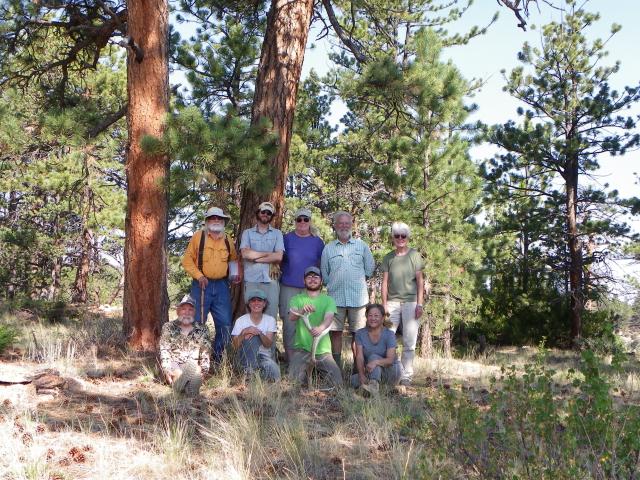
“We have found some stuff that is really unique ... and I enjoy how after a project, we get to learn more about what we’ve found, such as ages, what tribes are related to what we have found, and how it was used and changed throughout history,” said Phil Gonzales, who has volunteered since 2012.
Gonzales is one of many return volunteers but has become key to the success of the team’s ability to function in the wilderness. As a former outfitter, he brings gear to make the camp a community, like with a tent to gather under, real utensils and plates to eat from, and even showers to clean up after a long day.
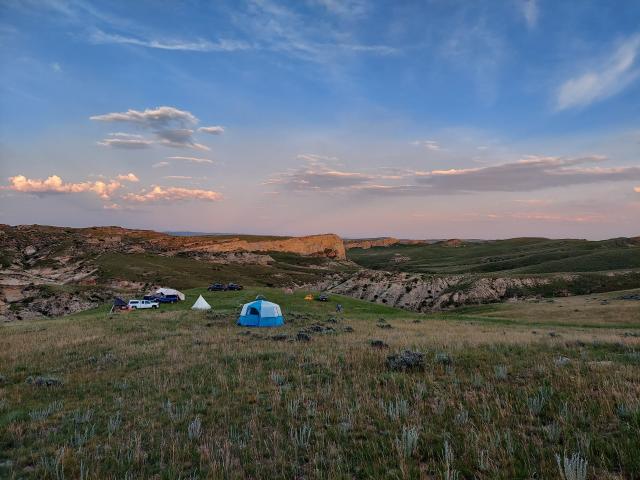
| In 2024, the volunteer crew wrote an “Ode to Phil’s Wall Tent” that reads, in part: It’s heard all the tales and been many places. Been rattled over rough roads in Phil’s trailer-hunting camp, PIT camp, THPO meetings and more. Blown down in Wyoming winds and weighted down by snow. Remember when- The tent came down at Welch Ranch? Flattened and mangled from the wind but he set it back up. The rustling of pans in the morning meant time to get up. More stories than poles and stakes, yarns and ropes as long as the days. |
“Those small things make it easier to enjoy the stars and spending mornings and evenings together as a team, and I told Ardy I wanted us to camp like we knew what we were doing,” Gonzales chuckled. “We get into some of the most isolated places in the country, and each project has been a different adventure. I have lived and worked in this area well over 30 years, and it wasn’t until I started volunteering with these projects that I got a feel for how these tribes lived and traveled around the east slope of the Bighorns.”
Gonzales said the team has found rock art related to others in Montana and Canada, and their finding was the furthest south and east that those markers had been discovered. Over the years, the team has found something on every project that helps shape and inform resource management plans, which includes evaluating sites for the National Historic Register, developing a Cultural Resource Management Plan for the Southern Bighorns, and helping create interpretive signs for the public.
Margaret Barrow travels from North Carolina to participate in these volunteer projects. She has found a system to travel with all her camping gear ever since she started volunteering in 2014.
“So far so good and no lost baggage!” she said. “It has always been so great to see each other and catch up each year, and it’s a wonderful opportunity to work with a variety of volunteers and BLM staff. You get to meet people with common interests, form lasting friendships and venture into some of the most beautiful areas in Wyoming that I would never see myself.”
Barrow’s takeaways after volunteering over the years start with being open to opportunities and adventure. Her favorite project was one she stumbled into in 2016.
“I had wandered a short distance from the group and found a rock cairn arranged in a sort of square,” Barrow recalled. “After showing Ardy, we all surveyed the area. We found an unrecorded site with several lithics, stone cairns and a rock alignment, and I got to name it. I chose the first letters of all the volunteers’ names, and a few years later, historic preservation officers and archeologists with the tribes saw the site. I was so proud to be a part of the project, knowing it held a deep meaning to the tribes.”
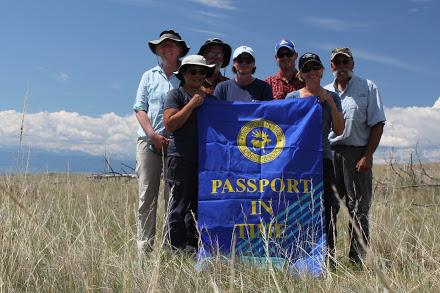
Their discoveries not only inform planning and resource management but teach about the way of life on these landscapes.
“It’s fun, it’s educational — and we get to share it with the people that it is most important to,” said Gonzales about volunteering. “Because of the work we do, we get to hear stories that are not written and learn about these cultures firsthand from tribal elders.”
The U.S. celebrates its 250th anniversary this year, but with 12,000 years of human history in this area of Wyoming there is so much more to discover and appreciate on the landscape.
“It’s important to record what we can find and interpret to the public because it’s all our history — and it’s important history,” Hahn said.
Related Stories
- One day, one goal: caring for El Malpais National Conservation Area
- National Public Lands Day Volunteers Revitalize Dean S. Reservoir in Montana
- Celebrating National Public Lands Day across the High Desert District in Wyoming
- One Mile Closer
- Fossils, furs and a few sparks at Kemmerer Outdoor Discovery Day
Office
1425 Fort Street
Buffalo, WY 82834-2436
United States