


BLM Utah Air Resources Management Program
The Bureau of Land Management Utah Air Resources Program supports the agency’s land use planning, permitting, and compliance responsibilities by ensuring that authorized activities on public lands are consistent with applicable air quality laws and regulations. Air resources encompasses air quality, meteorology, noise, and other atmospheric values. The Federal Land Policy Management Act (FLPMA) guides the BLM to manage the public lands in a manner that will protect the quality of air and atmospheric values, and requires the BLM’s land use plans provide for compliance with applicable air pollution standards or implementation plans. The program works within the framework of the Clean Air Act and other relevant authorities to evaluate potential air quality impacts associated with proposed actions and to support informed, defensible decision making.
BLM Utah's management strategy includes four main elements: airshed management, National Environmental Policy Act (NEPA) analysis, air monitoring, and public education and awareness. Program staff provide technical expertise during land use planning and NEPA analyses by assessing emissions, identifying potential impacts to air quality related values (AQRVs), and recommending practicable mitigation measures where appropriate. These efforts support responsible development while maintaining regulatory certainty and efficiency for permitted uses, consistent with the BLM’s multiple use mission.
Because air pollution does not stop at county or state lines, the science and practice of air pollution control has been moving to managing air quality on an airshed basis, rather than limiting management based on political boundaries. The BLM incorporates the “one atmosphere” approach into its airshed management work. The one atmosphere approach addresses pollutants in an area holistically, rather than addressing each separately. While using this approach, BLM Utah works with the Utah Department of Environmental Quality, the U.S. Environmental Protection Agency, and our other public and private partners to collaboratively manage airshed resources across the State of Utah.
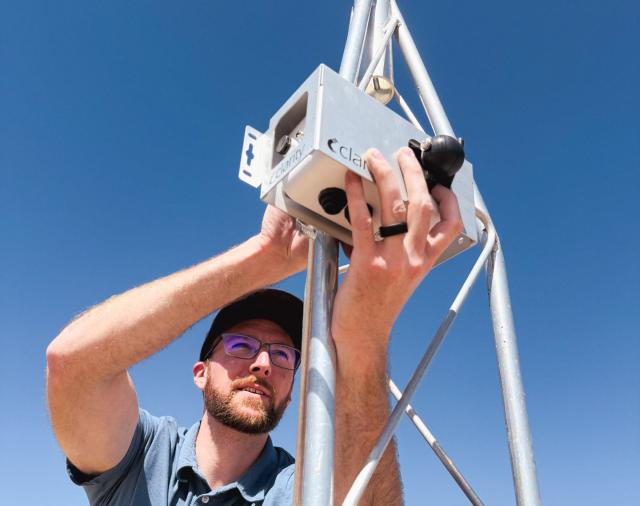
BLM Utah operates a low-cost, non-regulatory air quality monitoring network comprised primarily of particulate matter sensors. A low-cost monitoring network uses commercially available sensors to provide supplemental, real-time air quality information at a fraction of the cost of regulatory grade monitoring. These data are used for situational awareness, trend evaluation, and planning support, but are not used for regulatory determinations or enforcement purposes. The program may also conduct short-term, research grade air quality monitoring to support project specific analyses, decisions, or compliance evaluations, as appropriate.