


Stewardship partnerships protect irreplaceable cultural resources at Richardson Homestead in Arizona
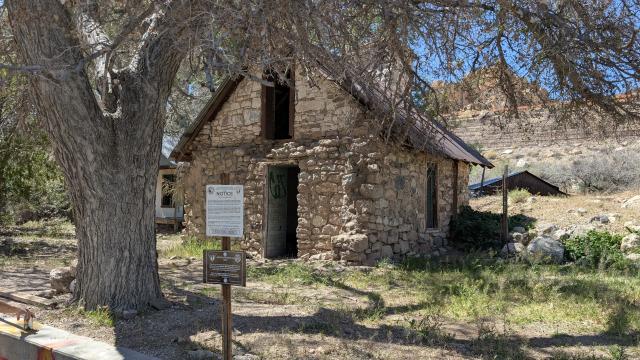
Tucked along a historic pathway through Union Pass, the Richardson Homestead and Toll Road site stands as a visible reminder of Arizona’s pioneer-era travel and settlement. A time when early travelers, miners, and settlers relied on these challenging routes for passage through northwestern Arizona. Today, that same accessibility continues to draw visitors, making active stewardship critical to preserving what remains.
Located between Bullhead City and Golden Valley off State Route 68, the Richardson Townsite operated from the late 1800s through the early 1940s. While the remaining structures and features offer insight into a chapter of early transportation and settlement in northwestern Arizona, they represent only part of a much broader cultural landscape that spans thousands of years of human history.
Protecting that landscape is a shared responsibility: One carried forward through partnerships between the Bureau of Land Management (BLM), the Arizona Site Steward Program, and members of the public.
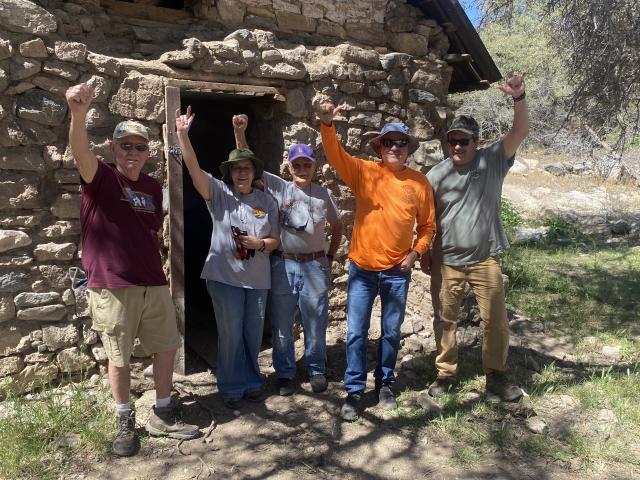
Recent stewardship efforts at the site brought together BLM Colorado River District staff, Arizona Site Steward Program volunteers and local PFLAG hiking group to support preservation through coordinated, on-the-ground action. The work included installing protective signage, conducting a targeted cleanup and site presence, and coordinating with partners to plan for future restoration and monitoring.
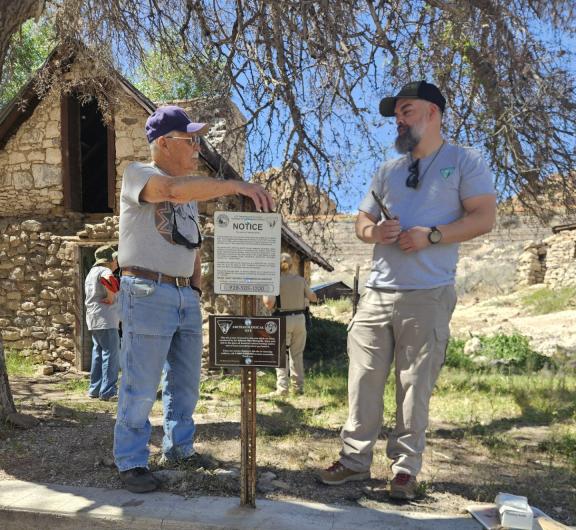
BLM archaeologist Augustine Potor installed new permanent signage identifying Richardson Townsite as a protected cultural resource, helping establish a clearer visual presence for visitors. The signage underscores the importance of the site and provides valuable information to visitors who may not be familiar with its historical background.
While these visible improvements are important, the long-term value of the effort lies in ongoing partnership in stewardship. Reflecting the strength of this partnership, site stewards worked alongside a local hiking club and community volunteers to remove trash and evaluate site conditions. Because the area is easily accessible, it has experienced repeated impacts over time, including graffiti and disturbance to historic features, which point to the need for continued stewardship.
BLM staff, including park rangers and law enforcement personnel, also engaged directly with participants to provide context on site significance, appropriate use and the long-term effects of damage to cultural resources.
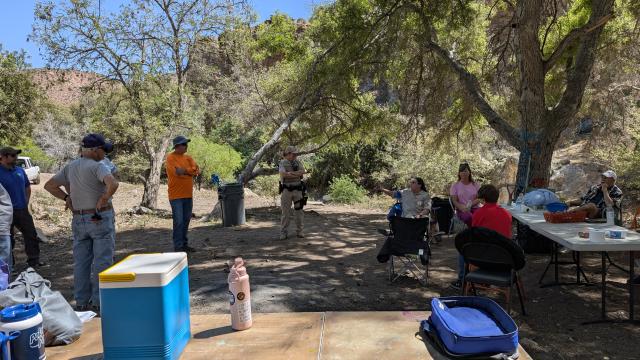
An informal meeting was held between BLM staff, site stewards, and community members to coordinate future support in the area. Discussions focused on improving monitoring, communication, increasing volunteer engagement and identifying opportunities for additional restoration work, including potential graffiti mitigation.
A 40-year partnership
These coordinated actions show the broader mission of the Arizona Site Steward Program, a 40-year partnership-based initiative designed to work with land management agencies to protect cultural and historical resources by monitoring and preserving archaeological and historic sites statewide. Since its inception in 1986 under Arizona State Parks and Trails, the BLM has collaborated with the program to help safeguard and educate the public about the importance of cultural heritage sites such as the Richard Homestead.
With thousands of cultural sites spread across millions of acres, land managers rely on the site steward volunteers to monitor conditions and report site damage. For sites like Richardson Homestead, where visibility and access are high, this partnership plays a critical role. Many sites do not have the same level of visibility or access. These locations can be easily overlooked and are often unintentionally damaged by off-highway vehicle use, artifact collection and other disturbances. Once impacted, these resources may be impossible to fully restore. Monitoring and public engagement help address these common threats caused by visitors unfamiliar with the site’s significance.
For these reasons, the partnership with the Arizona Site Steward Program remains vital to protecting cultural sites across the region. The program trains volunteers to work with BLM archaeologist to document site conditions, report damage and support education and outreach efforts. Through regular monitoring and public engagement, they help detect issues early and build awareness about the importance of protecting these resources.
Today, on BLM administered lands alone, more than 200 trained volunteers monitor over 2,200 sites across Arizona, contributing 14,500 hours last year to help detect and report vandalism, support stabilization efforts, and promote public awareness.
Community involvement matters
The clean-up efforts at Richardson Homestead highlights the importance of community involvement and shared commitment of public land stewardship. Local groups who regularly visit the area contribute to stewardship efforts through cleanup activities and by helping build awareness among other visitors.
Public lands contain thousands of cultural sites that tell the story of human presence in the Southwest spanning thousands of years. Protecting those sites requires a shared commitment between land managers and the public. Visitors to cultural sites are encouraged to leave artifacts in place, avoid disturbing structures or features and pack out all trash, so these places remain intact for future generations.
Get involved
Opportunities to get involved in stewardship efforts are available through the Arizona Site Steward Program. Volunteers of all backgrounds contribute to the program, supporting long-term preservation through monitoring, education and partnership. For other volunteer opportunities with the BLM, visit Volunteer.gov or contact a local BLM office
As part of America’s 250th anniversary, volunteers who donate 250 hours of their time with the BLM and other federal agencies can earn a free America the Beautiful volunteer pass, which grants access to over 2,000 federal recreation sites across the country.
Efforts like those at Richardson Homestead demonstrate how coordinated action can strengthen protection of cultural resources while maintaining access to public lands, especially during this year that is so important to our shared legacy.
Related Content
Related Stories
- One day, one goal: caring for El Malpais National Conservation Area
- National Public Lands Day Volunteers Revitalize Dean S. Reservoir in Montana
- National Public Lands Day Paddles, Plants and Caves: BLM Connects Milwaukee Youth with the Outdoors
- Celebrating 30 Years of California Condor Recovery at Vermilion Cliffs National Monument
- Using Beavers as Partners in Riparian Habitat Restoration in Las Cienegas National Conservation Area
Office
2755 Mission Blvd.
Kingman, AZ 86401
United States