


BLM law enforcement medical rescue team brings advanced care to public lands
Public lands managed by the Bureau of Land Management (BLM) stretch across deserts, mountains, canyons, rivers, forests and some of the most remote terrain in the nation. When someone is injured, ill, stranded or endangered in these environments, help is not always minutes away.
That is where the BLM’s Operational Medical Unit (OMU) comes in.
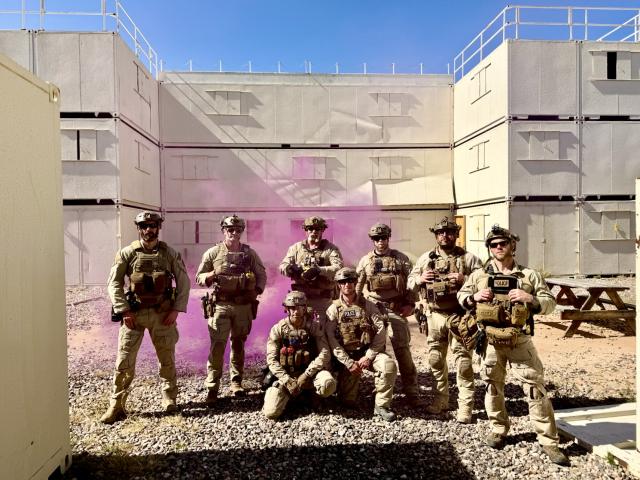
Most visitors to public lands will never see the OMU at work. But in rare, critical moments when something goes wrong in the most unforgiving of places, OMU becomes a lifeline. The OMU is a specialized national team of BLM law enforcement officers trained to bring advanced medical care, rescue capabilities and operational support to places where traditional emergency response may be delayed, unavailable or difficult to access. Small by design, the unit currently includes just eight members nationwide, three of whom are based in Arizona.
To better understand this unique capability, I recently met with Field Staff Law Enforcement Ranger Brian Puckett, out of Arizona’s Colorado River District and commander of the OMU, to discuss the team’s mission, recent annual recertification training and the specialized skills required to serve on the unit. The conversation offered a rare, close look at a team most public land visitors will never encounter but one that can become critical when emergencies happen far from roads, hospitals or traditional emergency response systems.
“Most people never think about what happens when 911 can’t reach you. That’s where we come in — we bring the emergency room to the middle of nowhere,” Puckett said.
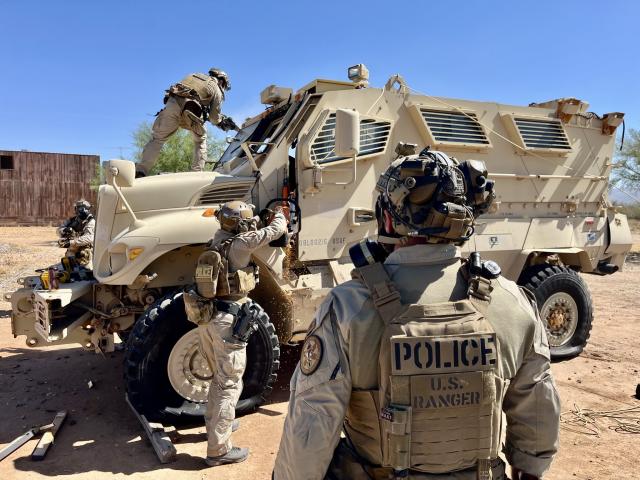
OMU personnel are federal law enforcement officers first, serving as rangers or special agents. But to serve on the team, they also must hold advanced medical credentials.
“This is a real integration of law enforcement, medicine, and rescue,” Puckett said.
According to Puckett, the team currently includes both paramedics and advanced emergency medical technicians. All OMU members work under an advanced scope of practice, and the unit’s paramedics serve as independent duty paramedics capable of delivering high-level care in austere field environments.
Since 2022, OMU personnel have treated more than 2,300 people. Still, advanced medical care is only one piece of the unit’s mission.
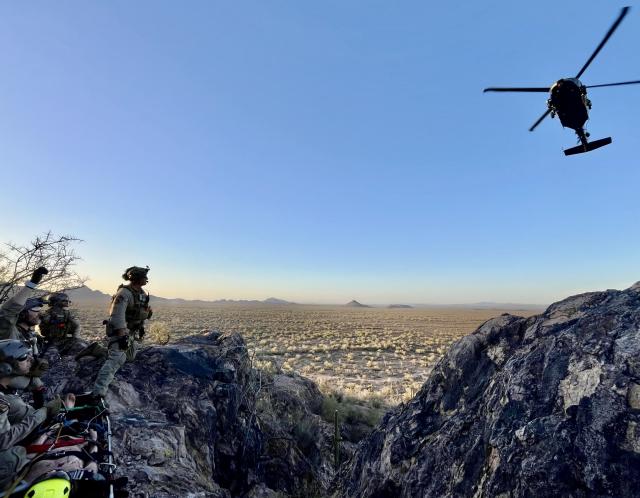
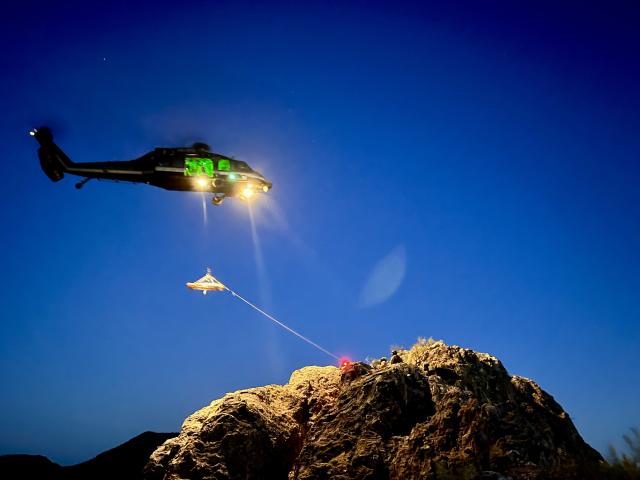
OMU members must also be able to reach patients wherever they are. OMU members are trained in technical rescue, including high-angle ropes, swift water, cutting out and extricating people from vehicles and aircraft, helicopter operations, hoist rescue, patient packaging and overland evacuation over whatever difficult, rugged and unpredictable terrain types they may encounter. They may operate on foot, in tactical vehicles, or even from boats, ATVs, and helicopters in remote terrain.
“The thought is that we have to be able to reach the patient, however it takes us to get to them, and however it takes to get them back out,” Puckett said.
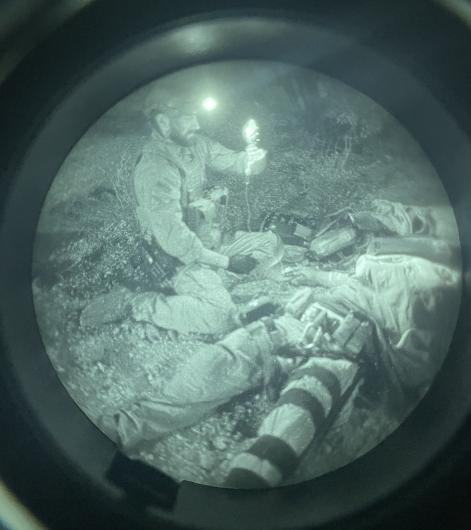
The unit is equipped and trained to provide prolonged field care, meaning OMU personnel can stabilize and manage a patient for up to 24 hours or longer when evacuation is delayed. That capability is especially important on public lands, where distance and terrain can turn a medical emergency into an extended, complex operation.
The OMU mission is broad. The unit may treat injured recreationists, support special law enforcement operations, assist with wildland fire incidents, provide medical support for employees in the field, care for working canines, and support partner agencies during large or complex missions. OMU personnel also support federal, state, local and tribal partners when their skills are needed.
“The OMU provides a capability that is difficult to replace. Its members bring advanced medical care, rescue skills and sound judgment to missions where time and access can determine the outcome,” said Michael Roop, BLM State Chief Ranger for Oregon and Washington. The amount of time dedicated to training and skills learned on the job is years in the making. This group is highly dedicated to the mission and go above and beyond every time they deploy on an OMU mission.
Because the mission is so broad, OMU members must maintain an exceptionally high level of medical readiness. The team operates under medical direction from the U.S. Department of Health and Human Services’ (HHS) Administration for Strategic Preparedness and Response – Center for Tactical Medical (TacMed) program, a partnership that anchors the team’s standards.
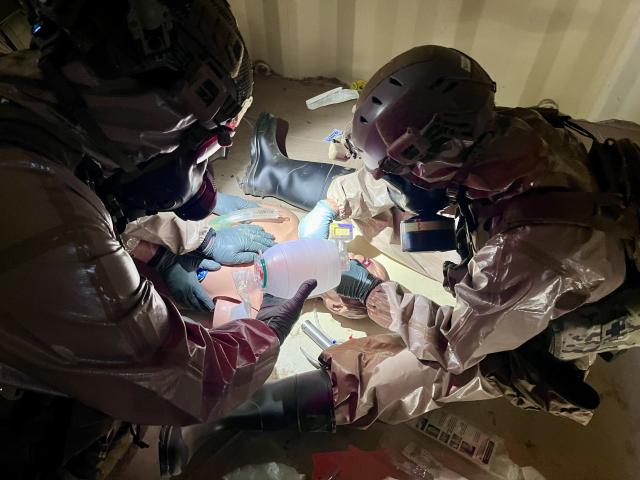
That oversight comes into focus during the unit’s annual recertification training. During the unit’s recent annual recertification training, OMU members completed medical procedures, reviewed medications and treatment protocols, and worked through trauma and medical scenarios under the observation of the medical director’s office.
Recertification is not just a formality. Team members are required to demonstrate competency in all invasive medical skills, including airway management, intravenous access and other advanced procedures. They must also exhibit a thorough understanding of the medications and equipment they carry and may be required to use in the field, while proving proficiency in the environments in which they are assigned to operate.
This rigorous, hands-on assessment ensures OMU personnel are ready for their real-world missions.
In addition to certifying skills, HHS’s Center for Tactical Medicine works with OMU very closely because the two programs work together to supplement staffing in the field for real world missions. HHS has worked alongside OMU in a wide range of BLM operations including helping staff Burning Man in the remote Nevada desert. OMU works with HHS to plus up TacMed’s operations on National Special Security Events and has worked on missions in New York City and Washington, D.C.
As Puckett noted, “often HHS will request and assign OMU members to some of the more complex missions due to our diverse background and ability to work independently as tactical medical providers while seamlessly integrating with law enforcement tactical teams from other agencies.”
Beyond their own training and work with the OMU in the field, OMU members also help others across the country stay certified, prepared, and ready for emergencies. The unit develops and presents training programs for BLM rangers and agents, along with other law enforcement officers from different agencies. OMU team members offer instruction that ranges from basic first aid to advanced-level skills used by other special mission teams.
The unit also develops and presents virtual training programs every month for all BLM law enforcement officers to help maintain the required continuing medical education required for certifications and licensures.
“We don’t just respond to emergencies. Our job is to make sure the entire organization is more capable and prepared,” Puckett said.
That commitment to partnership, preparedness, and professionalism is woven into the unit’s history.
The unit traces its roots to Arizona, where BLM ranger and agent medical training first began in 2001. It became more formally operational in 2012 through a partnership with HHS, according to Puckett. The program has continued to mature ever since, guided by policy and standard operating procedures established through the BLM Office of Law Enforcement and Security.
Today, the members of the team are:
- Commander Brian Puckett, Field Staff Law Enforcement Ranger, Colorado River District (Arizona)
- Jason Marsoobian, Staff Law Enforcement Ranger, Phoenix District (Arizona)
- Greg Johnson, Special Agent, Office of Law Enforcement and Security, Region 5 (Arizona)
- Steve Cunningham, Field Staff Law Enforcement Ranger, Farmington District (New Mexico)
- Michael Morningstar, Supervisory Staff Law Enforcement Ranger, Anchorage District (Alaska)
- Brian Watson, Field Staff Law Enforcement Ranger, Anchorage District (Alaska)
- Brendt Coyle, Field Staff Law Enforcement Ranger, Carson City District (Nevada)
- Scott Nash, Field Staff Law Enforcement Ranger, Southern Nevada District (Nevada)
For the eight members of the national team, the progress of the past and the demands of the future meet in every mission and every life-saving decision they make in the field.
“We have to be able to trust each other literally with our own lives,” Puckett said. This trust is what carries the team forward. On a team like this, small decisions can escalate into life-or-death outcomes. During rescue operations, each team member must know the others can build a rope system, package a patient, provide medical care, operate in a tactical environment or coordinate an evacuation – all under pressure.
“The teamwork, the cohesion is absolutely essential,” Puckett said.
Teamwork is the thread that keeps an operation together.
Puckett said the team looks for people with the right attitude, judgment and drive to keep improving. Members must be able to communicate clearly, think through stressful situations and care for patients in places that may be far from roads, hospitals or conventional emergency medical systems. The breadth of training is also the reason the team is so selective. Members must be able to work independently in tactical law enforcement environments, provide advanced medical care, operate rescue systems and make decisions in austere settings where weather, terrain, distance and limited resources can complicate every step.
For public land users and agency employees alike, the Operational Medical Unit represents a specialized capability most people may never see but could depend on in a critical moment. Whether responding to a remote injury, supporting a complex law enforcement mission or assisting partner agencies during a large incident, the team brings advanced care directly to the places where it is needed most.
In simple terms, the OMU is a highly capable rescue medical team for public lands — a small group of law enforcement officers equipped to bring police, medicine and rescue skills together in dangerous, remote and hard-to-reach places. They bring skill, courage and compassion to the people who need it most, no matter how remote the public lands are.
Related Stories
- Celebrating 30 Years of California Condor Recovery at Vermilion Cliffs National Monument
- Nails and Tires Don’t Mix
- BLM recruits future workforce at Missouri University of Science and Technology career fair
- Signs of Collaboration: Protecting Tortoises on Arizona Public Lands
- BLM Showcases Local Recreation Treasures Ahead of National Hunting and Fishing Day
Office
One North Central Ave., Suite 800
Phoenix, AZ 85004-4427
United States