


Growing Resilience from the Ground Up at the Jupiter Inlet Lighthouse ONA
If the Jupiter Inlet Lighthouse Outstanding Natural Area is a reflection of the natural, scenic and cultural values of public lands in South Florida, then the on-site native plant nursery there, where efforts are underway to create a healthy, more resilient shoreline that protects the ONA for future generations of visitors could be considered the bedrock for those values.
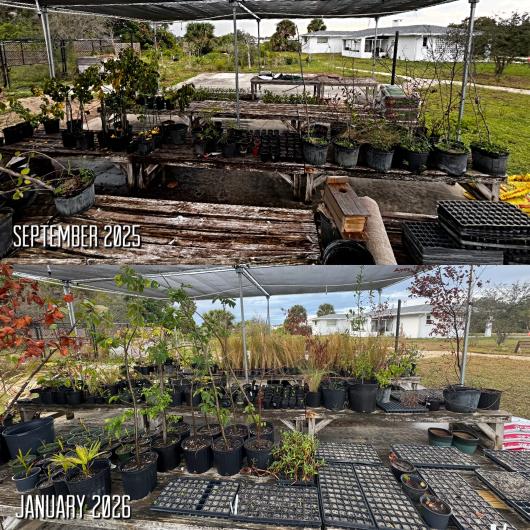
Workers at the ONA native-plant nursery are currently growing, installing and experimenting with a mix of native plants adapted for a volatile environment that is increasingly vulnerable to erosion, flooding, intense storm events. Coinciding with the $16 million shoreline resiliency project, largely funded by the Great American Outdoors Act, landscaping is being designed to reflect the historical natural ecosystems of the area. Upland areas at the ONA, for instance, will mimic a tropical hammock ecosystem, featuring gumbo limbo, wild lime, paradise tree, marlberry, wild coffee, and other local native plants. Lower terraces at ONA will replicate marsh and tidal environments with mangroves and dune-stabilizing plants such as railroad vine and dune sunflower.
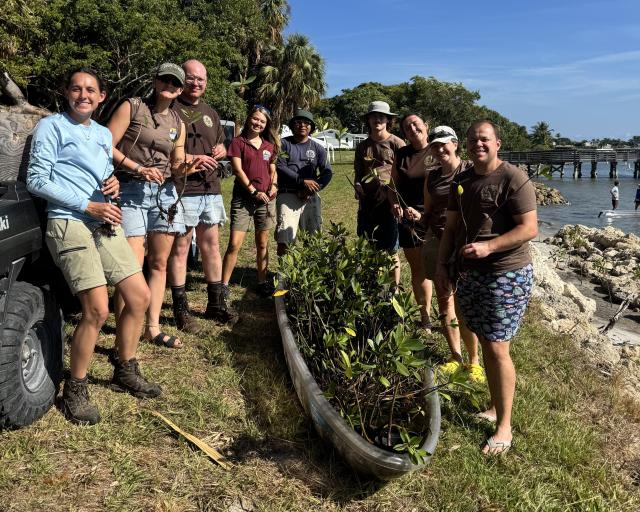
In December 2025, more than 250 young red mangroves were planted along the Loxahatchee shoreline in partnership with the American Conservation Experience. Throughout this year, ONA staff will host volunteer planting days, to relocate nursery-grown plants to the 1,000-foot shoreline stabilization project along the Indian River Lagoon.
The end result will be healthy, resilient native ecosystems well-adapted to the environment. This includes Florida scrub forests, tropical hammocks and mangrove lagoons, with wildlife and ecosystems that regenerate and re-establish naturally after storms and floods.
Finding Solutions Based in Nature
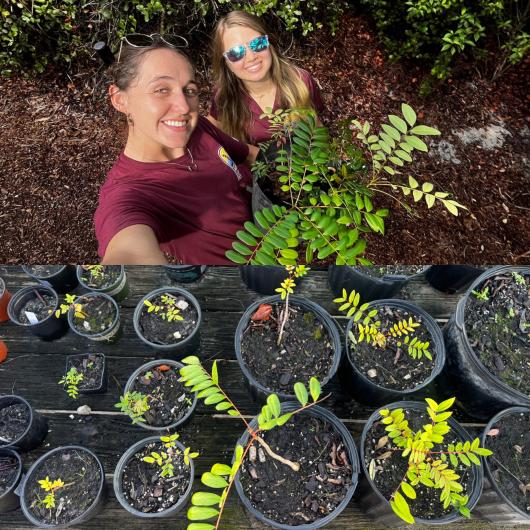
To make all of this a possibility, ONA staff had to think like a tree. In nature, germination often occurs when birds eat seeds and their digestive process breaks down the seed’s hard outer coating, allowing water to enter and initiate growth. Mimicking this natural process, interns at the ONA experimented with a variety of germination techniques in finding the method that worked best for each species.
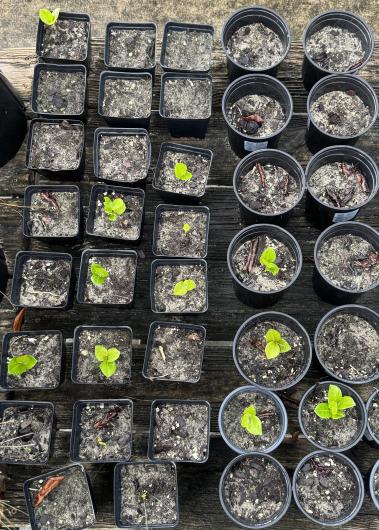
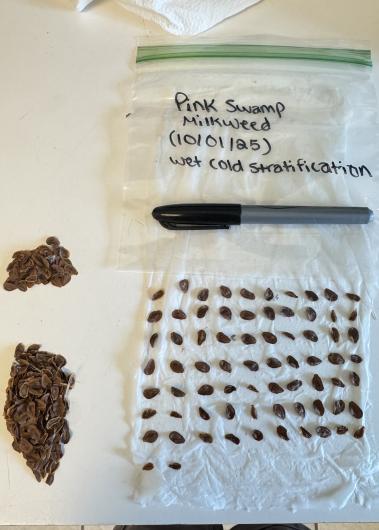
Using guidance from the University of Florida’s Institute of Food and Agricultural Sciences (IFAS) and the Florida Wildflower Foundation, methods included wet and dry cold stratification, scarification, and selectively keeping or removing the flesh from fruits. Additional plant material for the nursery is gathered through cuttings from established plants and by collecting seedlings from species capable of self-repopulation. This has benefitted sensitive plant species identified by the state of Florida as at risk. Learn more about the shoreline stabilization project at: https://www.blm.gov/shoreline-stabilization-project.
Related Stories
Office
273 Market Street
Flowood, MS 39232
United States