


Commemorating 150 Years: The St. Patrick’s Day Fight Along the Powder River
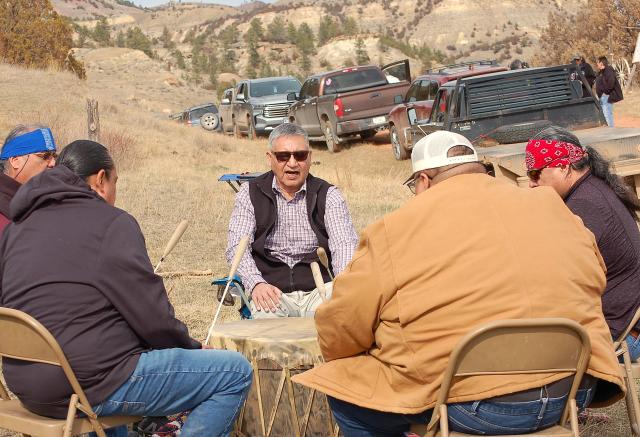
On March 17, a diverse group of tribal members, local landowners, history enthusiasts, and community members gathered along the rolling hills near the Powder River in southern Powder River County, Montana. They came together to mark a solemn and significant anniversary: 150 years to the day since a battle that helped set in motion one of the most consequential conflicts in the history of the Northern Plains.
The event commemorated the St. Patrick’s Day fight—more often referred to as “Reynolds’ Battle,” the “Powder River Battle,” or “the attack on Box Elder, Black Eagle and Old Bear’s Cheyenne camp.” This engagement, fought in March 1876, is widely regarded as the opening chapter of the Great Sioux War of 1876, the same conflict that would later culminate in battles such as Rosebud and the Little Bighorn.
Although intended as a decisive strike by the U.S. Army, the operation proved unsuccessful by contemporary military standards. Colonel Joseph J. Reynolds, who led the attack, faced courts-martial afterward, as did two of his subordinate officers. Their orders had been to locate and attack the camp of the renowned Lakota leader Crazy Horse. Instead, the troops struck an entirely different village—an error that would reverberate far beyond the battlefield.
After the attack on their winter encampment, Northern Cheyenne and Lakota survivors fled northeast to the villages of Lakota leaders Crazy Horse and Sitting Bull, located near the Little Powder River and Chalk Buttes, respectively.
The battlefield mistake had profound consequences. Rather than weakening Native resistance, it strengthened it. The assault on the camp forged deeper unity between the Northern Cheyenne and the Lakota, galvanizing both nations in their struggle against U.S. government forces in the months that followed.
Three months later in June, Lieutenant Colonel George A. Custer and his immediate command of the U.S. 7th Cavalry Regiment would be annihilated at the Battle of the Little Bighorn. The news would reach eastern newspapers just in time for the nation’s Centennial celebrations marking the 100th anniversary of the founding of the United States.
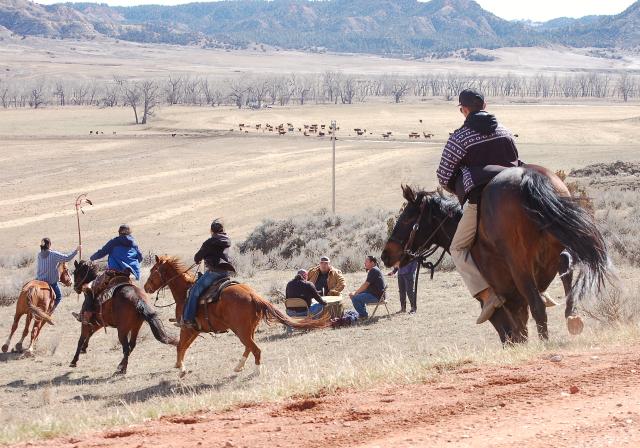
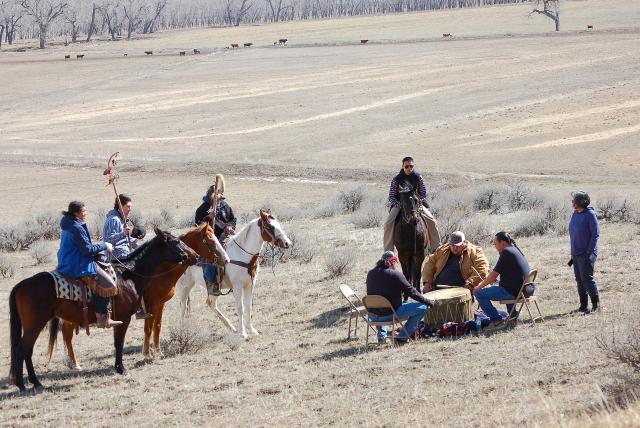
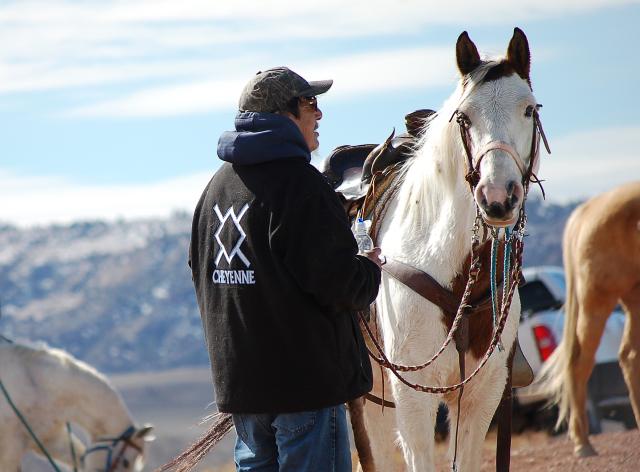
This year’s commemoration reflected both remembrance and resilience. Northern Cheyenne horseback riders, joined by Lakota riders from South Dakota, made a powerful entrance accompanied by singers in a drumming circle whose voices echoed across the landscape. Many participants described the moment as a blend of mourning, pride, and cultural continuity—honoring ancestors while reaffirming identity.
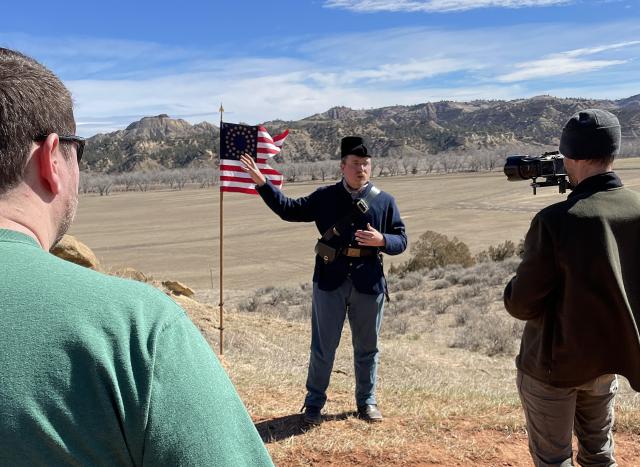
Adding historical depth to the gathering, National Park Service employee Jaeger Held offered a presentation on the battle and its aftermath. Dressed in the uniform of a period cavalry trooper, Held walked attendees through the events of March 1876, the decisions made by military leadership, and the lasting implications of the encounter. His portrayal humanized participants on both sides and gave insight into the perspectives and impacts to those involved.
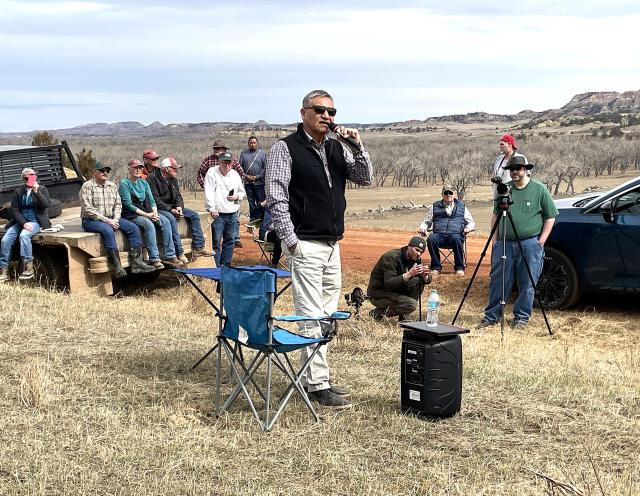
Keynote speaker Conrad Fisher, a respected Northern Cheyenne tribal historian, delivered remarks in both Northern Cheyenne and English. His speech emphasized the importance of remembering not only the battle itself, but the stories, voices, and lived experiences of the people who endured its consequences. Many attendees described his dual-language presentation as one of the most moving elements of the day—an affirmation of cultural survival and a bridge between past and present.
Today, the landscape where the St. Patrick’s Day fight unfolded is a patchwork of Bureau of Land Management (BLM) lands and private property. Though quiet now, the hills still hold the memory of the events that occurred there a century and a half ago. The commemoration served as a reminder that history lives not only in books and archives, but on the land itself and in the communities who continue to tell its stories.
Attachments
Related Stories
- From Open Rangeland to Historic Battlefields
- National Public Lands Day Volunteers Revitalize Dean S. Reservoir in Montana
- Nails and Tires Don’t Mix
- Pipestone Roars to Life as Community Comes Together for National Public Lands Day
- Healing Hooves: How a Once‑Wild Burro is Bringing Joy Across Pennsylvania and Competing Nationally
Office
111 Garryowen Road
Miles City, MT 59301
United States