


Volunteer Profile: Equestrian group carves a niche in the Utah back country
The demand for outdoor recreation on public lands managed by the Bureau of Land Management has increased significantly in recent years. This demand grew during the pandemic, as more people reconnected with nature and as growing populations in the West began looking for more recreational opportunities
As more people headed outdoors, conflicts also increased. Hikers, mountain bikers, off-highway vehicle users, and equestrians did not always get along on the same trail.
One group of trail users in central Utah saw the problem and decided to do something about it.
The San Rafael Back Country Horsemen made it their mission to create and protect opportunities for everyone who visits public lands to enjoy the outdoors, especially those on horseback.
The chapter was honored recently with the Bureau of Land Management’s Outstanding Volunteer Group Award for their work to preserve this old-fashioned, quiet, and equine-powered form of recreation. Notably, they built a campground suitable for horses and riders. The campground was the first of its kind in the area on BLM-managed public lands in Utah.
They also constructed and maintained trails and trailheads, as well as improved trail signage. This was all done in addition to other tasks they took on to preserve the natural and cultural integrity of the area.
“Our group has done varying things out there to ensure public land remains open for stock recreation. That's the primary goal for Back Country Horsemen,” said Don Bennett, the immediate past president of the group. “But in doing that, we have worked with many other users, including OHV, mountain bike, and hiking groups.”
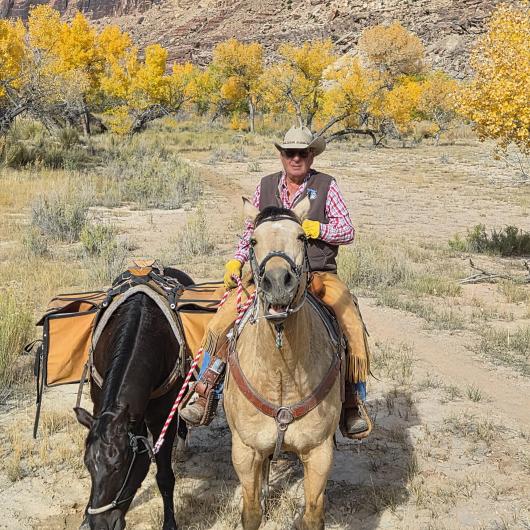
The fact that they work with other user groups, not just equestrians, is what makes them so successful and why they were recognized by the Bureau.
“After the need is determined with the BLM, we can apply for grants, and we have the expertise within the chapter to do the work,” Bennett said.
An added advantage are the contacts they’ve built to complete the work, which include close working relationships with the U.S. Department of Agriculture’s Forest Service, the BLM, and Emery County.
“It makes the volunteer work easier when you can work with the agency,” Bennett said. “When a project is underway, each of those entities have sent equipment in to help the Back Country Horsemen, if they have a crew in the area.”
The group’s proactive posture is what led to the chapter’s establishment in 2006. A few horsemen recognized that assisting with stewardship and trail maintenance in Carbon and Emery counties were the best ways to preserve access for equestrian recreation.
Wayne Ludington, a founding member of the chapter, noticed a need for more equestrian use when he moved to central Utah. He said he’d been to other states where more was being done and wanted to take initiative to support those opportunities locally.
He and Rod Player started the chapter and did just that. The chapter now averages about 23 members, who enjoy the camaraderie of weekend rides. Looking back, they cannot overstate the appeal of riding in the San Rafael Swell Recreation Area.
“It’s very beautiful, it’s high desert … with several unique features,” Player said. “The cool thing is you can ride horses year-round and not have to go very far. The varied geology and vegetation make some areas cool in the summer and others more temperate in the winter.”
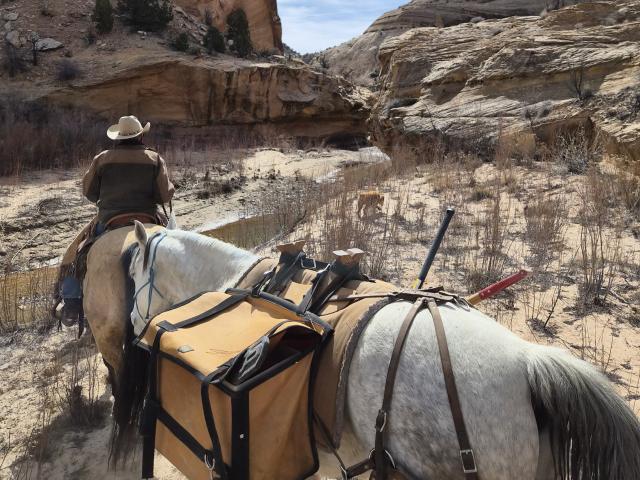
What makes the area unique is the large number of acres managed for wilderness, which means no mechanical uses are allowed. There are 427,000 acres of wilderness in the San Rafael Swell and 217,000 acres bordering the wilderness in the San Rafael Swell Recreation Area. Since all the work in the area must be done without mechanized tools, the appeal of using horses to bring the materials in and out is beneficial.
“It’s not uncommon for the federal agencies to come to us for help,” Luddington said. “There might be a tree down in some area or rocks on a trail. They recognize we have the people and the means to take care of it.”
In honoring the San Rafael Back Country Horsemen, the BLM stated that the group goes beyond its own equestrian interests, volunteering for OHV projects, supporting day-use areas for hikers, and consistently showing up when asked.
With volunteerism as a primary part of its mission, the National Back Country Horsemen track the amount of work by its chapters.
“Our chapter contributed over $73,000 in time and then a little bit of money last year in volunteer work for the two agencies,” Luddington said.
The BLM salutes partners like the Back Country Horsemen, who are creating greater public access for not only their members, but all who visit public lands, through acts of service, which is the true spirit of volunteerism.
As America celebrates its 250th anniversary and the Bureau of Land Management commemorates its 80th, we also want to celebrate the individuals, teams, and groups who help make our public lands great. Please visit the BLM volunteer page to learn how you can get involved.
Related Stories
- One Mile Closer
- Celebrating National Public Lands Day across the High Desert District in Wyoming
- BLM National Public Lands Day tradition continues in Roswell, New Mexico
- Pipestone Roars to Life as Community Comes Together for National Public Lands Day
- Celebrate National Public Lands Day with BLM Arizona