


Legacy on the land: BLM Firefighter James Will Bennett's homesteading heritage in New Mexico
When James Will Bennett steps onto public lands, he’s walking in the footsteps of generations before him, traced along the rugged terrain of the Sacramento Mountains, across decades of ranching tradition, and into his current role as an Assistant Engine Captain with the Bureau of Land Management's (BLM) Carlsbad Field Office in New Mexico.
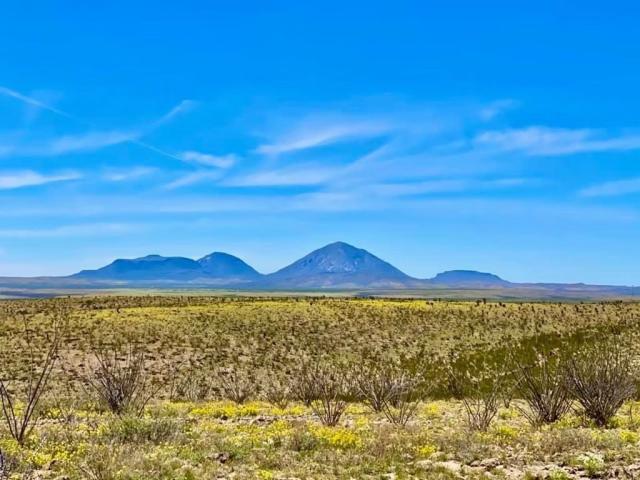
James, who goes by his middle name, Will, is a fourth-generation steward of a family ranch that dates back to the 1880s. His great-great-great-great-grandfather moved west from Limestone County, Texas, as part of a wagon train seeking new opportunities after the Civil War. They settled near what is now Weed, New Mexico and began a modest ranching life on the edge of the Chihuahuan Desert.
“It’s been a part of the Bennett family for a while,” said Will. “It’s just been part of all of our lives.”
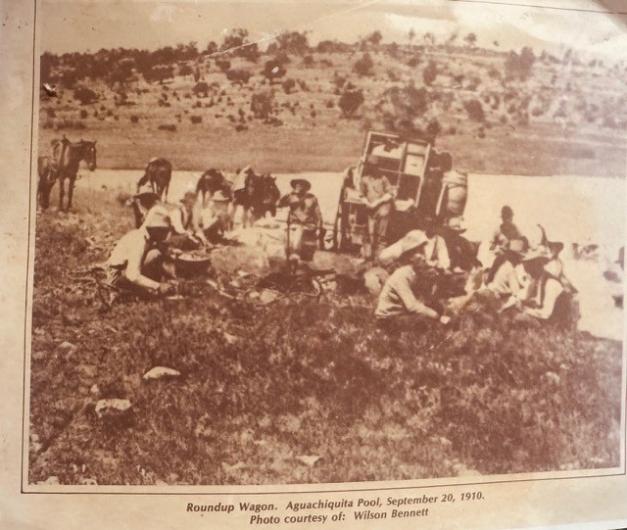
The ranch, still in the family today, holds more than just cattle. It holds stories etched into rocks by Buffalo Soldiers and early settlers, preserved in old photographs, and passed down through generations. Will’s great-great-grandfather once ran one of the largest mercantile stores in the area, and the family still owns a Model T frame, one of the first in Otero County. They also maintain heirlooms like a wood-burning stove and hand-built furniture that are still in use today.
“We still have the original house from the 1920s,” said Will. “Not a lot of small heirlooms, but some big, prominent ones. It’s neat to see that part of history still standing.”
The Bennett family continues to graze cattle on BLM-permitted lands, a tradition that has helped shape Will’s understanding of public land stewardship from a young age.
“They always say ‘the land of many uses,’ and that’s kind of true,” he said. “We use it for grazing, hunting, hiking; it’s just neat to have a piece of that and be able to use it.”
After serving in the Marine Corps, Will was drawn to wildland fire as a way to continue serving his community while staying connected to the land. Firefighting allows him to explore public lands across the country and deepen his appreciation for stewardship.
“Every time I go on a fire, I like to look up the history of the area,” he said. “It’s neat learning how multifaceted and diverse some of these places are, and how much of that history is forgotten.”
Will’s sense of responsibility to his family’s legacy is clear. He hopes to pass down not just the land, but the values of stewardship and resilience that have defined his family’s story.
“There’s more to it than just financial gain,” he said. “It’s an investment in history, in family, and in the land. I hope future generations grow that same appreciation.”
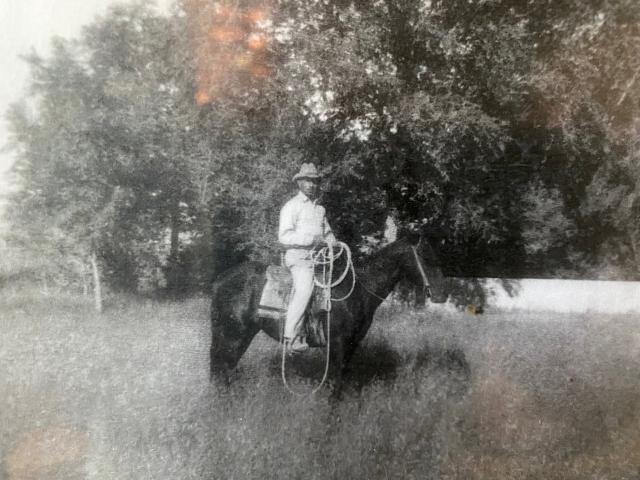
A chance discovery at a local book sale led Will to a forgotten piece of his family’s past: a two-volume history of Otero County families, co-authored by his great-great-grandmother. That find, along with photo albums, handmade furniture, and stories passed down through generations, continues to inspire him.
“Public lands are one of our biggest treasures,” said Will. “They’re not just ours to enjoy, they’re our children’s, and our children’s children. We need to protect them.”
Related Stories
- One day, one goal: caring for El Malpais National Conservation Area
- Celebrating 30 Years of California Condor Recovery at Vermilion Cliffs National Monument
- BLM National Public Lands Day tradition continues in Roswell, New Mexico
- New Website for the General Lands Office Brings Increased Access to Land Records
- Handies Peak Brings People Together on Colorado’s Public Lands for Summit 2026