


New year, new beginnings for dozens of wild horses and burros in Arizona
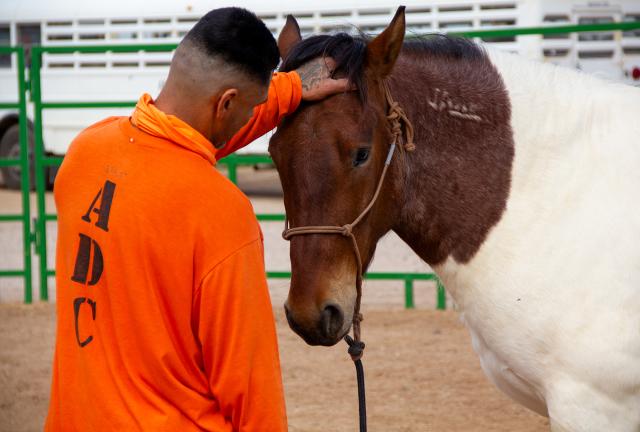
January brought new beginnings for many wild horses and burros at the Florence Wild Horse and Burro Training and Off‑Range Corral – and saved taxpayers hundreds of thousands of dollars!
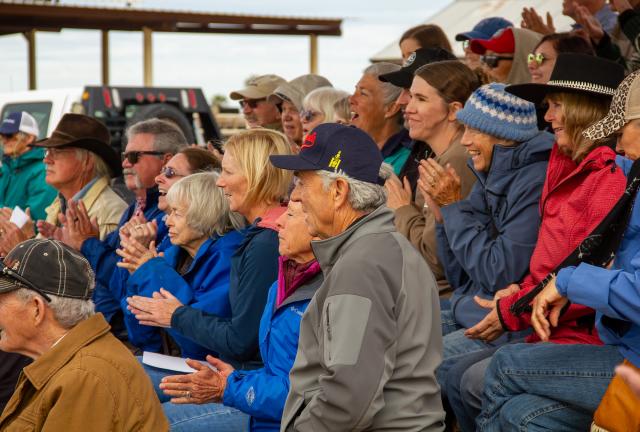
The Bureau of Land Management (BLM) Arizona, in partnership with Arizona Correctional Industries (ACI) and the Arizona Department of Corrections, Rehabilitation and Reentry, held a series of well attended Wild Horse and Burro Adoption and Sale events over three Fridays in January. These events not only placed dozens of animals into good homes but also show cased the power of effective partnerships. Plus, a record number of people attended these events, underscoring growing public interest in and the shared commitment to caring for these iconic animals.
“Seeing so many people welcome these animals into their lives was inspiring,” said John Hall, BLM Arizona’s state Wild Horse and Burro program lead. “Every adoption and sale helps manage healthy herds on public lands, preserves the legacy of America’s wild horses and burros, strengthens our partnerships, and saves taxpayer dollars.”
Event attendees found themselves a short drive from Phoenix with the opportunity to bring home a wild horse or burro the same day. Each event featured a diverse group of animals, and visitors received tips and insights from BLM staff, past adopters, and trainers from ACI’s Wild Horse Inmate Program (WHIP).
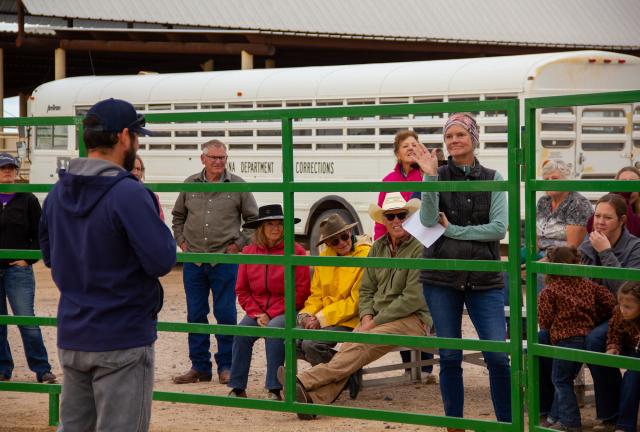
Most animals available at these events were untrained, but the BLM also offered trained animals on January 23. At the January 23 event, a training demonstration showcased inmate-led gentling under WHIP. Dozens of people gathered around to watch these animals’ strength, endurance, and intelligence. Some people went on to bid in the following auction or opted for an untrained animal.
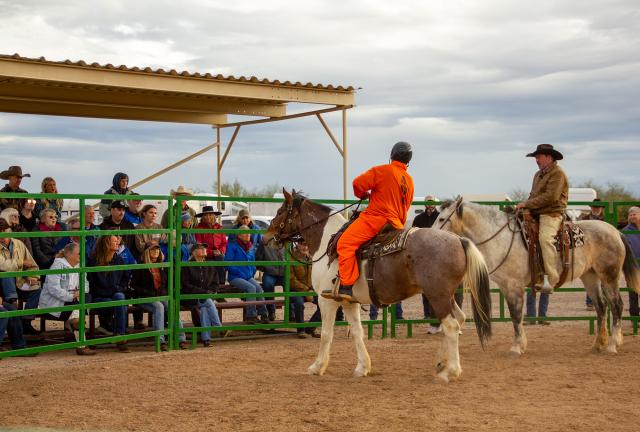
Inmates, under the guidance of professional trainers, helped gentle and train wild horses and burros to enhance their adoptability. The inmates’ gentling doesn’t just teach the animals to lead, load, and accept handling. It builds trust, confidence, and a foundation for future training. Animals that at one time may have never even seen a human have learned to accept halters and respond calmly to cues, all thanks to consistent gentling.
From public lands to placing them in private care, the BLM and its partners care deeply about the well-being of wild horses and burros. The care provided before and during the events sets attendees considering whether to bring a wild horse or burro home up for success.
Every animal available at these events was examined by a veterinarian, vaccinated, de‑wormed, and tested negative for equine infectious anemia (Coggins), creating a baseline of health before animals stepped into private care. Another partnership as part of the Florence Wild Horse and Burro Training and Off‑Range Corral and ACI’s WHIP includes the University of Arizona (UA) College of Veterinary Medicine for medical care, now a permanent part of students’ hands-on education. Aside from providing top-notch health services for the animals at the facility, the UA program also encourages more students to pursue careers in rural and large-animal medicine, which is great for communities adjacent to BLM-managed public lands.
This advanced preparation of the animals was paired with on-site support during the events in January. The events were designed to make the adoption and sale process easy to understand. The online and in-person application was straightforward but thorough, with questions answered by the experienced Wild Horse and Burro program team. Staff also loaded animals into trailers at departure and provided guidance, health records, and follow‑up contacts. Overall, the events equipped qualified people to care for their animals with practical knowledge, clear standards, and a pathway to success.
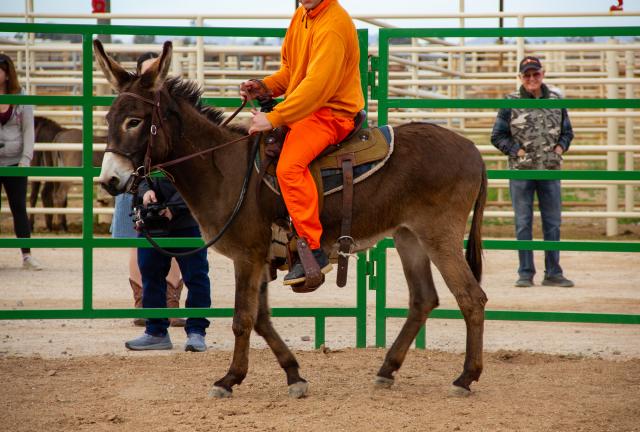
Fifty-one wild horses and burros left the Florence facility, beginning journeys that will last a lifetime. By the end of each day, these trailers rolled out toward expansive ranches, small farms, suburban pastures, and beyond.
Some of these animals leaving Florence also have the opportunity to be placed through a public-private partnership with Forever Branded. Forever Branded supports a nationwide network of training and adoption programs for wild horses and burros, including a Branded Adoption Center in Queen Creek.
Once in private care, wild horses and burros can be trained into excellent show, work, or companion animals. This is a long-term commitment because caring for a wild horse or burro takes a lot of dedication, time, space, and resources. But with preparation and patience, many people find it immensely rewarding to train these animals for trail riding, ranch work, national competitions, and more.
“These events do more than just placement,” Hall said. “They also honor the spirit of the West and start lifelong bonds between people and these animals.”
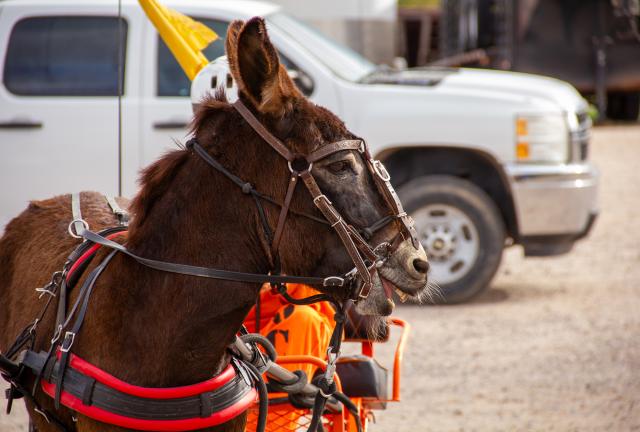
These events were part of the BLM’s mission under the Wild Free-Roaming Horses and Burros Act of 1971, which entrusts the agency with managing and protecting wild horses and burros on public lands. Because these animals are federally protected and lack natural predators, the BLM monitors herd size, land health, vegetation, and water availability to maintain balance. When populations grow beyond what the land can support, the BLM gathers excess animals and works to place them in qualified private care through adoptions and sales.
Every dollar from these events goes directly back into the program, helping place even more wild horses and burros into good homes. For every animal placed into private care, taxpayers save on average approximately $15,000 that would otherwise be spent on lifetime care for the animal in BLM facilities. Because of these January events in Florence, American taxpayers saved approximately $765,000 in average lifetime care costs if the animals had remained with the BLM.
By reducing long-term holding costs and promoting humane private care, the Wild Horse and Burro program delivers benefits for animals, the public, and partners alike, not just the BLM.
Find an event near you
Don’t miss the next opportunity to give a good home to your very own wild horse or burro! As spring approaches, keep an eye out for more events at the Florence Wild Horse and Burro Training and Off‑Range Corral and across Arizona.
The BLM also keeps a national schedule of adoption and sale events, which is updated throughout the year, so you track upcoming dates by region. In addition to in‑person events, the BLM’s Online Corral hosts periodic adoption and sale events via competitive bid, allowing people to participate from home and then pick up their animals at designated locations across the United States.
Find an event near you! This is your chance to care for a part of America’s heritage. Your future wild horse or burro, paired with a lifetime of adventure, could be right around the corner.
Related Content
Related Stories
- From Open Rangeland to Historic Battlefields
- Using Beavers as Partners in Riparian Habitat Restoration in Las Cienegas National Conservation Area
- Celebrating 30 Years of California Condor Recovery at Vermilion Cliffs National Monument
- Signs of Collaboration: Protecting Tortoises on Arizona Public Lands
- BLM Arizona and Arizona Association of Conservation Districts: A Model Partnership for Landscape Conservation
Office
One North Central Ave., Suite 800
Phoenix, AZ 85004-4427
United States