


Wild horse and burro adoptions and sales climbed in Fiscal Year 2025, reducing long-term care costs
The summer sun hung low but heavy over Virginia’s Meadow Event Park in Doswell, casting a golden glow across the historic grounds where Secretariat once trained. On this warm, humid day, pens were alive with movement. Wild horses and burros, freshly arrived from facilities back West, munched on their breakfast and flicked their ears as staff and volunteers prepared for one of the most anticipated adoption events of the year in the eastern United States.
For two days, Doswell became a gathering place for horse lovers, trainers, and families from across Virginia and neighboring states. Some came to watch demonstrations, others to learn about America’s wild herds. Many came with a dream: to take home a piece of the West.
Among them was Will, a young boy who had already fallen in love with mustangs. He arrived later in the day, eyes bright with excitement, hoping to adopt his second horse (with help from his mom!). For Will and others like him, these events are more than transactions: they’re moments of connection, where the untamed spirit of the West meets the open hearts of adopters.
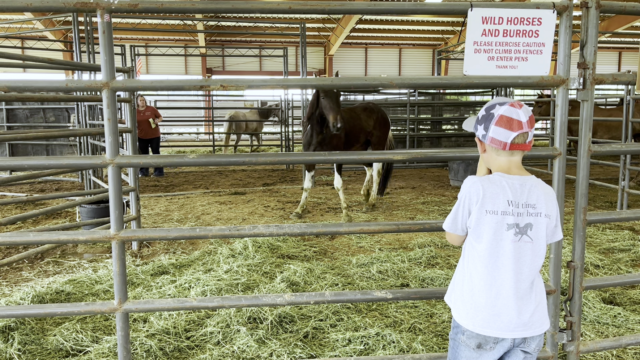
Wild horses and burros are iconic symbols of freedom, but on the rangelands, their numbers can grow quickly. With few natural predators and limited food and water, overpopulation threatens rangeland health, wildlife habitats, and even the animals themselves. That’s why adoption and sale events are so critical - they give these animals new homes to help protect the lands so important to the survival of their herds.
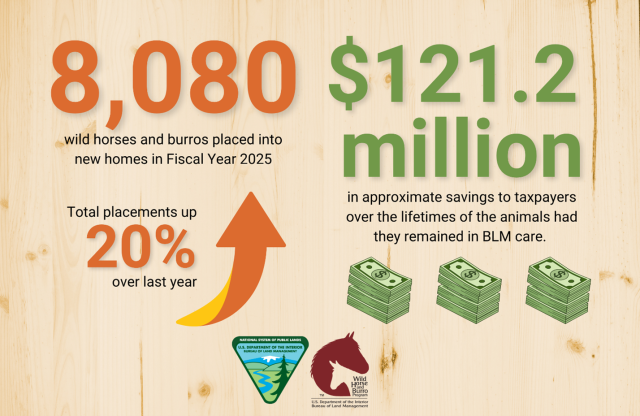
Last year, the BLM and its partners hosted more than a hundred adoption and sale events across the country, along with online opportunities through its Online Corral platform. Thanks to these efforts, more than 8,000 wild horses and burros found new homes in Fiscal Year 2025, a 20% increase from the previous year and the most since 2021.
Every animal placed into private care not only provides a new home for a horse or burro, but it also benefits the American taxpayer and the health of our public lands. By finding homes for these animals, the BLM saved an estimated $121.2 million in lifetime care costs that would otherwise be spent housing them in government facilities.
“Every wild horse or burro placed into a good home represents a win for the animals, the American taxpayer, and our public lands,” said Annie Ebbers, acting division chief of the BLM’s National Wild Horse and Burro Program. “Thanks to the dedication of our partners, the hard work of our staff, and the public’s growing interest in these iconic animals, we’re not only saving millions in taxpayer dollars, we’re also helping ensure our wild herds have the resources they need to thrive.”
The BLM’s goal is to place every animal into a safe and good home. Adopters must provide at least one year of good care before they receive title to the animal. During that time, the BLM may conduct compliance checks to ensure the horse or burro is healthy and living in a suitable environment. For sales, ownership transfers immediately upon signing a Bill of Sale, but buyers must first certify their intent to provide proper care before they’re approved. These safeguards help ensure animals go to good homes.
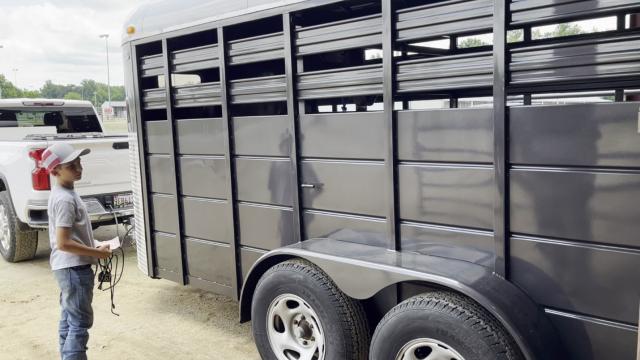
At the end of the Doswell event, Will grinned ear to ear as he watched his new prospect loaded into the trailer. Multiply that moment by thousands, and you have the story of 8,080 wild horses and burros finding homes last year bringing partnership, loyalty, and hope for families all across the country.
The work is far from finished. Today, more than 63,000 wild horses and burros remain in BLM facilities, which costs taxpayers over $100 million annually to feed and care for. Adoptions and sales are critical to reducing that number and ensuring healthier herds on the range. If you’ve ever considered adopting or purchasing, now is the time. Every adoption or purchase makes a difference for the animal, for the land, and for the future of America’s wild horses and burros.
Related Stories
- BLM Showcases Local Recreation Treasures Ahead of National Hunting and Fishing Day
- Healing Hooves: How a Once‑Wild Burro is Bringing Joy Across Pennsylvania and Competing Nationally
- Gallant: A BLM mustang with a bright future
- Bringing Wild Horses and Burros Home: Doswell’s Adoption Event Inspires Community
- Meet the inmate-trained wild burros available in Arizona on August 14