Harrison Creek Watershed
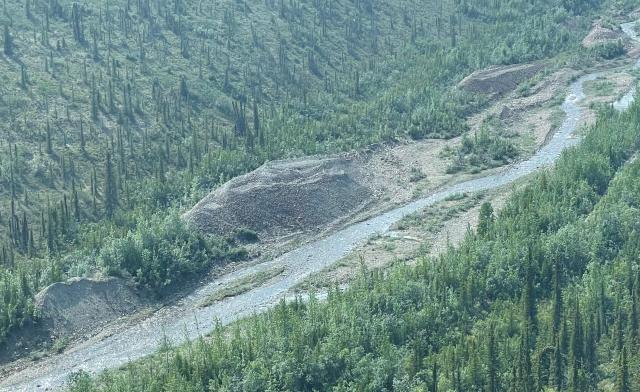
Harrison Creek is a major tributary to the Birch Creek National Wild and Scenic River and is partially located in the Steese National Conservation Area. It was extensively placer-mined for gold starting in the late 1890s and contains a mixture of existing (recorded) and closed federal mining claims.
In 2001, BLM initiated restoration efforts in the Harrison Creek watershed but only completed restoration work on 1.5 miles of stream due to limited funding. The 2016 Steese Resource Management Plan identified Harrison Creek as a High Priority Restoration Watershed noting that biological and physical processes and functions do not reflect natural conditions because of past and long-term human-caused land disturbances.
The Harrison Creek project continues restoration of approximately 10-miles of placer-mined stream channel on abandoned mine lands within the watershed. Starting in 2024, BLM initiated a multi-year project to assess conditions and begin development of a restoration treatment strategy.