


2026 Sulphur Wild Horse Gather
Purpose of Gather:
The BLM is conducting gather operations to reduce overpopulation in support of healthy wild horses on healthy public rangelands. With few natural predators, wild horse herds increase 15-20 percent annually, doubling in size every 4-5 years. Without management, herds can quickly outgrow what the available forage and water on the land can support. Constant overpopulation can degrade resources critical for wild horses and other wildlife, and can lead to starvation and thirst for the wild horses themselves. Drought can further amplify the impacts of overpopulation.
Details of Gather:
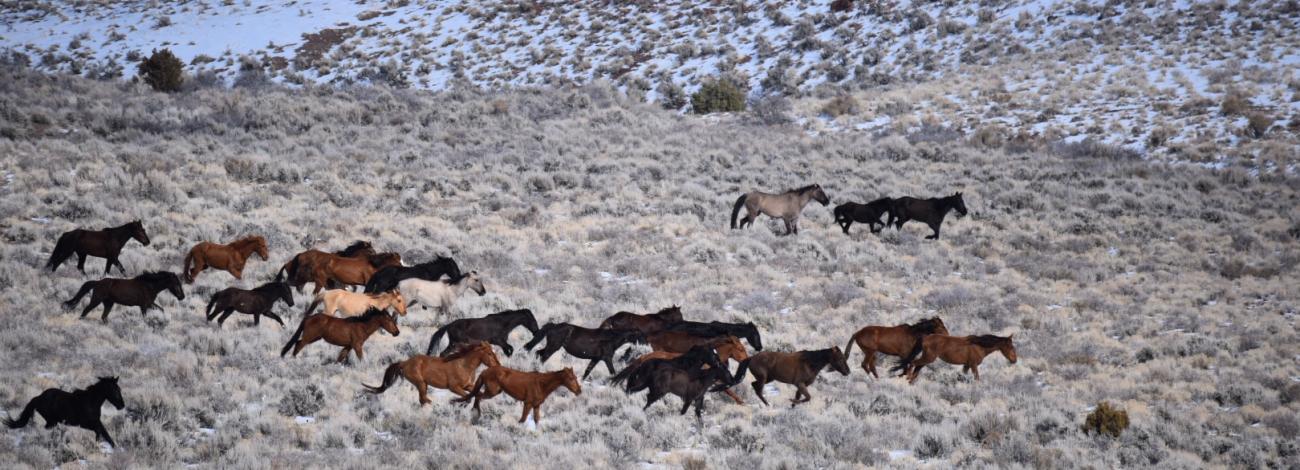
The BLM plans to gather and remove approximately 300 excess wild horses from the Sulphur Herd Management Area. The appropriate management level for the Sulphur herd is 165-250 wild horses based on the available forage, water and other authorized uses, such as wildlife habitat and livestock grazing.
Under BLM supervision, contractors will conduct gather operations with assistance of one or more helicopters that will guide animals on the range into temporary gather corrals. The careful use of helicopters allows the BLM to safely and efficiently move wild horses across large, rugged landscapes while reducing stress and minimizing risks associated with prolonged pursuit on horseback or land-based vehicles.
The safety and welfare of wild horses during gather operations is a top priority for the BLM. All operations will be conducted in full compliance with the BLM’s Comprehensive Animal Welfare Program.
Public Observation:
The BLM will temporarily close certain public lands around gather locations to public access in accordance with 43 CFR 8364.1. The closures are necessary to protect the wild horses, as well as public health and safety. Read the closure notice.
For information on public observation opportunities, call 801-539-4050.
For questions about public or media observation, contact BLM Utah External Affairs.
Adoption Information:
All excess wild horses identified for removal will be transported to the Sutherland Off-Range Contract Wild Horse Facility near Delta, Utah, where they will be checked by a veterinarian and readied for the BLM’s wild horse Adoption and Sale Program. Those that are not placed into a new home will be cared for in off-range pastures, where they live off the rest of their lives on grass pastures. Learn more about the BLM’s Adoption and Sale programs.
Background:
The wild horses in western Utah include a well‑known herd with long-established roots in the area. Some individuals retain characteristics associated with the Colonial Spanish Horse, historically linked to early Spanish explorers. Over time, the Sulphur Herd has also mixed with escaped ranch stock, resulting in a variety of traits. These may include dun and grulla coloring, distinct ear shapes, dorsal striping, bi‑colored manes and tails, striped legs, and occasional facial markings. Some horses may have a shorter back due to fewer lumbar vertebrae. Only a limited number of other wild horse herds in the United States show similar features.
The HMA contains 230,157 acres of BLM lands and 35,554 acres of Federal, State-, and privately-owned land for a total of 265,711 acres. It’s located in western Iron, Beaver, and Millard counties, approximately 50 miles west of Minersville, Utah in the Indian Peak and Mountain Home Mountain Ranges). The elevation ranges from 9,790 feet on top of Indian Peak to 6,000 feet in the valley floors.
The Sulphur HMA supports multiple vegetation types including Aspen, Mountain Fir, Spruce-Fur, Mountain Shrub, Pinyon-Juniper (PJ), sagebrush, grasslands, and salt desert shrub. The PJ woodland type dominates the HMA and is very dense with minimal understory forage. Open areas outside the PJ canopy are dominated by big sagebrush with Indian ricegrass, wheatgrass, bluegrass, and squirreltail grass as the primary forage species.
Available water within the HMA is the limiting factor. Water is limited to isolated springs and man-made developments that supply water to permitted livestock, wildlife, and wild horses. Several springs primarily used by wild horses were dry during the summers of 2000-2004, 2007-2008, 2012-2015 and 2026, forcing animals onto winter ranges and into areas outside of the HMA traditionally unoccupied by horses. Most water sources produced less than average levels for the summer, forcing wild horses to use winter ranges throughout the summer.
Big game species that occur in the Sulphur HMA include mule deer, Rocky Mountain elk and pronghorn. All three species are year-long residents. Competition for forage between big game species and wild horses is greatest during the spring and summer months when mule deer, elk and pronghorn are feeding primarily on grasses and forbs. Additionally, forb consumption is crucial during the early spring months for does to maintain a healthy body condition while meeting the nutrient requirements of nursing fawns. Competition is reduced in fall and winter when mule deer and pronghorn shift their diets to browse (i.e. bitterbrush, sagebrush) species. Typically, elk move to wintering areas throughout the Pine and Hamlin Valleys. During periods of drought competition between wildlife and wild horses increase dramatically when less forage is available.
- Daily Gather Reports
Saturday, October 17, 2026
Summary: Clear skies, 58-60 degrees
Animals Gathered: 4 (3 stallions, 1 mare)
Animals Shipped: 0
Animals Released: 0Deaths: 0
- Sudden / Acute: 0
- Pre-existing / Chronic: 0Thursday, October 15, 2026
Summary: Overcast morning and sunny afternoon
Animals Gathered: 2 (2 stallions)
Animals Shipped: 27 (6 stallions, 13 mares, and 8 foals)
Animals Released: 0Friday, October 16, 2026
Summary: Overcast morning and sunny/windy afternoon
Animals Gathered: 25 (5 stallions, 14 mares, 6 foals)
Animals Shipped: 0
Animals Released: 0Deaths: 0
- Sudden / Acute: 0
- Pre-existing / Chronic: 0Thursday, October 15, 2026
Summary: Overcast morning and sunny afternoon
Animals Gathered: 2 (2 stallions)
Animals Shipped: 27 (6 stallions, 13 mares, and 8 foals)
Animals Released: 0Deaths: 0
- Sudden / Acute: 0
- Pre-existing / Chronic: 0Wednesday, October 14, 2026
Summary: Overcast morning and sunny afternoon; 50°-60°
Animals Gathered: 32 (6 stallions, 18 mares, and 8 foals)
Animals Shipped: 0
Animals Released: 0Deaths: 0
- Sudden / Acute: 0
- Pre-existing / Chronic: 0Tuesday, October 13, 2026
Summary: No gather operations due to weather conditions
Animals Gathered: 0
Animals Shipped: 0
Animals Released: 0Deaths: 0
- Sudden / Acute: 0
- Pre-existing / Chronic: 0Monday, October 12, 2026
Summary: No gather operations due to weather conditions
Animals Gathered: 0
Animals Shipped: 0
Animals Released: 0Deaths: 0
- Sudden / Acute: 0
- Pre-existing / Chronic: 0Sunday, October 11, 2026
Summary: No gather operations due to weather conditions
Animals Gathered: 0
Animals Shipped: 0
Animals Released: 0Deaths: 0
- Sudden / Acute: 0
- Pre-existing / Chronic: 0Saturday, October 10, 2026
Summary: No animals gathered due to weather conditions
Animals Gathered: 0
Animals Shipped: 29 (5 stallions, 17 mares, and 7 foals)
Animals Released: 0Deaths: 0
- Sudden / Acute: 0
- Pre-existing / Chronic: 0Friday, October 9, 2026
Summary: Sunny/partly cloudy; 60°-81°
Animals Gathered: 29 (5 stallions, 17 mares, and 7 foals)
Animals Shipped: 46 (14 stallions, 21 mares, and 11 foals)
Animals Released: 0Deaths: 0
- Sudden / Acute: 0
- Pre-existing / Chronic: 0Thursday, October 8, 2026
Summary: Sunny; 56°-83°
Animals Gathered: 28 (6 stallions, 14 mares, and 8 foals)
Animals Shipped: 0
Animals Released: 0Deaths: 0
- Sudden / Acute: 0
- Pre-existing / Chronic: 0Wednesday, October 7, 2026
Summary: Sunny; 80°-85
Animals Gathered: 13 (3 stallions, 7 mares, and 3 foals)
Animals Shipped: 37 (0 stallions, 29 mares, and 8 foals)
Animals Released: 0Deaths: 0
- Sudden / Acute: 0
- Pre-existing / Chronic: 0Tuesday, October 6, 2026
Summary: Overcast, partly cloudy; 66°-75°
Animals Gathered: 28 (5 stallions, 15 mares, and 8 foals)
Animals Shipped: 39 (27 stallions, 7 mares, and 5 foals)
Animals Released: 0Deaths: 0
- Sudden / Acute: 0
- Pre-existing / Chronic: 0Monday, October 5, 2026
Summary: Sunny and warm; 66°-80°
Animals Gathered: 25 (10 stallions, 12 mares, and 3 foals)
Animals Shipped: 0
Animals Released: 0Deaths: 0
- Sudden / Acute: 0
- Pre-existing / Chronic: 0Sunday, October 4, 2026
Summary: Sunny with blue skies; 67°-79°
Animals Gathered: 17 (5 stallions, 9 mares, and 3 foals)
Animals Shipped: 42 (13 stallions, 22 mares, and 7 foals)
Animals Released: 0Deaths: 2
- Sudden / Acute: 1
- Pre-existing / Chronic: 1- One 9-year-old grulla mare with a broken right front leg.
- One 17-year-old brown mare with a lame front right leg; swollen knee with a hopeless prognosis for recovery.
Saturday, October 3, 2026
Summary: Sunny and partly cloudy; 63°-84°
Animals Gathered: 33 (15 stallions, 14 mares, and 4 foals)
Animals Shipped: 0
Animals Released: 0Deaths: 0
- Sudden / Acute: 0
- Pre-existing / Chronic: 0Friday, October 2, 2026
Summary: Sunny and partly cloudy; 82°-91°
Animals Gathered: 23 (10 stallions, 10 mares, and 3 foals)
Animals Shipped: 0
Animals Released: 0Deaths: 0
- Sudden / Acute: 0
- Pre-existing / Chronic: 0
Gather Status
As of October 17, 2026:
Animals Gathered: 259 (75 stallions, 131 mares, and 53 foals)
Animals Shipped: 257 (75 stallions, 130 mares, and 52 foals)
Animals Released: 0
Deaths: 2
-Sudden / Acute: 1
-Pre-existing / Chronic: 1
Scroll to the bottom of this gather page for detailed “Daily Gather Reports"