


BLM Delivers on Call for More Wild Horse Fertility Control With $30 Million USDA Investment and National Roundtable
Organization:
Media Contact:
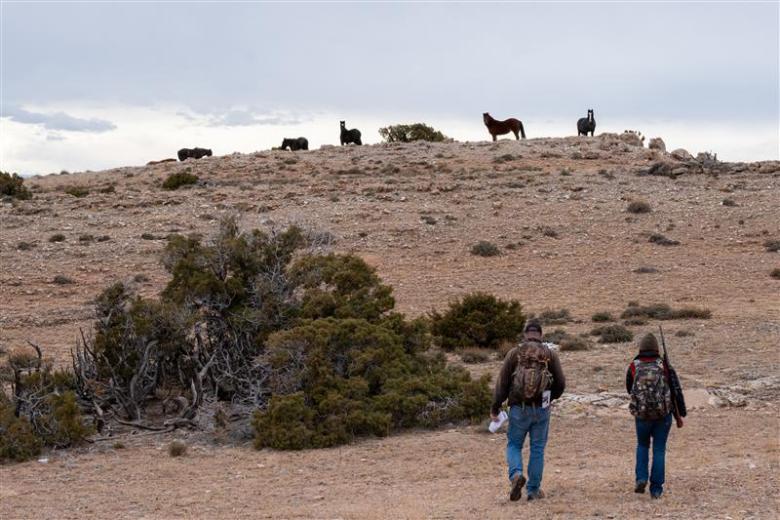
WASHINGTON – The American people have asked for more fertility control in wild horse and burro management, and the Department of the Interior is prepared to deliver. Today, at the National Wild Horse and Burro Roundtable, the Bureau of Land Management announced a $30 million investment from the U.S. Department of Agriculture to expand and accelerate fertility control efforts nationwide.
“The passion shown by the American people for safeguarding the Spirit of the West continues to guide and energize this work,” said Secretary of the Interior Doug Burgum. “Their steadfast support has driven major action to ensure wild horses and burros remain a cherished part of our national heritage. This progress is also made possible through the strong commitment of the U.S. Department of Agriculture, whose partnership reinforces the shared responsibility of caring for these iconic landscapes and the animals that define them.”
Most herds grow by 15 to 20% every year, far faster than drought‑strained western rangelands can provide for sufficient forage and water. When herds grow beyond what the land can sustain, horses face real and immediate risks, including struggling to maintain weight and strength, starvation, dehydration, and long‑distance travel in search of food and water that can leave animals weak or injured. Removing wild horses and burros from the range is the safest way to get overpopulated wild horse and burro populations to a size that the range can support. Once herds are at sustainable levels, expanding fertility control will help stabilize herd growth, reduce the need for future gathers, and protect wild horses and burros from these conditions. The USDA investment will allow the BLM to increase field capacity, train and deploy more fertility control applicators, and expand vaccine delivery across remote herd areas.
Some advocates claim the BLM has “ignored cheap fertility control options for 20 years,” but that is not true. The BLM used 921 fertility control treatments in fiscal year 2025 and is actively expanding the tool. Fertility treatments alone cannot shrink an already overpopulated herd, and slowing growth requires treating about 75% of mares every single year, something not feasible across most of the vast, rugged western landscapes. Fertility control is most effective once gathers reduce herds to sustainable sizes. Gathers are still generally required to successfully treat horses with fertility control.
Today’s roundtable, held at the Main Interior Building, brought together diverse groups of stakeholders from across the country with a goal to deepen collective understanding of how the program’s statutory, policy, budgetary, and staffing responsibilities intersect, and to identify areas of shared interest that can strengthen humane, sustainable herd management.
Participants included representatives from Humane World for Animals, American Wild Horse Conservation, Return to Freedom, Beaver County, the Nevada Department of Wildlife and Intermountain West Joint Venture, the Wild Horse and Burro Working Group of the Association of Fish and Wildlife Agencies, and the U.S. Geological Survey.
Reducing long-term costs is another important benefit of expanded fertility control. Caring for tens of thousands of unadopted wild horses and burros in off‑range corrals and pastures is the largest expense in the program’s budget, and each animal that remains in holding represents a significant cost to taxpayers. By slowing herd growth, fewer animals will need to be removed from the range, which means fewer horses entering long‑term care and lower overall program costs. Every horse adopted or purchased by a responsible owner helps reduce this burden, saving an estimated $15,000 in lifetime care.
Members of the public can play an important role in supporting these efforts. Adoption or purchase of a wild horse or burro provides an animal with a safe, caring home and reduces the number of horses that require long-term holding. Sharing accurate information about humane management, participating in public comment opportunities, volunteering with fertility control partners, and reporting any activity that might put an animal at risk all help protect wild horses and burros and support sustainable herd sizes on the range.
The Wild Free‑Roaming Horses and Burros Act of 1971 charges the BLM with managing wild horses and burros on public lands. Federal law prohibits the commercial slaughter of these animals, and the BLM does not sell or send wild horses or burros to slaughter. The agency enforces adoption and sale requirements, strengthened the bill of sale language, and works closely with law enforcement whenever credible information suggests a violation may have occurred. This commitment to humane care is central to the BLM’s mission and guides every action we take to ensure wild horses and burros remain responsibly managed for generations to come.
The BLM manages about 245 million acres of public land located primarily in 12 western states, including Alaska, on behalf of the American people. The BLM also administers 700 million acres of sub-surface mineral estate throughout the nation. Our mission is to sustain the health, diversity, and productivity of America’s public lands for the use and enjoyment of present and future generations.