


BLM Utah Wild Horse Operations Help Prevent Starvation, and Stabilize Herd Health
SALT LAKE CITY–The Bureau of Land Management completed two operations in Utah recently to protect wild horses from deteriorating on-range conditions and ensure the long-term health and welfare of the Bible Springs Complex and Confusion herds near Milford and Delta. In total, the BLM rounded up 1,056 wild horses from vastly overpopulated rangelands where declining forage and water availability had already begun affecting the horses’ health.
“Managing healthy wild horse herds on healthy rangelands is central to the mission of the Bureau of Land Management,” said Acting BLM Utah State Director Christina Price. “These recent operations will help restore ecological balance on the landscape and ensure that the horses remaining on the range have access to the forage and water they need to survive.”
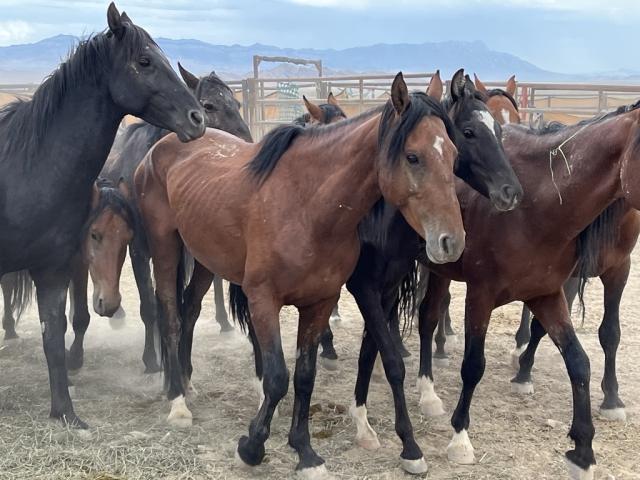
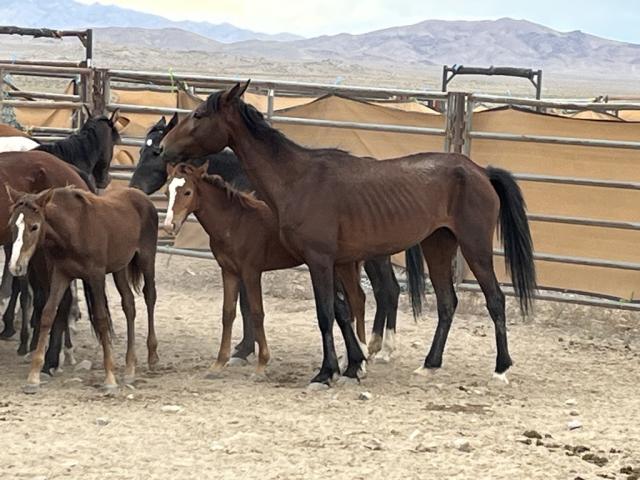
Many of the wild horses collected during these operations exhibited a poor body condition, a sign that the land can no longer support the number of these animals that are present there. Wild horse herds grow rapidly on public lands, doubling in size every four to five years. Without effective management, herd numbers can quickly exceed available food and water, leading to overgrazing, degraded vegetation, and declining range and horse health. Gathers consistent with the Wild Free-Roaming Horses and Burros Act of 1971, help restore balance on public lands and improve conditions for horses, wildlife, and other permitted uses.
In total, the BLM gathered 747 wild horses from the Bible Springs Complex, and 309 wild horses from the Confusion Herd Management Area and surrounding lands.
Trained gather personnel conducted operations in accordance with the Comprehensive Animal Welfare Program, which promotes safe and humane treatment of all animals.
All gathered horses were transported to the wild horse corral facilities in Axtell and Sutherland, where they will be checked by a veterinarian and prepared for the BLM’s wild horse and burro Adoption and Sale Program. The BLM routinely offers animals from these off‑range facilities for adoption at off‑site events and through the Online Corral, and also provides opportunities for the public to tour the facilities and learn more about the program.
The BLM’s Wild Horse and Burro Program is grounded in science, law, and humane‑care standards and adheres completely to the Wild Free-Roaming Horses and Burros Act and other federal laws. The BLM does not send wild horses or burros to slaughter, and no loophole exists that would legally allow people who adopt or buy wild horses to ever sell animals directly or to middlemen for slaughter.
The BLM manages about 245 million acres of public land located primarily in 12 western states, including Alaska, on behalf of the American people. The BLM also administers 700 million acres of sub-surface mineral estate throughout the nation. Our mission is to sustain the health, diversity, and productivity of America’s public lands for the use and enjoyment of present and future generations.