


Celebrating 30 Years of California Condor Recovery at Vermilion Cliffs National Monument
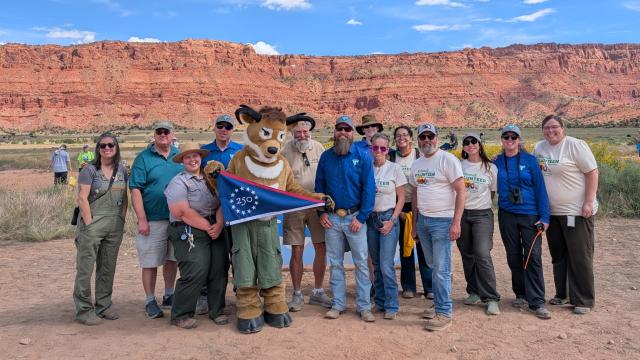
BLM Arizona marked a milestone on National Public Lands Day with the 30th anniversary California Condor Release at the Condor Viewing Site in Vermilion Cliffs National Monument in northern Arizona. As part of the DOI’s Freedom 250 initiative, hundreds of visitors, partners, volunteers, and agency staff gathered to witness four juvenile condors take flight into the wild. The event not only commemorates a yearly tradition but also highlights the enduring success of one of the nation’s largest and most collaborative wildlife recovery efforts.
30-year Recovery Partnership
With only 22 individuals remaining in the late 1980s, the California condor was on the brink of extinction. The California Condor Recovery Program emerged as an intensive multi-agency and partner effort to save the species, including BLM Arizona and Utah, The Peregrine Fund, Arizona Game and Fish Department, U.S. Fish and Wildlife Service, National Park Service, Utah Division of Wildlife Resources, and tribal nations.
Through captive breeding, habitat management, monitoring, and public outreach, condor numbers have steadily increased. Today, the population has grown to over 600 with 392 flying free across four release sites. But challenges remain.
Outreach, education, and partnerships remain essential to reducing threats and ensuring long-term success. “Collaboration is key,” said Bob Bate, BLM Arizona Vermilion Cliffs Monument Manager. “As land managers, we work closely with The Peregrine Fund to ensure conditions support condor recovery operations. Outreach continues to grow every year and that growth shows just how interested people are in these birds and in their public lands.”
A Day of Celebration
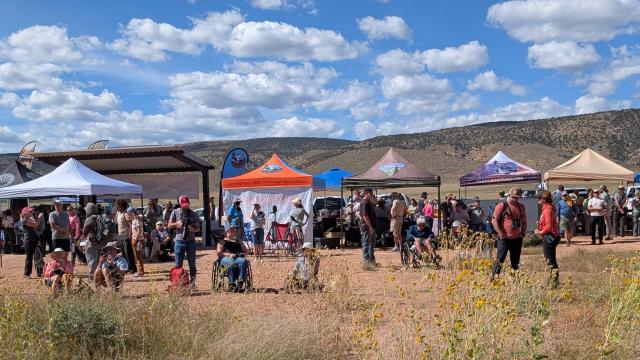
In the early hours of Saturday, Sept. 26, the BLM, The Peregrine Fund, and several federal and non-federal partners arrived on-site to set up educational tents, spotting scopes, activity and education stations, and technology for the livestream broadcast. By midmorning, hundreds of visitors—many of whom have come year after year—gathered to celebrate this year’s cohort of condors, bringing their binoculars, folding chairs, curiosity, and a passion for birding. As they waited for the pens to open, attendees were able to explore information booths, speak with condor biologists, and learn more about the complex breeding, monitoring, and tracking that support condor recovery. “When you become embroiled in condor recovery, it never leaves your blood,” said Tim Hauk, Peregrine Fund Program Director. “You are family for life, and you appreciate the birds and the people that make this happen.”
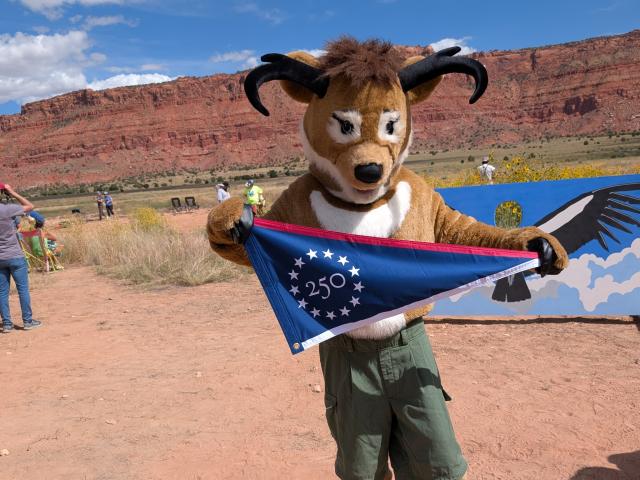
As an official BLM Freedom 250 event and in honor of the 30th anniversary of the Condor Release, this year’s festivities included a few extra features, such as the Great American Expedition, a traveling flag that visits public land sites across the nation to record stories of stewardship, heritage, and pride. Visitors were invited to take photos with the flag and share their own experiences at the event. Also, BLM’s own mascot, Seymour Antelope, was in attendance to greet guests, pose for photos, and add a little extra excitement to the day.
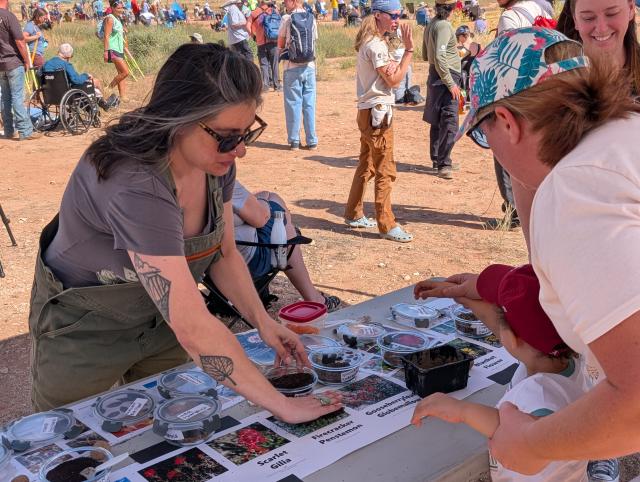
At the BLM booth, families enjoyed a hands-on seedball-making activity led by Christina Francois, BLM Arizona state plants and invasive lead, and Pam Blackmore, Arizona Strip District GIS specialist. Using native seeds, clay, soil, and water, participants created seedballs destined for restoration around the viewing site to help enhance native plant communities and reduce invasive species pressure. Kids especially loved the “get your hands dirty” experience, and parents appreciated the chance to learn how healthy plant communities support condor habitat.
The Flight of the Condors
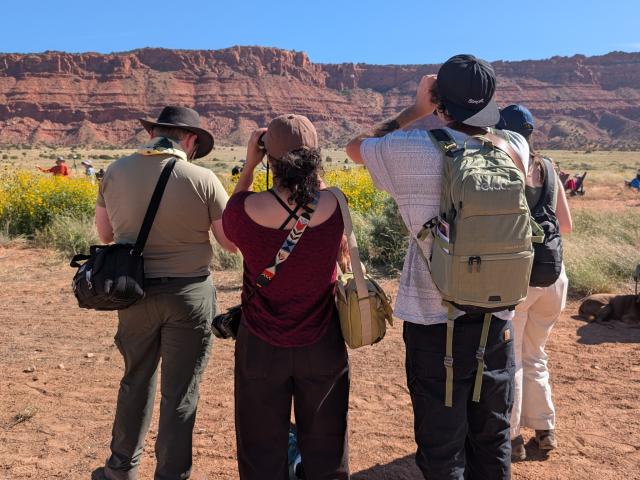
At 11 am, the crowd shifted their attention to the edge of the Vermilion Cliffs as the Peregrine Fund announced the opening of the release pens. With much applause, the attendees settled in for what many call the "Condor Waiting Game." Because the release is a "soft launch," the young condors decide on their own when to leave the pen. This year, all four condors took flight within the hour, with each flight garnering a round of applause from the crowds below. The Peregrine Fund and partners will continue monitoring the birds to ensure ongoing research and protection.
For those unable to attend in person, The Peregrine Fund produced a full multicamera livestream, including pre-recorded mini-documentaries, field crew interviews, and a live Q&A. Viewers worldwide tuned in to celebrate the condors’ first flights.
For the first time, the Cornell Lab of Ornithology Merlin Bird ID app team worked with the BLM and The Peregrine Fund to feature the event and condors on an in-app promotion highlighting the in-person and livestream event, information about the California condors, and recovery efforts to their app users in Arizona, Utah, Idaho, and California. The feature was viewed more than 144,000 times, expanding public awareness of condor conservation efforts.
A Testament to Teamwork and Stewardship
As the crowds dispersed and the newly released condors circled high over Vermilion Cliffs, the day closed with a deep sense of shared achievement. The event’s success was the result of months of planning and coordination by The Peregrine Fund and dedicated staff from the BLM Arizona Strip District Office, whose commitment ensured a safe, engaging, and meaningful experience for all. “It wouldn’t happen without collaboration,” said Margaret (Peggy) O’Reilly, BLM Arizona Strip Vermilion Cliffs Outdoor Recreation Planner. “Every year the event becomes more streamlined, more refined. It gets better for the condors, and it gets better for the public.” The 30th anniversary release not only highlighted the remarkable progress of California condor recovery but also marked a powerful milestone that honors 30 years of conservation success and inspires the work still ahead.
Related Stories
- Celebrating National Public Lands Day across the High Desert District in Wyoming
- Fossils, furs and a few sparks at Kemmerer Outdoor Discovery Day
- BLM recruits future workforce at Missouri University of Science and Technology career fair
- One Mile Closer
- Pipestone Roars to Life as Community Comes Together for National Public Lands Day
Office
4001 East Aviator Drive
St. George, UT 84790
United States