


Meet ‘Birder Geoff,’ retired employee turned volunteer Birder in Residence for BLM Arizona
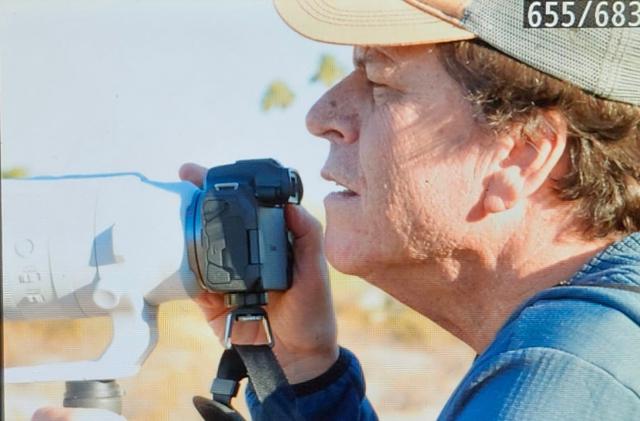
For many Arizonans, birding is a pastime. For Geoffrey “Birder Geoff” Walsh, it’s also a lens through which he has explored his career and landscapes for decades.
A longtime birder and photographer — and a recently retired Bureau of Land Management (BLM) employee — Geoff (pronounced “Jeff”) brings a deep familiarity with public lands. In retirement, he is stepping into a new volunteer role as BLM Arizona’s Birder in Residence, where his passion for birds and public lands will come together in a yearlong journey across the state.
With this year marking the commemoration of America’s 250th anniversary, we’re also reflecting on the stories, landscapes, and traditions that define our shared heritage. Watching birds across Arizona’s public lands is one of those traditions – and he’s here to share it with you!
In his “Birder Geoff” blog series, Geoff will share the experiences that shaped his love of birding, the species that continue to spark his curiosity, and the unique opportunities that BLM-managed lands offer to birders of all levels. He’ll explore new sites, revisit familiar ones, and highlight the birds he finds along the way.
Through his stories, insights, and photography, you will get an inside look at Arizona’s BLM-managed habitats. You’ll also get practical tips, recommended resources, and inspiration for anyone hoping to begin their own birding adventure.
Whether you’re a seasoned birder or just starting out, Geoff’s reflections promise to bring fresh perspective to places where Arizona’s birds thrive. Let’s dive into his journey to becoming BLM Arizona’s Birder in Residence.
What first inspired your love of birding, and how has that passion grown over time?
My love of birding really started when I was about sixteen, walking my dog around Upper Newport Bay. In the winter, the bay was full of shorebirds and ducks, and I was close enough to see all their markings without even using binoculars. I’d go home afterward and look up each species, so I’d know what I was seeing the next time I went out. Back then I didn’t even realize songbirds were a whole world of their own — I was just captivated by the birds right in front of me.
Over the years, the people I met and worked with helped expand that early curiosity into a real passion. They introduced me to birds beyond the shorebirds and ducks I started with, and each new species opened up another layer of fascination. What really motivates me is the wildlife itself. Birds are warm‑blooded, wild, and completely untamable. That’s the beauty of them. We’ve domesticated so many large mammals, but you can’t domesticate a warbler. Birds just live their lives on their own terms, and that’s what I find so fascinating about them.
How and when did you get started with bird photography, and what keeps you excited about it?
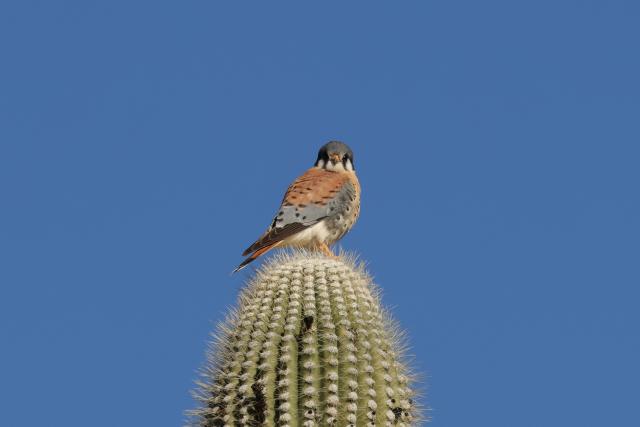
I’ve been interested in wildlife photography since high school, but the tools just weren’t there yet. Back then, taking a lot of bad photos was expensive. With digital and a good telephoto lens you can have fun trying over again and hopefully end up with a successful picture. In community college, I bought a Canon FTb with money from my campus job. I didn’t get many great shots, but it planted the seed. I always hoped that someday I’d have better tools to really pursue it.
I took a hiatus for a while, but digital photography reinvigorated my interest. Suddenly, I could take hundreds of shots, learn from my mistakes, and keep improving without worrying about cost. I didn’t seriously get into bird photography until 2016, when I bought my first digital SLR.
What keeps me excited is that birds never stop surprising you. There’s always a new species to find, or an “old” species doing something unexpected or showing up in a new setting. Birds are the ultimate challenge, and you never get bored photographing a bird. They are fast, unpredictable, and constantly in motion. Trying to identify and photograph them before they disappear never gets old.
Do you have a favorite species, or a species that feels especially meaningful to you?
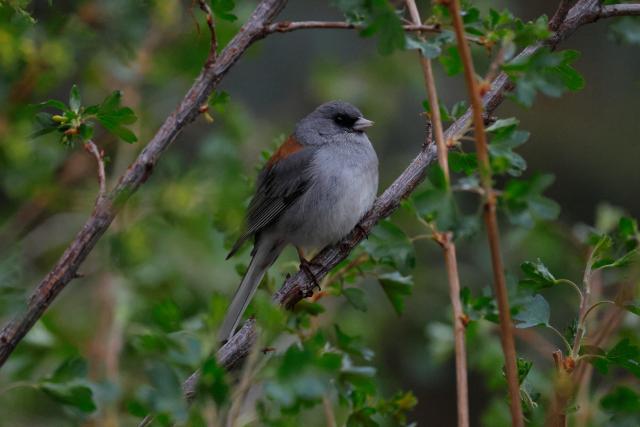
That’s a tough one, but white-tailed kites have always stood out for me. I spent a lot of time watching them in Arcata, California, when I was in college — back when they were still called black-winged kites. You might still find some in Arizona but seeing them hunt in person is something special. Their hovering behavior, “kiting,” is incredible to watch, and their look is so striking.
Even though I spent hours observing them, I never actually photographed them. That’s something I’d love to go back and do to capture them perched or mid-hunt.
From your experience as a former BLMer, what makes birding on public lands, especially BLM‑managed landscapes, uniquely rewarding?
With some exceptions, BLM landscapes are under-celebrated for the bird life they support. Finding and revealing the bird life on BLM lands helps add to the awareness of the richness of these landscapes. It’s challenging and fun being able to make the birding experience on BLM lands better known.
As a BLM Arizona National Conservation Land System lead, designations rarely started because of birds or wildlife. Someone might have thought it was a pretty canyon and nominated it for a wilderness area or noted that the area didn’t have a lot of roads. After the fact, we can often recognize wildlife values that weren’t highlighted when these areas were designated.
If we look at Arizona, the popular birding sites — aside from Aravaipa Canyon Wilderness — are few. There are very few recognized hot birding spots on BLM lands. They’re not as accessible, and most people are more focused on doing the hikes than on the birds you can find in wilderness areas. It’s neat to showcase wildlife or cultural values that haven’t been prominent in these areas before.
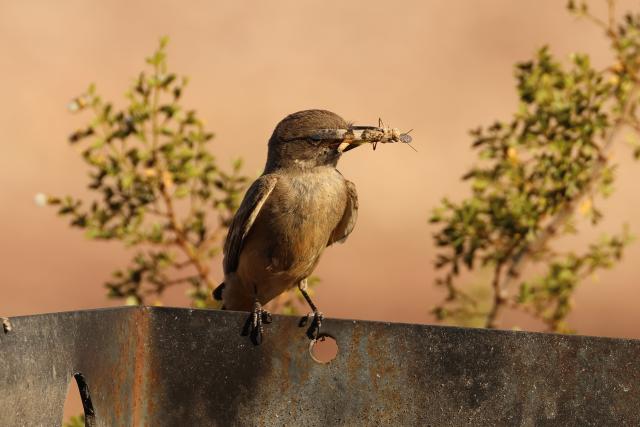
What excites you most about serving as BLM Arizona’s Birder in Residence this year?
Hopefully, a chance to explore BLM lands that aren’t usually thought of as birding hotspots. There’s something really rewarding about going out with no expectations and discovering what’s actually there.
A good example was at Agua Fria National Monument, where I ended up finding crissal thrasher, vesper sparrow, and a green‑tailed towhee — all on a day in April when I was just seeing what I could see. The crissal thrasher alone made the trip worth it. What really stood out was seeing vesper sparrows and green‑tailed towhees in places they don’t typically mate. They usually head farther north, so finding them there was surprising and motivating.
It’s the kind of experience that makes me want to document more of these observations, and I’ll probably write a blog about it. Overall, I’m excited for the chance to keep exploring, keep learning, and hopefully highlight bird life in areas that don’t always get attention.
Are there particular regions or BLM sites you’re eager to explore?
I’m especially interested in spending more time in southeastern Arizona. For bird diversity, places like the San Pedro Riparian National Conservation Area (NCA), Las Cienegas NCA, and Peloncillo Mountain Wilderness are high on my list.
The region is one of the best birding areas I’ve experienced, outside of California, because of its mix of habitats, reliable water sources, and the way migratory routes and ecosystems from Arizona, New Mexico, and Mexico all meet there.
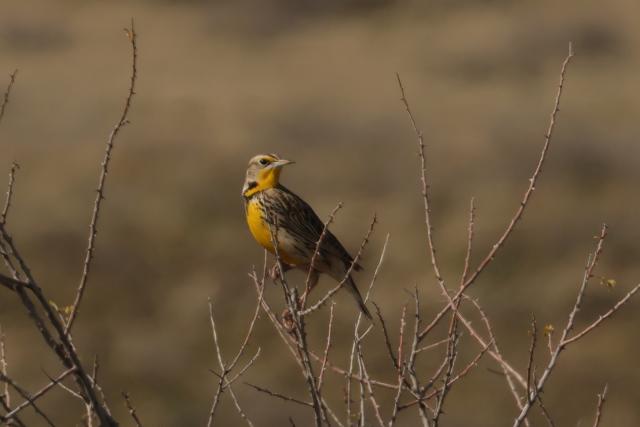
Are there species you're hoping to observe or photograph during your residency?
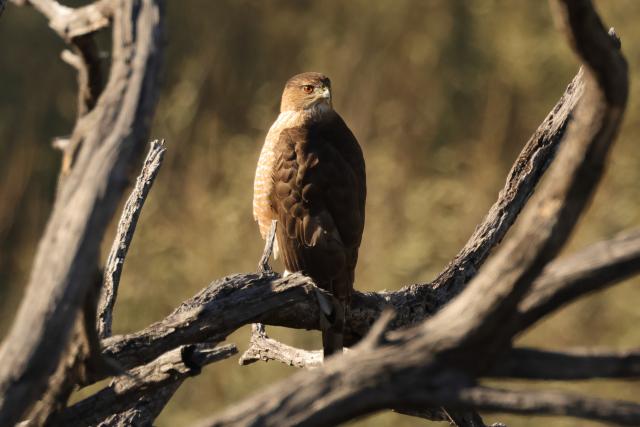
Grey hawk, black hawk, and zone-tailed hawks. Three birds of prey for sure. I’ve seen them, but it would be great to get a picture.
What’s one piece of advice you’d share with someone just beginning their birding journey?
I’d tell someone just starting out to be patient and really take the time to listen and observe. Birds aren’t making random sounds — everything they do is a clue you can learn from.
It also helps to start by getting familiar with the birds in your own area or the place you plan to bird. Connecting with other birders is very helpful. Going on group trips, like those organized by local Audubon chapters or a BLM partner group like the Friends of the San Pedro, can increase your learning.
And paying attention to migration patterns makes a big difference. For example, March and April are great months to watch for winter migrants like the green-tailed towhee.
Overall, stay curious, get outside often, and don’t rush the process. The more time you spend listening and looking, the more it all starts to click.
Are there organizations, apps, or tools you consider must‑haves for new birders?
I don’t think there’s a perfect app, but a few tools are really helpful when you’re starting out. I use Cornell University Lab of Ornithology's Merlin Bird ID a lot, especially for quick IDs and sound comparisons, but I always double‑check with a solid field guide or resources like Birds of North America. Apps are great for getting you in the right direction, but learning from books can be great resources, too.
Geoffrey "Geoff" Walsh grew up in Orange County, California, and earned his degree in wildlife management from Humboldt State University. He went on to serve in the Peace Corps as an aquaculture extensionist before completing graduate work in zoology and wildlife management at North Dakota State University. He joined the Bureau of Land Management in 1988 as a wildlife biologist and went on to work in Utah and California before taking on leadership roles in wildlife, fisheries, riparian, and threatened and endangered species programs across several BLM offices. He later served as the BLM Arizona National Conservation Lands and Systems lead, retiring in 2024 after a long career in public‑lands conservation. Now retired, Walsh continues his commitment to stewardship by volunteering as BLM Arizona’s Birder in Residence.
Related Content
Related Stories
- BLM National Public Lands Day tradition continues in Roswell, New Mexico
- Pipestone Roars to Life as Community Comes Together for National Public Lands Day
- Signs of Collaboration: Protecting Tortoises on Arizona Public Lands
- BLM Arizona and Arizona Association of Conservation Districts: A Model Partnership for Landscape Conservation
- Celebrate National Public Lands Day with BLM Arizona
Office
One North Central Ave., Suite 800
Phoenix, AZ 85004-4427
United States