


Nine Miles of Prevention: The Fuel Break that turned the Fire
When the fire first ignited deep within the Saylor Creek Range in south-central Idaho, its rapid spread was immediate and alarming. Driven by winds pushing it east‑southeast, the flames tore through miles of grasslands dotted with scattered pockets of brush. Before long, the fire had grown to 8,292 acres, burning across 2,589 acres of BLM‑managed land, 213 acres of State land, and 5,490 acres of Military property.
As crews mobilized, U.S. Wildland Fire Service firefighter Chase Krapf approached the scene and witnessed something remarkable. A towering smoke column rose high above the desert—until, in an instant, it collapsed. The head of the fire had reached the Pothole South fuel break.
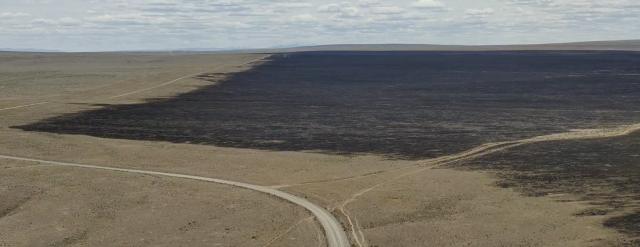
Stretching approximately nine miles with a 275‑foot treatment area on both sides of the road, the Pothole South fuel break covers about 603 acres. Roughly 151 of those acres lay directly within the fire perimeter. Years of strategic work were being put to the test in a single, critical moment.
The fuel break had been carefully built over multiple seasons, beginning in the fall of 2016. Vegetation was first removed through chemical applications, followed by additional treatments and seedbed preparation in the spring of 2017. That same spring, crews mowed standing dead vegetation and applied another round of herbicide to keep the corridor clear. In the fall of 2017, stabilizer wheatgrass was drill‑seeded to establish a low‑profile, fire‑resistant plant community. Winters of 2018 and 2019 brought aerial seedings of forage kochia, a hardy species known for slowing fire behavior. Additional chemical applications in 2019 and 2021 reduced invasive annuals, and maintenance mowing in 2022, 2023, and 2024 ensured the break remained effective and open.
All of that effort paid off.
The moment the fire hit the Pothole South fuel break, its behavior changed dramatically. The advancing flame front lost intensity, the towering smoke column laid down, and firefighters were able to safely and effectively engage. What could have been a fast‑running, difficult‑to‑contain wildfire instead slowed, allowing suppression resources to halt its forward progression.
And in addition to the operational success, the financial impact was significant. By stopping the fire at the fuel break and reducing the need for extended aviation support, the U.S. WFS avoided potentially hundreds of thousands of dollars in suppression costs. For comparison, last week’s Median Fire required roughly 5.5 hours of retardant‑dropping aviation time—nearly $400,000 in costs alone. The effectiveness of the Pothole South fuel break illustrates how proactive fuels management doesn’t just protect lives and landscapes—it also protects budgets.
The fire’s footprint tells one story. The fuel break tells another.
Through sustained investment, strategic design, and ongoing maintenance, the Pothole South fuel break functioned exactly as intended—protecting the landscape, aiding firefighters, and preventing a dangerous wildfire from growing even larger. It stands as a clear example of how proactive fuels management pays off on every front: safety, effectiveness, and substantial cost savings. Aerial view of fuel break
Related Stories
- Nails and Tires Don’t Mix
- BLM Turns Wildfire Response into Opportunity for Forest Management and Local Industry
- Cultivating Stewards: ICC Crews and Interns Transform Idaho’s Public Lands in 2026
- Cottonwood Field Office and Extreme Adventure Club Strengthen Youth Engagement Through Annual Float Trip on the Lower Salmon River
- BLM Wyoming Explores Emergency Response and Rehabilitation after Wildfire