


BLM Wyoming Explores Emergency Response and Rehabilitation after Wildfire
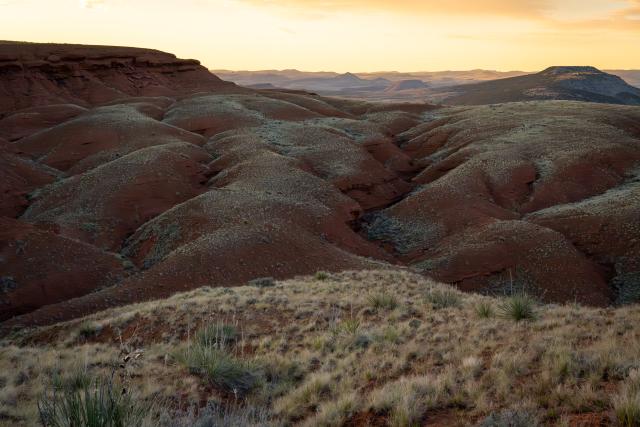
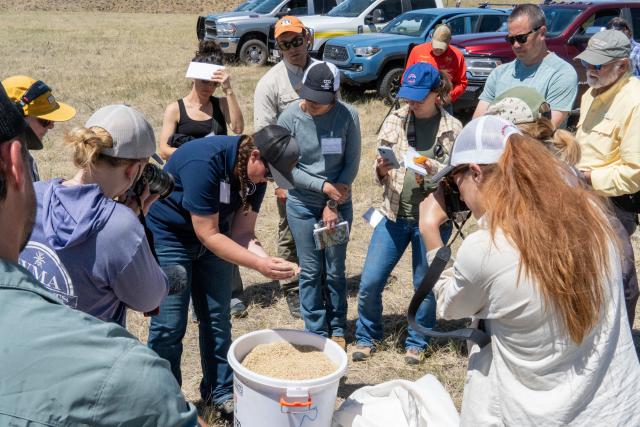
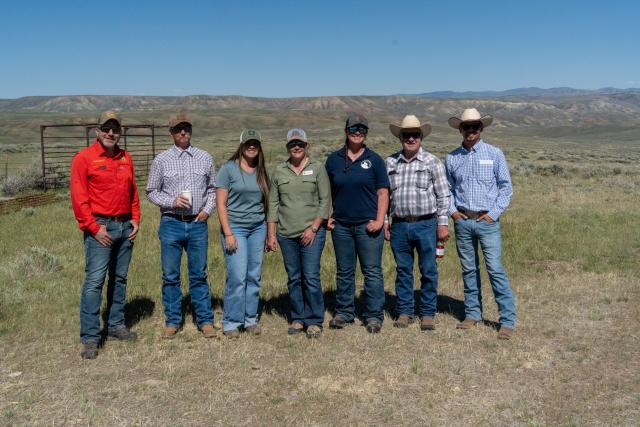
Early this June, Intermountain West Joint Venture coordinated a workshop in Thermopolis, Wyoming, to explore post-wildfire rehabilitation, emergency response and coordination efforts between federal agencies, state partners, and private landowners. The workshop included a field tour of the 2025 Red Canyon Fire. Derek Trauntvein, USWFS Firefighter, and Alicia Hummel, BLM Range Specialist, represented the BLM Wyoming Worland Field Office.
During the workshop, Hummel shared firsthand insight on the aftermath of the 2025 Red Canyon Fire. She spoke about recovery efforts that began immediately after the wildfire was contained.
“Even before the last flames were extinguished, teams from BLM and the USWFS began mapping out restoration strategies,” said Hummel. “Managers faced tough decisions, knowing they had only a brief window to allocate funds from a limited national pool shared by hundreds of other fires.”
As the 2025 fire was winding down, an interagency Burned Area Emergency Response (BAER) Team was assembled. The BAER Team was crucial for helping to determine the long-term impacts caused by the fire. Managers quickly identified urgent priorities: treating invasive grasses, applying native seeds and seedlings, rebuilding damaged fences, and restoring miles of dozer lines created during suppression efforts. The workshop included a tour of older burn scars, reinforcing why restoration requires careful, multi-year planning and highlighting how every dollar is stretched for maximum impact.
“When the wildfire swept through Wyoming’s sagebrush rangelands, it left behind deep scars - not just in the landscape, but in the lives of those who call it home,” said Hummel. One of the most urgent tasks that followed the fire was restoring more than 130 miles of dozer lines created during the fire suppression efforts. These wide, raw tracks cut across hills and valleys, helping firefighters contain the blaze but also disrupting fragile ecosystems. Completing dozer line rehabilitation while heavy equipment remains on-site is especially critical, as delays can significantly increase costs that must then be absorbed by the local field office.
In the months following the fire, Hummel worked alongside grazing permittees and local partners to implement the fire recovery efforts. This work included the replacement of more than 150 miles of fence and stock water pipelines, implementing temporary livestock grazing closures, and treating invasive annual grasses.
“We are so grateful to all our local stakeholders for helping to make all the various restoration efforts a success," said Hummel. “It truly takes a team to be able to pull off all these projects that are completed at such a large scale in a very short amount of time.”
Hummel explained during the workshop that recovery in sagebrush country is slow, expensive, and requires sustained commitment.
“The workshop itself was a powerful showcase of collaboration and persistence, highlighting both the challenges and the triumphs of restoring Wyoming’s rangelands after wildfire,” she said.
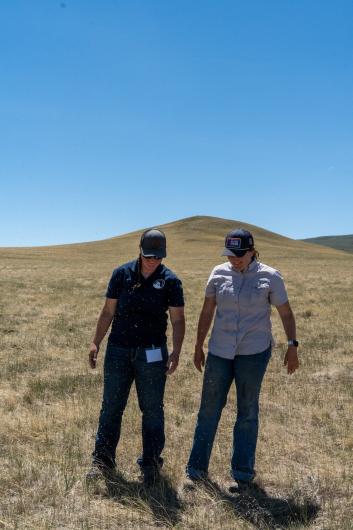
Trauntvein said the workshop effectively highlighted the contributions of all partners and the spirit of collaboration in restoring landscapes affected by the Red Canyon Fire, as well as the ongoing efforts in the Bighorn Basin to combat invasive annual grasses.
"Although there isn’t an official organization leading these initiatives, the collaborators are pitching in and making the most of their resources to prevent further spread of invasive annual grasses and lessen the impact of the fire on those who cherish this landscape," said Trauntvein.
The workshop provided participants with a firsthand look at the complexity of post-fire recovery while reinforcing that successful rehabilitation depends on strong partnerships, strategic planning, and long-term commitment to restoring Wyoming's rangelands.
Related Stories
- National Public Lands Day Paddles, Plants and Caves: BLM Connects Milwaukee Youth with the Outdoors
- Using Beavers as Partners in Riparian Habitat Restoration in Las Cienegas National Conservation Area
- Celebrating 30 Years of California Condor Recovery at Vermilion Cliffs National Monument
- BLM recruits future workforce at Missouri University of Science and Technology career fair
- One Mile Closer