


Celebrating Endangered Species Day: Restoring the Rare MacFarlane’s Four O’Clock
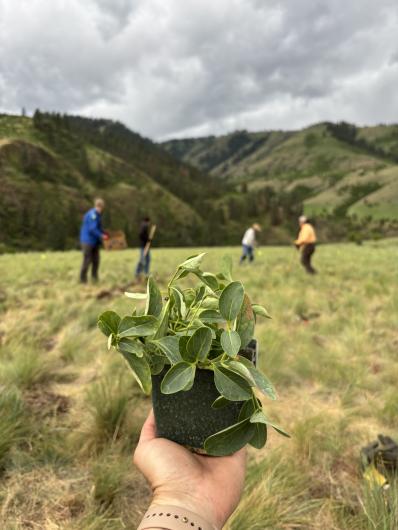
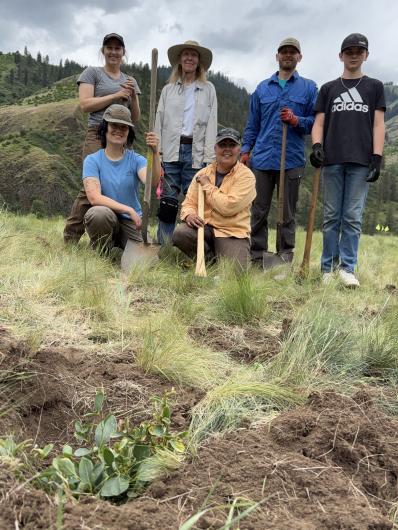
In honor of National Endangered Species Day last week, a team from the Bureau of Land Management Cottonwood Field Office joined forces with University of Idaho students and staff to give one of the Northwest’s rarest plants a much-needed boost. Led by BLM Coeur d’Alene Botanist LeAnn Abell, the crew spent a few days planting 400 seedlings raised by the University of Idaho Department of Plant Sciences, strengthening populations of MacFarlane’s four o’clock (Mirabilis macfarlanei) along the rugged slopes of the Lower Salmon River in Idaho County.
A Plant Found Almost Nowhere Else on Earth
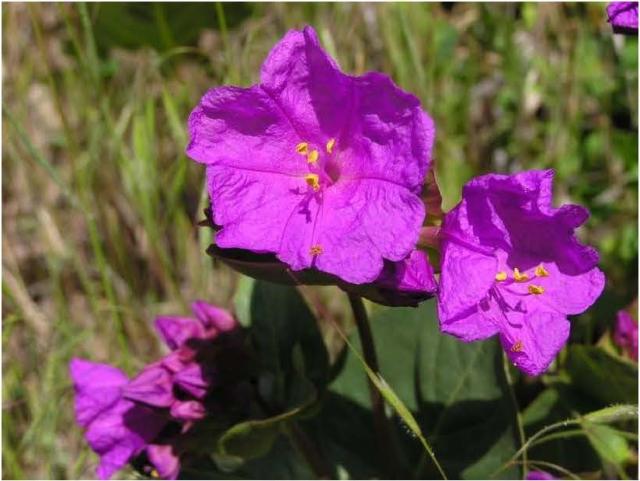
MacFarlane’s four o’clock is a federally threatened perennial wildflower known for its deep taproot and brilliant magenta blooms. Endemic to just a few steep river canyons in Idaho and Oregon, it occupies an area only about 29 by 18 miles in size. Today, just 13 known populations remain—most of them in Idaho County.
These plants thrive in warm, dry canyon grasslands, and rocky soils where few others can survive. With taproots stretching up to eight feet, they anchor themselves into tough, drought-prone terrain—helping stabilize soils and paving the way for other native plants to grow.
Why This Species Matters
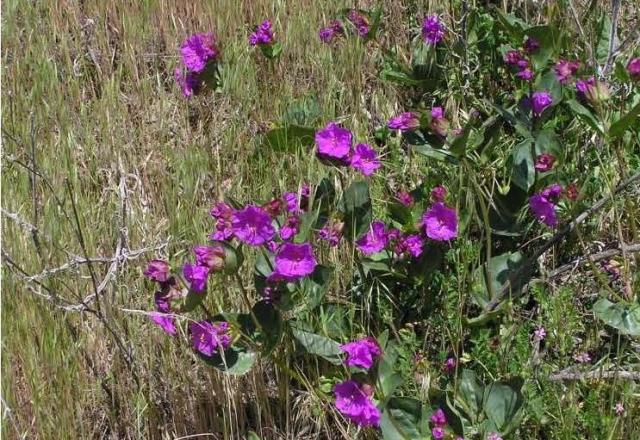
Though small and unassuming outside of bloom season, MacFarlane’s four‑o’clock plays an outsized ecological role:
• Supports pollinators with nectar-rich, trumpet-shaped flowers
• Stabilizes steep slopes in canyon ecosystems
• Serves as an indicator species for healthy, undisturbed native grasslands
• Holds genetic traits that may be key for climate resilience in arid environments
Flowering from May through June, the plant is a seasonal lifeline for bees, butterflies, and other insects navigating the hot, dry canyon landscape.
A Conservation Success—But Work Remains
First listed as Endangered under the Endangered Species Act (ESA) in 1979, MacFarlane’s four o’clock was downlisted to Threatened in 1996 after new populations were discovered and recovery actions gained traction. Five-Year Status Reviews show that populations are currently stable.
But stability doesn’t mean safety.
Invasive plants—including cheatgrass, yellow starthistle, dalmatian toadflax, and rush skeletonweed—pose ongoing threats. These species compete aggressively for space, water, light, nutrients, or pollinators, and cheatgrass in particular can fuel more frequent and intense wildfires negatively impacting this ecosystem.
Recent reviews highlight that while the species is not at immediate risk of extinction, it remains vulnerable to habitat degradation and fire-driven ecosystem change.
Hands-On Conservation in Action
One of the main goals of the BLM’s special status species management program is to conserve and/or recover ESA-listed species and the ecosystems on which they depend so that ESA protections are no longer needed for these species.
This week’s collaboration between the BLM and University of Idaho students is one piece of a long-term effort to secure the species’ future. By planting new individuals and expanding existing populations, crews help preserve genetic diversity, bolster resilience, and ensure that these rare magenta flowering plants continue brightening canyon slopes for decades to come.
Related Stories
Office
2 Butte Drive
Cottonwood, ID 83522
United States