


Owyhee Field Office and partners collaborate to improve sage grouse habitat
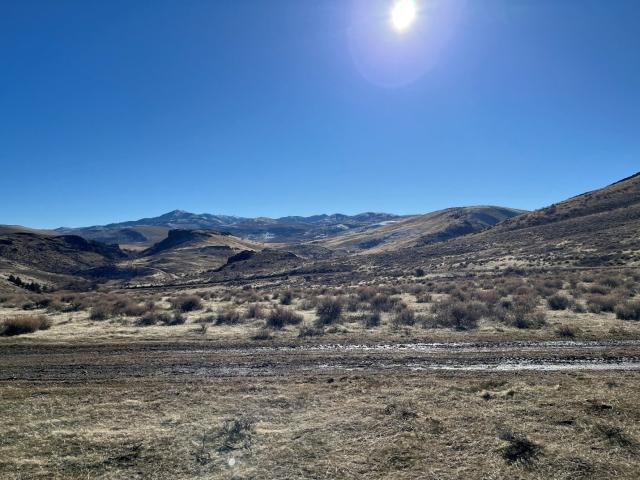
Sagebrush steppe is home to a surprising abundance of organisms that depend on this complex, fragile ecosystem. Greater sage-grouse is considered an indicator species of the sagebrush steppe ecosystem of western North America. As an indicator species for the sagebrush sea, sage grouse presence or decline reflects the condition of native sagebrush steppe. Managing these vast expanses of sagebrush is no small task, which is why collaborative efforts to improve sage grouse habitat are key to successful conservation.
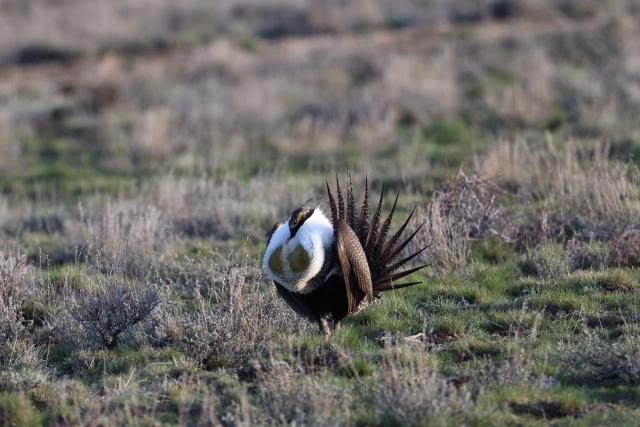
These birds have a courtship dance ritual that takes place in bare patches called leks during March and April mornings. Before dawn, the birds gather at leks where males strut and scuffle to impress females and mate. But in the wee hours of the morning, low-flying birds risk colliding with difficult-to-see fences, resulting in injuries or mortalities.
To reduce this hazard, the Idaho Department of Fish and Game (IDFG) and the BLM Owyhee Field Office (OFO) partnered. IDFG Regional Habitat Biologist Chris Yarbrough and OFO Wildlife Biologist Colleen Trese devised a plan to install reflective fence markers near a sage grouse lek northeast of South Mountain, ID to help protect sage grouse ahead of mating season.
Mild winter weather conditions enabled the team to access the site in mid-January.
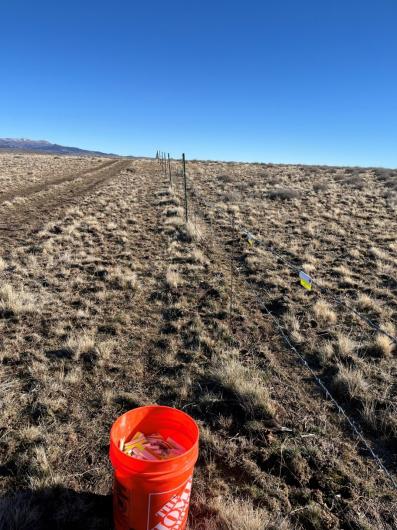
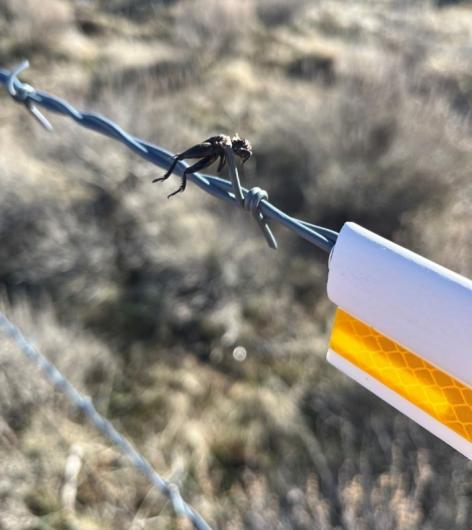
With limited funds and too few fence markers, the field office faced a challenge. Pheasants Forever (PF) stepped in, using leftover state funds to purchase vinyl siding strips. After time behind a chop saw in the OFO shop, the team had handmade markers ready to install.
In two hours, nine people from BLM OFO, IDFG, US Fish & Wildlife Service, PF, and Natural Resource Conservation Service (NRCS) installed markers, expediting the project.
“It was great to get these fences marked. At its closest point, the fence is only 220 yards from the lek, so having that marked will be a huge help as grouse are flying into the lek at dawn” said BLM Owyhee Field Office Wildlife Biologist Colleen Trese.
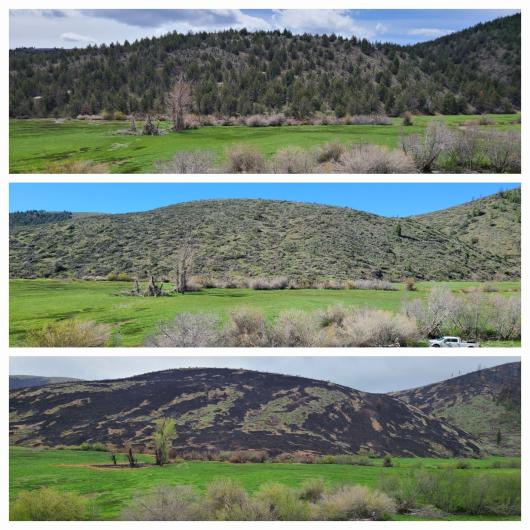
Other work to improve sage grouse habitat on BLM lands in Owyhee County continues. Near the marked fence, approximately 15,000 contiguous acres of conifer removal have been completed through the Bruneau-Owyhee Sage Grouse Habitat (BOSH) project, the NRCS, and other state partner’s efforts. To date, BOSH treatments have occurred over 270,251 acres.
Sage grouse numbers surged throughout this area last year. The two leks showed a combined total of 46 males in 2024 and 77 males in 2025. The team hopes this growth in sage grouse is due to benefits from the BOSH treatments. Research in Oregon supports this idea, showing a 12% increase in sage grouse vital rates —such as nest success or chick survival —after targeted conifer removal.
“These leks saw big jumps in the spring of 2025,” said IDFG Regional Habitat Biologist Chris Yarbrough, who’s eager “to see how they respond in 2026 and beyond with all the conifer removal that occurred” said IDFG Regional Habitat Biologist Chris Yarbrough.
Strong partnerships are the backbone of wildlife habitat management for many species across BLM Idaho. Thanks to ongoing active management strategies, support from partners, and recent population increase, the health of the landscape and future for these birds looks promising.
Related Stories
- One Mile Closer
- Cultivating Stewards: ICC Crews and Interns Transform Idaho’s Public Lands in 2026
- Power and Fiberoptic Line Burial Project Brings Conservation and Connectivity to South Valley County
- BLM Opens New Campsites on Islands at Black Duck Lake
- Cottonwood Field Office and Extreme Adventure Club Strengthen Youth Engagement Through Annual Float Trip on the Lower Salmon River