


BLM, Bat Conservation International Monitor Bat Species on Lake Vermilion Islands
In 2025, the Bureau of Land Management’s (BLM) Northeastern States District Office teamed up with Bat Conservation International (BCI) to acoustically monitor for threatened and endangered bat species in Lake Vermilion, Minnesota.
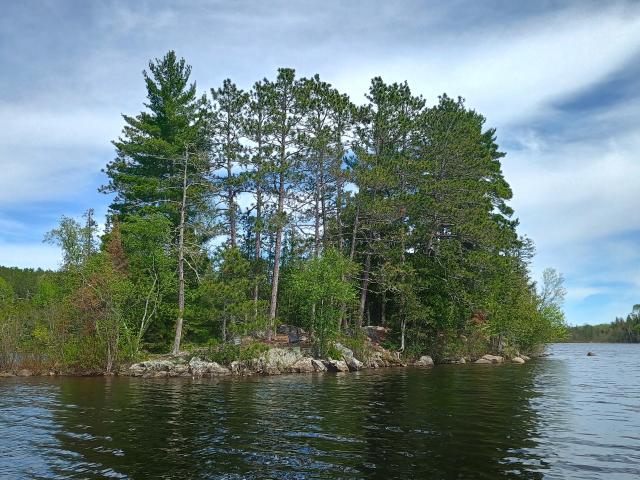
The BLM manages more than 80 islands within the Lake Vermilion complex for multiple uses, including recreation and avian rookeries. The islands also fall within the range of numerous threatened and endangered species, including two bat species: the northern long-eared bat (Myotis septentrionalis) and the tricolored bat (Perimyotis subflavus).
As recreation opportunities continue in the Lake Vermilion area, the BLM is taking steps to ensure activities do not negatively affect endangered wildlife species. BCI was called upon to help determine whether the two listed bat species were present.
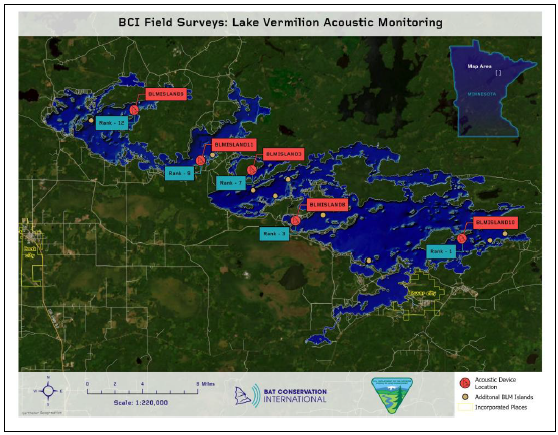
BLM Natural Resource Specialist Nikki Carter worked with BCI to identify islands most likely to support bat activity. Fifteen islands were selected based on criteria such as island size, forest cover, and proximity to shore.
In late May 2025, BCI staff installed acoustic monitoring stations on five of the selected islands. BCI also conducted basic forestry transects using specialized bat detectors to determine if forest type and basal area --a cross-sectional area of trees -- were associated with bat activity. The BCI team returned several weeks later to check on the equipment and switch out memory cards. Final measurements were taken in mid-September 2025, and the monitoring stations were removed.
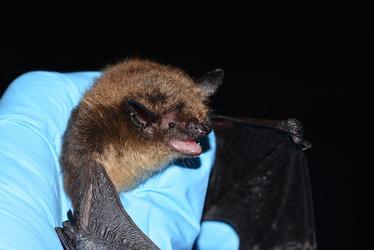
Although no listed bat species were detected, the survey produced some interesting discoveries! Five bat species were recorded: Little brown myotis (Myotis lucifigus), big brown bat (Eptesicus fuscus), hoary bat (Lasiurus cinereus), silver-haired bat (Lasiurus noctivagans), and eastern red bat (Lasiurus borealis).
“I was really surprised at the number of calls—over 100,000—and that so many of them were the little brown myotis, given how their numbers have been affected by White Nose Syndrome,” said Dan Taylor, senior restoration specialist with BCI.
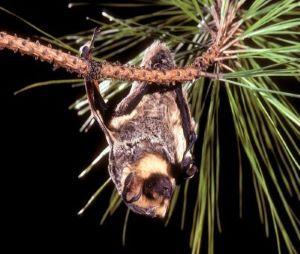
White Nose Syndrome (WNS) is a disease caused by a fungus found that thrives in cold, dark, damp environments such as caves and mines. The disease effects hibernating bats, often appearing as a white fuzz on their noses and wings. Infected bats become more active during hibernation, burning up precious fat reserves needed to survive the winter. The disease has decimated bat populations across North America. In northern Minnesota, a major little brown bat hibernation site once supported more than 8,000 bats. Today, fewer than 100 bats remain.
Acoustic monitoring provides a non-invasive method to identify bat species, track population trends and map habitat usage without disturbing the animals. Data collected during the Lake Vermilion project will be entered into the North American Bat Monitoring Program database, which supports more than 570 organizations working across the continent to protect these tiny furry creatures.
For the BLM, the results were reassurance that Lake Vermilion’s islands can continue to support both recreation and wildlife. The islands continue to provide a restful visitor experience, while continuing to provide a suitable habitat for the sensitive bat species.
Related Stories
- Bat Week: Celebrating the Species of BLM Eastern States
- Swainson’s Hawks: a remarkable return to California’s Central Valley
- National Public Lands Day Paddles, Plants and Caves: BLM Connects Milwaukee Youth with the Outdoors
- Using Beavers as Partners in Riparian Habitat Restoration in Las Cienegas National Conservation Area
- Celebrating 30 Years of California Condor Recovery at Vermilion Cliffs National Monument
Office
250 E. Wisconsin Avenue
Suite 1100
Milwaukee, WI 53202
United States