


Strategic fuel break prevents wildfire spread across U.S.–Mexico border
At the intersection of two nations, the International Border Fuel Break—one of California’s most unique wildland urban interface projects—proved its value in June 2025 by helping firefighters protect property, critical infrastructure, and natural resources in the United States.
When two wildfires ignited south of the border and raced toward California, the 1,800-acre fuel break stopped their advance, giving crews the upper hand in suppression efforts along the U.S.-Mexico border.
Originally constructed in the 1970s by California Department of Forestry and Fire Projection (Cal Fire), the fuel break was designed to reduce wildfire spread and provide safe travel routes along the border. It includes strategically-placed safety zones for U.S. Customs and Border Protection agents, first responders, and others who may face fast-moving fires.
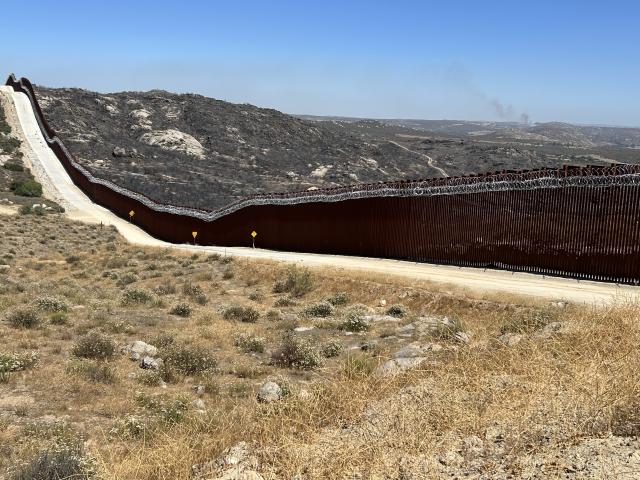
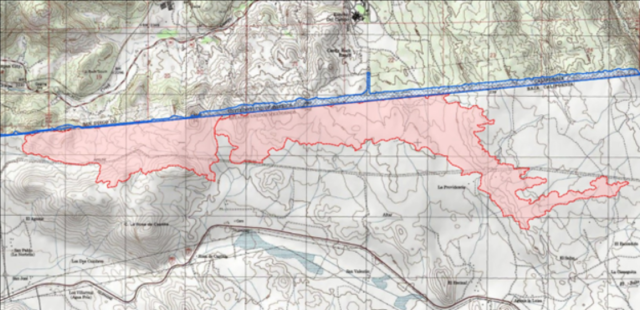
On June 16, the Border 6 Fire ignited in Mexico and pushed north and east toward BLM-managed lands in California and the community of Campo, California. Thanks to the fuel break and coordinated response from BLM and Cal Fire’s San Diego Unit, the fire was stopped at the border.
Just a day later, the Border 7 Fire started near the border fence west of the first blaze. It spread along the fuel break and merged with Border 6, burning about three acres into the U.S. before crews contained it.
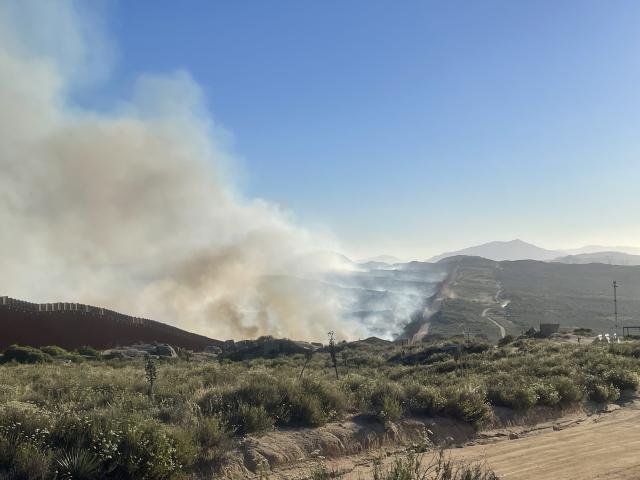
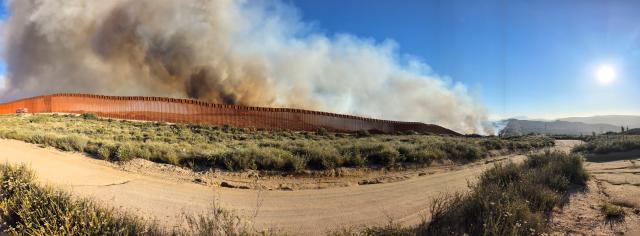
Together, the fires scorched roughly 2,170 acres of dense chaparral. When the fires reached the treated area, fire intensity dropped and the spread stopped with only three spot fires of a quarter-acre or less — allowing engine crews to suppress the flames effectively.
The fuel break has been periodically maintained over the years, with efforts increasing in the late 2000s. The BLM has been maintaining various portions of the fuel break since 1999. In 2022, the BLM’s California Desert District partnered with Cal Fire’s San Diego Unit and U.S. Customs and Border Protection to reestablish and maintain a portion of the International Border Fuel Break, with the BLM managing the maintenance. Other project partners included the U.S. Geological Survey, San Diego Gas and Electric, Campo Kumeyaay Nation, private landowners, and others.
“The BLM and Cal Fire have been working with cooperators to maintain this fuel break for decades because we know its value,” said BLM Fuels Program Manager James Gannon. “Every mile of treated land represents foresight and commitment to protecting lives, property, and natural resources.”
Stretching 38 miles along the U.S.–Mexico border, the fuel break has helped contain multiple wildfires over the years. Beyond fire protection, it supports border operations and reduces fire suppression costs and impacts to natural resources. The fuel break also provides habitat for species like the Quino checkerspot butterfly and Cope’s leopard lizard, which thrive in areas of sparse vegetation. This project, supported by the Southern Border Initiative and funded through a mix of federal programs, demonstrates how proactive land management can protect communities and ecosystems from wildfire threats.
Related Stories
- Swainson’s Hawks: a remarkable return to California’s Central Valley
- BLM Fishing Derby brings Americans Outside for recreation and stewardship in Imperial Valley, California
- Nails and Tires Don’t Mix
- BLM Turns Wildfire Response into Opportunity for Forest Management and Local Industry
- BLM Wyoming Explores Emergency Response and Rehabilitation after Wildfire