


Rural wildland firefighting partners grateful for BLM gift
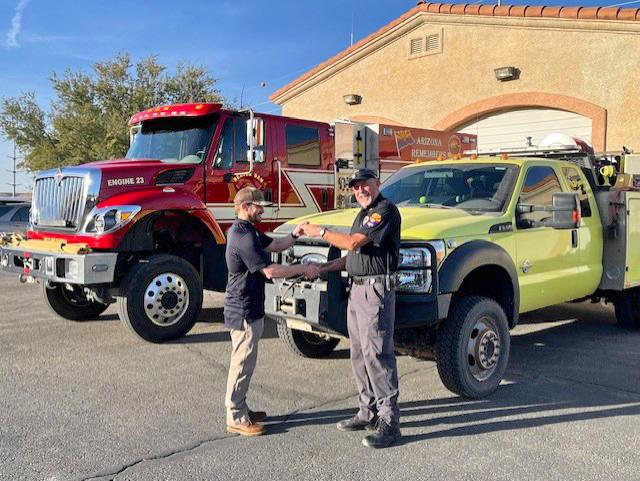
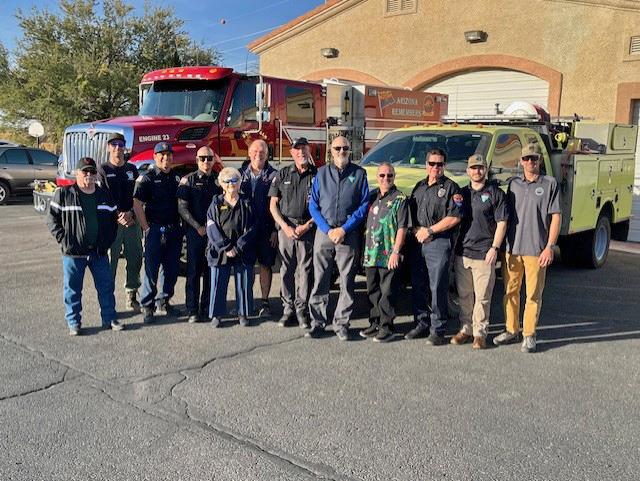
The Bureau of Land Management (BLM) recently transferred a wildland fire engine to the township of Beaver Dam, Ariz., to enhance their wildland firefighting capabilities. The Type 6 engine, 1601, was transferred under BLM’s Rural Fire Readiness (RFR) program, which is designed to provide equipment to local wildland firefighting partners at no cost.
The engine will be stationed at the Beaver Dam Fire Department and will be available for its firefighters to use for wildland fire response across the Beaver Dam Fire Department’s district. The district spans 288 square miles and provides aide to the communities of Beaver Dam, Littlefield, Desert Springs, Scenic, Arvada and Jones Flat municipal areas. As partners with the BLM, the resource also allows the department to provide initial attack coverage to fires on BLM administered lands spanning from the Virgin River Gorge to Mesquite, Nevada, including public lands across Arizona, Utah and Nevada.
In 20 years of service to the Beaver Dam Fire Department, assistant fire chief Andres Ojeda has seen the department’s incredible growth from a tiny organization to the department it is today.
Growth that hasn’t come easily.
“We’ve applied many times for grants to fund resources and training, but grants are very hard to come by,” said Ojeda, noting that obtaining funding on that scale is challenging for small communities which often turn to tax levies that are hard on residents. The engine transfer from the BLM is a significant help economically to small, rural communities like Beaver Dam and Littlefield.
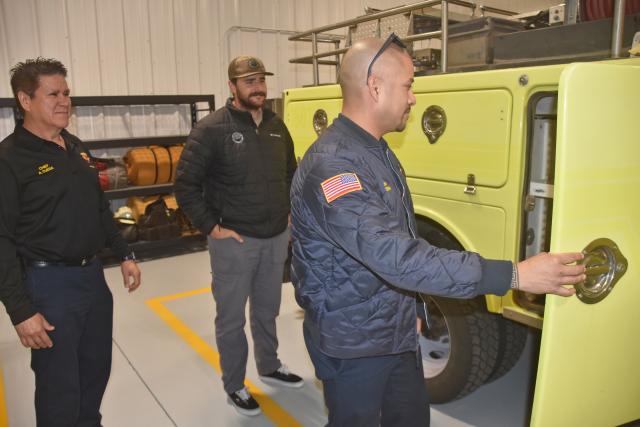
While the department does have a Type 3 engine, their current Type 6 engine is 20 years old.
“It’s almost obsolete to our fire department,” Ojeda said. “This Type 6 engine is the best resource to respond. The 4x4 makes tighter turns and it makes it a lot easier on the two track roads,” said Ojeda. The extra cab also allows them to bring more firefighters when responding.
“It obviously a great gift,” said Chief Jeff Hunt, noting the Type 6 engine replaces an older engine the department had that no longer met specific wildland fire fighting requirements. “It’s much easier for us to fill orders from BLM or the U.S. Forest Service to respond with this resource.” It also allows the department to become available to support requests for national wildland fire fighting assistance.
Cooperative partnerships between the BLM and local and rural fire departments, are crucial to remote wildfire response on private, state, and federal lands affecting grazing, recreational, wildlife, and other values important to local economies. Through the Rural Fire Readiness program, firefighting equipment is transferred in a fire-ready state with items like hoses, fittings, tools, and radios. The Rural Readiness Program also allows BLM to further help communities by providing training to members of local fire departments.
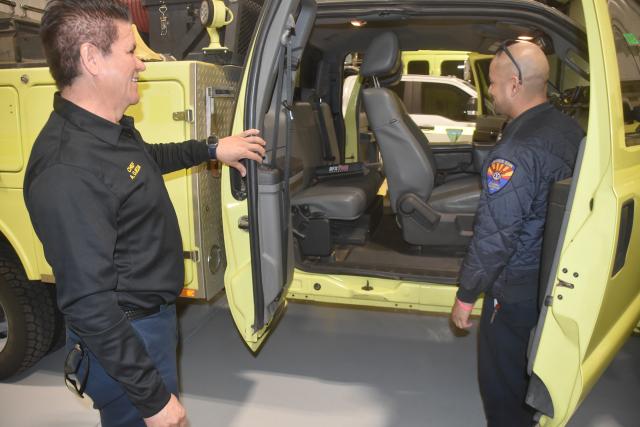
“Two years ago, I trained side by side with the BLM on an engine as I worked to complete my engine boss qualifications,” Ojeda said.
For remote communities like the town of Beaver Dam, Arizona surrounded by thousands of miles of undeveloped, desert landscapes and miles from the nearest urban infrastructure and resources, the partnership benefits local communities as much as the federal entities they work with.
“This program provides us the opportunity to help build wildfire response capacity by providing equipment to our local fire departments. Community fire departments and firefighters play a critical role in filling those gaps and strengthening overall response efforts,” said BLM Arizona Strip District Fire Management Officer Brandon Davis.
“Local volunteer fire departments are the closest resource so they’re often the first to respond and are dedicated to protecting their own communities and surrounding public lands,” said BLM Arizona Strip District Manager Wayne Monger. “That’s why the rural fire readiness program is mutually beneficial to both rural communities and agencies in fighting fires in remote areas like those surrounding the Arizona Strip District,” Monger said.
The BLM accepts requests from local fire departments for available vehicles, equipment, and supplies. As equipment is available, the BLM transfers excess items to local fire departments and Rangeland Fire Protection Associations during the fall and winter months, prior to the next fire season.
To receive wildland firefighting vehicles, equipment, and supplies through the Rural Fire Readiness program, local fire departments must meet a number of requirements including:
Have an existing cooperative fire response agreement with the BLM
Serve a rural community or area and is in the vicinity of, or within, the wildland urban interface
Have wildland fire protection responsibilities
Be in close proximity to BLM-administered lands and respond to wildland fires in support of BLM when available and as needed
More information on the BLM’s Rural Fire Readiness program can be found on our website.
Related Stories
- Celebrating 30 Years of California Condor Recovery at Vermilion Cliffs National Monument
- Nails and Tires Don’t Mix
- Celebrating National Public Lands Day across the High Desert District in Wyoming
- BLM recruits future workforce at Missouri University of Science and Technology career fair
- One Mile Closer
Office
4001 East Aviator Drive
St. George, UT 84790
United States