


Nine years of partnership pays off: Fitzhugh Creek Meadow restoration achieves dramatic results
The BLM Applegate Field Office is celebrating a remarkable transformation at Fitzhugh Creek Meadow, where nearly a decade of partnership-driven restoration is delivering clear and inspiring results. The meadow’s recovery began in the 1980s, when former Recreation Planner Claude Singleton worked to protect the creek corridor. Willow trees started returning in the 1990s, but the meadow itself still needed active restoration. That next effort began in 2017, when Jennifer Mueller took on Fitzhugh Creek as a long-term restoration site. Since then, she has helped lead all three phases of beaver dam analogue (BDA) construction, installed monitoring equipment, and coordinated with partners throughout the project’s nine-year timeline.
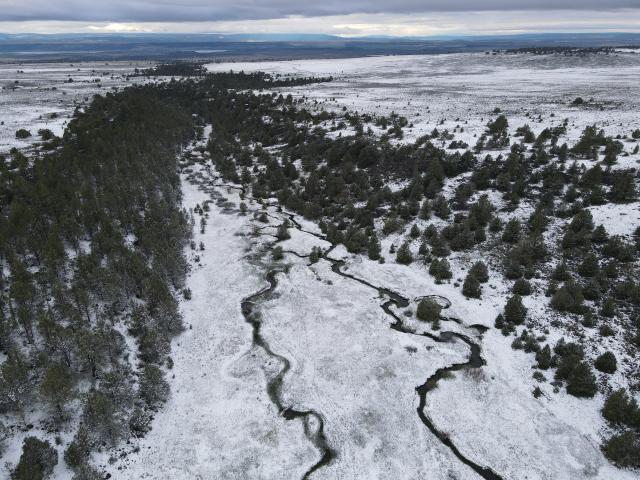
The restoration challenge at Fitzhugh Creek Meadow was significant. By 2017, upland species such as medusahead, cheatgrass, and Hooker’s balsamroot had spread across the meadow, replacing native wet-meadow plants like Nebraska sedge, Baltic rush, Meadow Foxtail, and Checker Mallow. That same year, the creek and meadow were selected for an interagency effort focused on restoring Northern California’s meadow systems. Specialists completed fieldwork and final design work in 2019, which led to the installation of the first seven BDAs between 2019 and 2020 along the main channel and south side channels. This initial phase, completed with Symbiotic Restoration, BLM, the California Department of Water Resources (DWR), and other partners, helped water move through braided overflow channels and reconnect with the main creek, rehydrating areas of hydric soil that had been dry for years.
The project’s systematic approach to monitoring and expansion has produced clear, measurable results. In 2024, the DWR installed seven piezometers, six of which were instrumented with data-loggers, to track changes in the water table across the creek and meadow system. An additional eight BDAs were added later that year with adaptive management of one existing BDA, bringing the total to 15 structures. By then, shifts in plant communities were already visible, with native meadow species expanding toward their historic edges. Rising water tables were also causing dieback of encroaching juniper trees within proximity of BDAs, providing a strong indicator of successful hydrologic restoration.
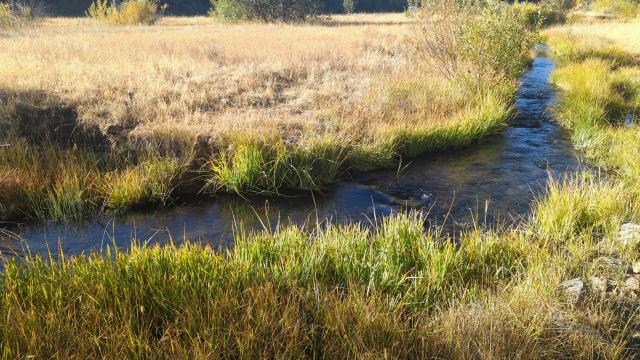
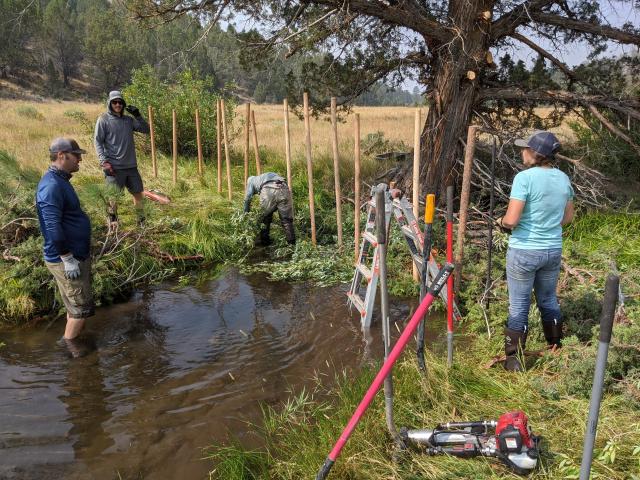
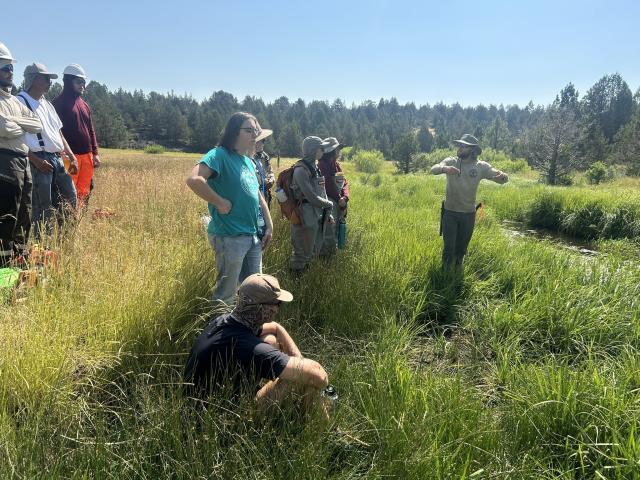
In July, DWR staff conducted a fisheries survey within the project area and observed native species including Pit River Sculpin and Pit-Klamath River Brook Lamprey. During a focused two-day field effort in July, the BLM led a multi-agency team that completed major BDA maintenance and construction work at Fitzhugh Creek Meadow. The group included about 18 staff, interns, and volunteers from the BLM, U.S. Forest Service, DWR, the Hammawi Band of the Pit River Tribe, Symbiotic Restoration, Lomakatsi Restoration Project, California Conservation Corps, American Conservation Experience, and the Modoc County Farm Bureau. Together, they adaptively managed 11 of the 15 existing BDAs, built one new structure, and identified priorities for future work. The results were immediately visible, with water spilling onto the floodplain, activating side channels, and increasing anabranching throughout the meadow.
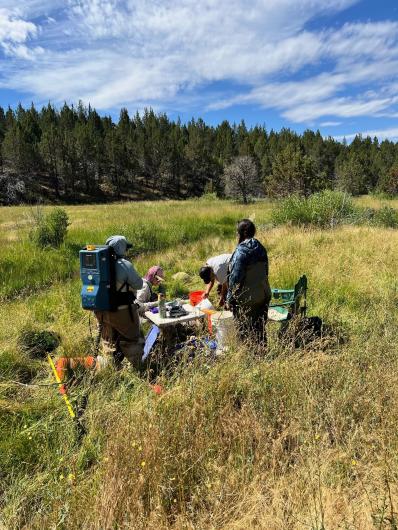
A one-day field effort in September focused on highest priority tasks in advance of the winter season, resulting in one newly built BDA and buttoning up of four existing BDAs, bringing the total to 17 BDAs. Future monitoring and management efforts are planned through 2029. This project stands as a significant success for BLM leadership, showing how low-tech, process-based restoration can revive a meadow that had been cut off from its natural water sources and overtaken by upland species. Supported through a mix of agency and partner funding, the effort highlights the short- and long-term benefits of regional planning and multi-agency collaboration. The results being achieved here reflect what is possible when organizations work together toward a shared goal.
Related Stories
- BLM and Partners Celebrate America's 250th at the King Range National Conservation Area
- Volunteers and Partners Retrace 250 Years of History on the Anza Trail
- Choosing Service: Fort Ord National Monument Celebrates 250 Years of American Legacy
- Meet Dashiell Gould Lagoyda, fisheries biologist intern at the Safford Field Office
- More time travel for the nation’s 250th: Exploring BLM back country byways in Oregon and California