


Freeze Marks
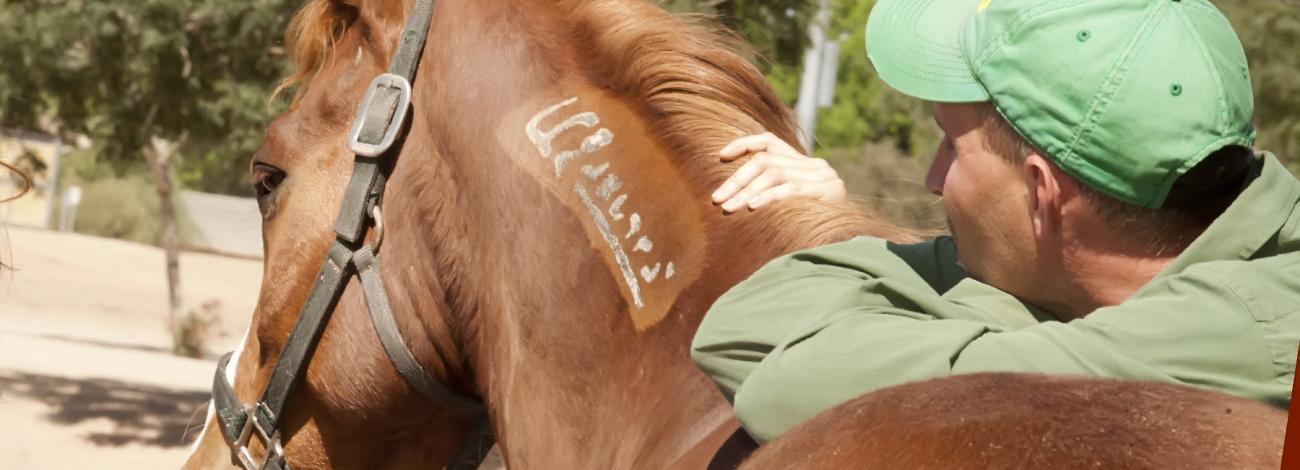
A freeze mark is a permanent identification marking applied to wild horse or burro by the Bureau of Land Management. Every wild horse or burro removed from public lands by the BLM receives a freeze mark in addition to a microchip.
For adopters and owners, the freeze mark is often more than just a number—it’s a point of pride. It represents the animal’s history and connection to America’s public lands, and many people see it as a badge of honor that reflects their role in giving a wild horse or burro a new home.
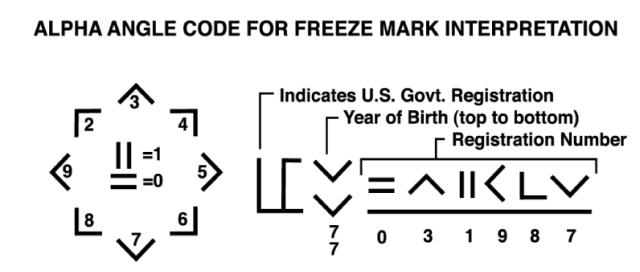
The BLM uses the International Alpha Angle System to create freeze marks. This system consists of unique symbols representing numbers, ensuring that every animal has a distinct identifier.
The freeze mark is applied to the left side of the animal’s neck using a cold-marking process. A specially designed iron is chilled in liquid nitrogen and pressed against the skin. The extreme cold changes the pigment-producing hair follicles, causing the hair to grow back white. This makes the mark gentle to apply, permanent, and easily visible for the life of the animal.
How to read a freeze mark
Locate the freeze mark.
Look on the left side of the horse or burro's neck. Sometimes the hair may need to be clipped or shaved for better reading. Taking a clear photo of the freeze mark and adjusting the contrast may also help.
Identify the first symbol
Resembling an oversized "U," this is the U.S. Government brand, indicating the animal was gathered by the BLM.
Decode the birth year and registration number
Use the Alpha Angle System chart to compare each symbol that comes after the "U" and determine the corresponding number.
The first two symbols (stacked vertically) represent the last two digits of the animal’s birth year. For example, if the symbols correspond to “1” and “9,” the animal was born in 2019. The remaining symbols form a unique six-digit registration number assigned to the animal, including the four-digit tag number the animal wears around its neck at BLM facilities.
Look up a freeze mark
Visit the BLM's Public Dashboard to find animal history using a freeze mark (or microchip number). The Public Dashboard provides access to key details such as:
- Birth year
- Where the animal originated
- Gather and health history
- Adoption or sale status
Signalments
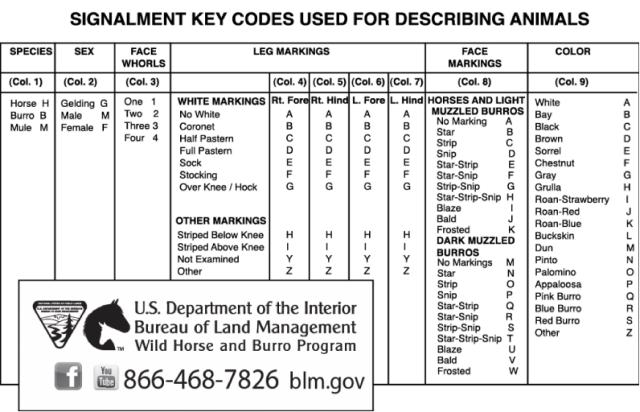
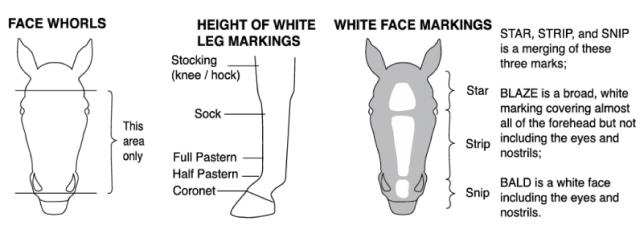
In addition to freeze marks, BLM uses signalments to help identify wild horses and burros. A signalment is a detailed description of an animal’s physical characteristics, recorded using standardized codes.
Signalments are especially useful when a freeze mark cannot be read and the animal does not have a microchip. By comparing these descriptive codes with BLM records, BLM staff can often locate the correct animal in the database.
Support
For assistance with deciphering a freeze mark or for help looking up an animal by signalments, please contact the BLM.