


Joint Pipeline Office
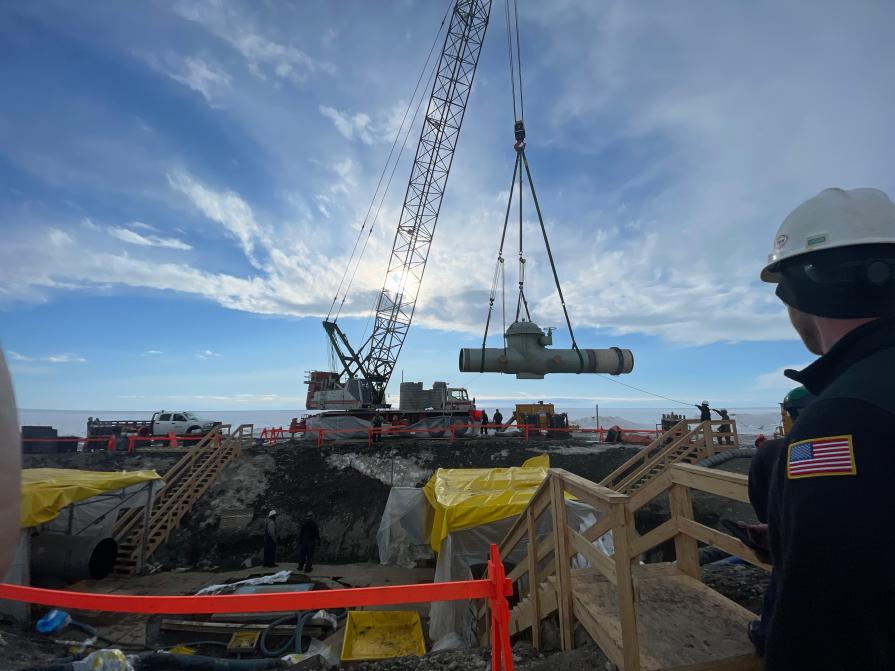
The Joint Pipeline Office (JPO) was created to coordinate regulatory oversight of the 800-mile Trans-Alaska Pipeline System (TAPS) and Valdez Marine Terminal in 1990.
The JPO is a consortium of federal and state agencies that was created to monitor environmental protection, pipeline system integrity, public and worker safety, and to ensure regulatory compliance along the pipeline. Federal member agencies include the BLM, Environmental Protection Agency (EPA), Pipeline and Hazardous Materials Safety Administration (PHMSA), U.S. Coast Guard, and the Department of Homeland Security. State of Alaska agencies include the departments of Natural Resources, Environmental Compliance, Labor, Fish and Game, and Public Safety.
Each agency representative acts within the scope of their respective agency authority as codified by the U.S. Code, Alaska Statute, Code of Federal Regulations, Alaska Administrative Code, Presidential Executive Orders, Governor’s Administrative Orders, Federal Agreements and Grants of Right-of-Way, and the State Leases (ROWs).
Operating Agreement
The formal agreement can be found is currently being coordinated between agencies.
The list below is meant as an overview of the agreement:
Provide coordinated review of all permitting actions and oversight of all phases of operation on jurisdictional pipeline systems.
Maintain and enhance reliability of the transportation of oil and gas resources and preserve the asset life of the systems under agency jurisdictions.
Maintain and enhance the infrastructure integrity.
Minimize pollution and protect fish, wildlife and their habitat.
Maintain and enhance safety of personnel and safe operations.
Maintain and enhance the capability and response to oil spills and other events.
Support the efforts to maintain and enhance security of pipeline systems.
Increase public awareness of oil and gas infrastructure and the challenges going forward for the public, agencies, and the industry.
Participating Agencies
Bureau of Land Management (BLM): Through delegation by the Secretary of the Interior, BLM’s Alaska Office has primary authority for administration of the right-of-way agreement on federal lands.
Bureau of Safety and Environmental Enforcement (BSEE): Responsible for safety and responsible development of the nation’s energy resources on the Outer Continental Shelf.
Pipeline and Hazardous Materials Safety Administration (PHMSA): Monitors pipeline operations for compliance with federal safety standards and for assurance that remedial actions for spills and accidents are adequate for the pipeline system.
Environmental Protection Agency (EPA): Responsible for ensuring that the pipeline system complies with several environmental laws, including the Clean Air Act and Clean Water Act.
U.S. Coast Guard (USCG): Responsible for issuing permits for bridges over navigable waterways. Requires that the Valdez Marine Terminal operate in accordance with regulations for facility safety and oil spill response.
Fish and Wildlife Service (USFWS): Responsible for National Wildlife Refuges; provides expertise to the BLM on matters affecting fish and wildlife conservation and habitats.
U.S. Army Corps of Engineers (USACE): Responsible for issuing permits for wetlands, construction in navigable waters, and coordination with Army installations through which the pipeline passes.
Alaska Department of Natural Resources: Primarily responsible for administering the right-of-way agreements on State lands.
Alaska Department of Environmental Conservation (ADEC): With EPA, responsible for ensuring compliance with applicable environmental laws; also responsible for reviewing pipeline contingency plans.
Alaska Department of Labor and Workforce Development (ADOLWD): Responsible for compliance with various building codes and worker safety for the pipeline system.
Alaska Department of Fish and Game (ADF&G): Responsible for protecting fish and game on State lands.
Alaska Department of Transportation & Public Facilities (ADOT&PF): Responsible for issuing permits for construction on State operated airports and highway rights-of-way. Also responsible for issuing permits for vehicles operating on the northern portion of the Dalton Highway.
Alaska Department of Public Safety (ADPS): Promote, regulate and develop ways and means of protecting life and property against fire, explosion, and panic. Performs building code and fire inspections and investigations.