


Materials Access Program - Community Pits
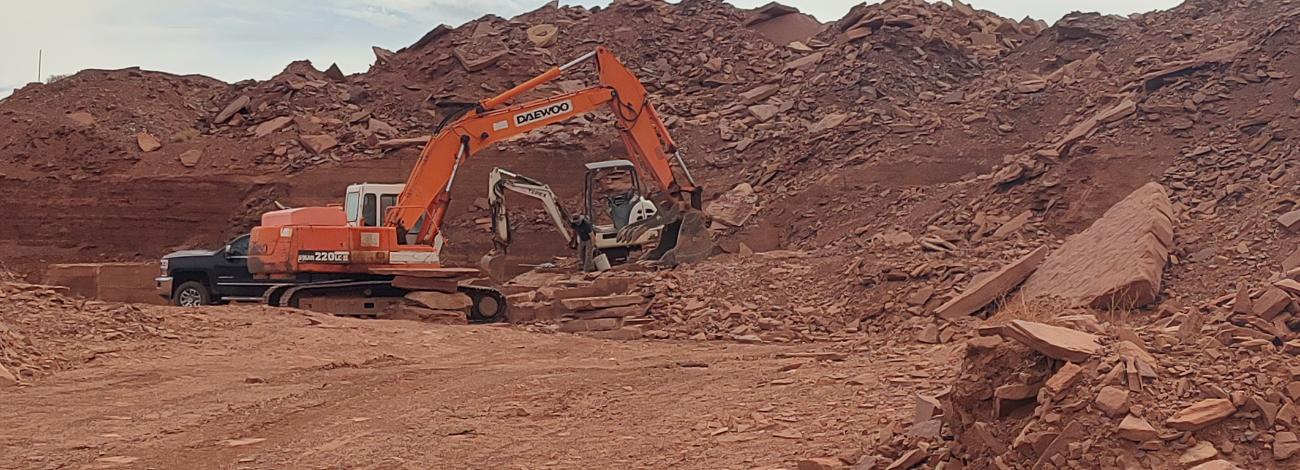
Community Pits are areas that the BLM designates to make mineral materials available to the public. Community Pits allow the public to purchase mineral materials such as sand, gravel, and stone through “over the counter” small sales but can also include larger-volume sales. The intent is to allow non-exclusive open access to mineral materials for the use and benefit of the public. In contrast, under individual sales, access to mineral materials is limited to the purchaser, such as a commercial quarry operation.
A purchaser buys mineral materials in Community Pits from the local BLM Field Office, which will offer the mineral materials for sale at the determined fair market value. In addition to paying fair market value, an individual or entity that purchases mineral materials from a community pit pays a precalculated reclamation fee that goes towards the final reclamation of the site. The purchaser will extract mineral materials according to the BLM-developed mining and reclamation plans. The BLM may also issue free use permits for the use of mineral materials in community pits to qualifying governmental entities and non-profit organizations.
Please contact the local BLM Field Office for information about the Community Pits in your area of interest or use the map below to explore what local community pits have to offer.
How to buy Mineral Materials from a Community Pit
- Find a Community Pit from which you would like to purchase mineral materials. This can be done by accessing the Community Pit Map and State Community Pit pages in the menu or contacting your local BLM Field Office.
- Go to the BLM Field Office that manages the Community Pit during their operating hours.
- Request a mineral material purchase from the personnel at the front counter of the BLM Field Office and let them know the amount of material you wish to purchase. You will be charged based on the “in-place” value and the amount of the material you wish to purchase, plus a nominal Community Pit reclamation fee.
- The front counter will issue you an “over the counter” sales contract for the purchase of the material and will inform you of any stipulations that you must comply with when accessing and removing mineral materials from the Community Pit (timing, waterway considerations, etc.). The contract will indicate the timeframe within which you will be allowed to remove the material as well as the purchase price and reclamation fee. A copy of the sales contract is available for informational purposes only.
- Remove the material that you purchased from the Community Pit. Material is sold as “in-bank” so you will need to excavate and load your own material.
Community Pits Interactive Map
View Community Pit Interactive Map in Full Screen
Community Pit Viewer Application Overview
- Surface Management Agency
- Public Land Survey System (PLSS)
- Administrative Units
- Roads and Trails
- USGS and BLM Surface Geology
- Basemap customization to suit user preferences
- Search functionality by Community Pit name or MLRS serial number
- Tabular data view at the bottom of the interface for easy browsing
- Flexibility to enhance the mapping experience by adding external data from ArcGIS Online, web services, or local files in supported formats such as CSV, KML, zipped Shapefiles, File Geodatabases (FGDB), GPX, and GeoJSON.
- The application offers robust filtering capabilities, allowing users to refine Community Pit data based on:
- Material type available at the Community Pit
- State in which the Community Pit is located
- Displaying key attributes such as commodity type, serial number, and geographic name
- The corresponding Community Pit page on BLM.gov
- Navigation options via Google Maps or Apple Maps