


Reclaiming Land and Eliminating Hazards in Washington State, One Abandoned Mine at a Time
In early June, the BLM Oregon/Washington Spokane District's Border Field Office partnered with Phil Barbarick of the BLM Idaho Mine Closure Team to complete the first phase of an Abandoned Mine Lands (AML) project at seven abandoned mines in northern Ferry County, Washington. The effort marked the culmination of months of planning, coordination, and field preparation to address significant public safety hazards on public lands.
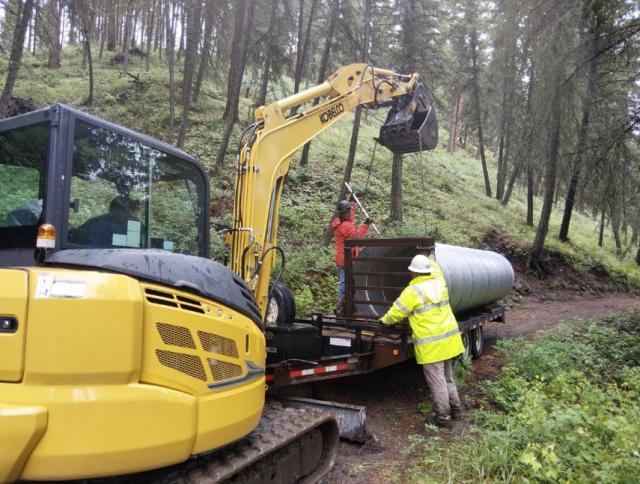
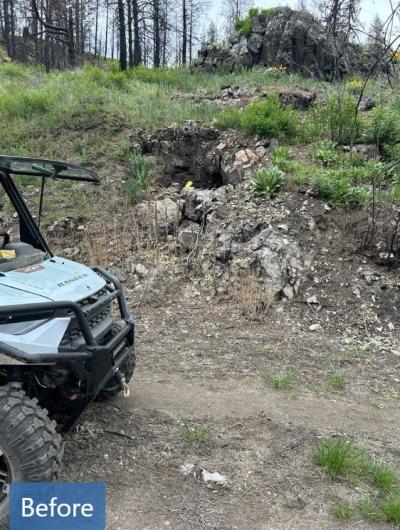
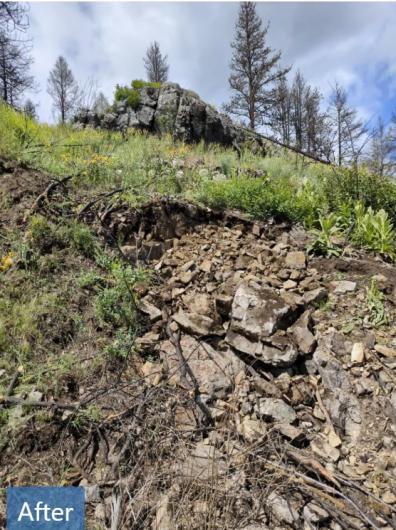
The seven mines selected for this project had no readily identifiable responsible parties and posed a range of hazards, including deep shafts, unstable rock overhangs, and unknown underground conditions beyond the visible openings.
| 
|
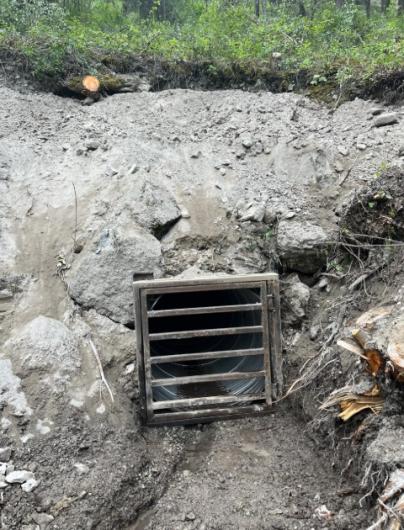
Under Barbarick's guidance, Border Field Office employees gained hands-on experience with several mine closure techniques. The team used heavy equipment to backfill hazardous openings, installed expanding foam closures, and placed a culvert and welded a bat-compatible gate at a mine that extends approximately 1,400 feet underground. The gate allows continued access for bats and authorized personnel while improving public safety. Future project phases will include installing site-specific steel gates at two additional adit openings.
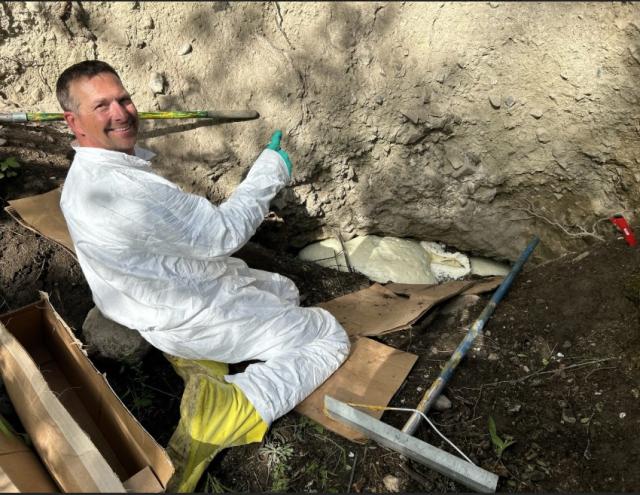
While previous AML work in the district has largely been completed through contracts and agreements, this project demonstrated the value of building in-house expertise. Staff members applied skills developed in other programs to successfully carry out closure work, while Barbarick's leadership provided valuable technical knowledge and training.
This cross-state collaboration not only enabled the Border Field Office to complete a priority safety project efficiently but also strengthened the team's capacity to tackle future AML projects across the district.
Related Stories
- Billings Field Office completes abandoned uranium mine closure work in the Pryor Mountains
- BLM, Partners Enhance Public Access at Popular Recreation Area
- BLM Celebrates America’s 250th Anniversary in Oregon
- More time travel for the nation’s 250th: Exploring BLM back country byways in Oregon and California
- Timber Talk: OR/WA logs a big win in FY25
Office
1103 N. Fancher Road
Spokane Valley, WA 99212
United States