


New Life for the Front Lines: How Surplus Engines are Saving Utah’s West Desert
SALT LAKE CITY — In the shimmering heat of the West Desert, the difference between a small brush fire and a runaway disaster is measured in minutes. In this vast landscape of sagebrush and jagged peaks, help is often miles away, and sometimes local volunteers are the only line of defense.
To give these small-town heroes a fighting chance, the Department of the Interior has launched a critical hand-off. Through the Rural Fire Readiness program, two heavy-duty wildland fire engines have been transferred to local departments, turning federal surplus into a community lifeline.
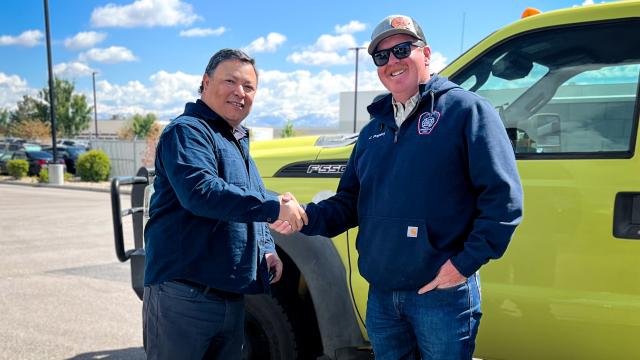
The first major upgrade arrived in Snowville, a town that watches over a staggering 1,600 square miles stretching across the Idaho border. For years, the Snowville Volunteer Fire Department relied on a 1999 engine that was showing its age. On April 28, they officially replaced it with a 2012 Ford F-550, a nimble yet sturdy machine built for rugged terrain.
This new engine is designed for initial attack operations, the earliest stages of wildfire suppression. It carries 313 gallons of water and a specialized foam tank, allowing crews to move quickly through rocky canyons to snuff out new starts before they grow. Because Snowville coordinates with multiple counties, this single truck adds a layer of protection to thousands of acres of public and private land.
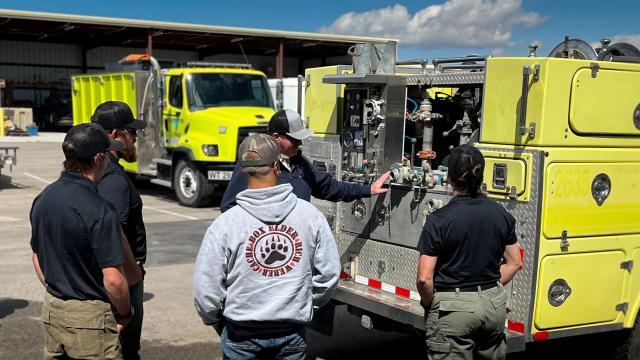
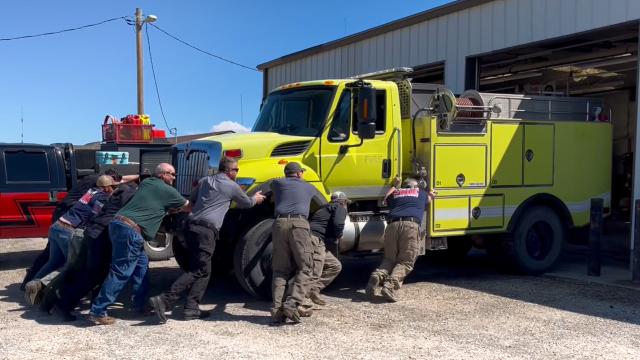
A few days later, the Vernon Fire Department received an even larger boost. Their new rig, a 2011 International 7400, is a powerhouse capable of hauling a massive 800-gallon water tank with a high-performance pump system designed to draft water from almost any source.
Before this transfer, Vernon’s crew struggled with an older truck that had become a source of constant, expensive repairs. The newer engine not only increases their water capacity but also lowers maintenance costs, ensuring that when the alarm sounds, the truck actually starts.
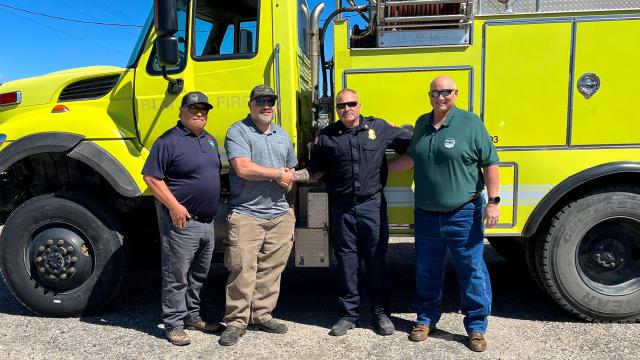
The logic behind the program is simple: wildfires do not care about property lines. By equipping local departments that sit near federal lands, the Department of the Interior creates a stronger, more unified shield for the entire region.
“These transfers give departments in remote areas the tools they need to respond faster and more effectively,” says Erik Valdez, a fire management officer for the U.S. Wildland Fire Service. These aren't just equipment hand-offs; they are investments in the safety of every person who lives in or visits the West Desert.
As the summer sun continues to bake the Utah landscape, the residents of Snowville and Vernon can breathe a little easier. With better gear and stronger partnerships, the West Desert is now better prepared than ever to face the flames.
Related Stories
- BLM Turns Wildfire Response into Opportunity for Forest Management and Local Industry
- BLM Wyoming Explores Emergency Response and Rehabilitation after Wildfire
- Nine Miles of Prevention: The Fuel Break that turned the Fire
- Firefighters and Archaeologists Collaborate to Protect Historic Mining Site during Monroe Canyon Fire
- Community, Fire, and Enforcement