


BLM’s Agua Fria National Monument is a worthwhile destination on your winter bucket list
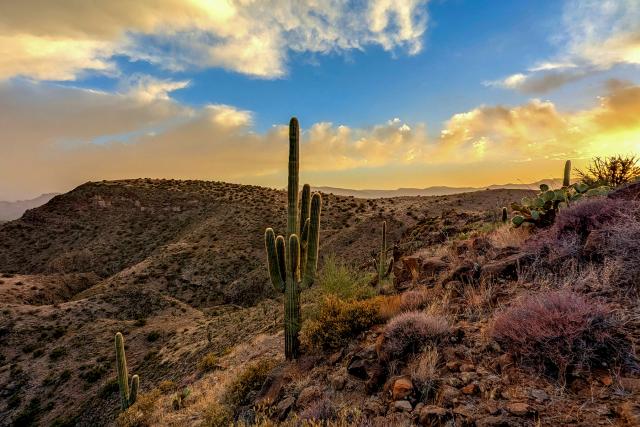
Imagine cooler temperatures in the 60s ideal for hiking and plentiful opportunities for solitude, framed by the beautiful, seemingly endless expanse of Arizona desert.
The Bureau of Land Management (BLM)'s Agua Fria National Monument, located about 40 miles north of Phoenix, is worth a wintertime visit — when most other public lands in the West are often buried in snow.
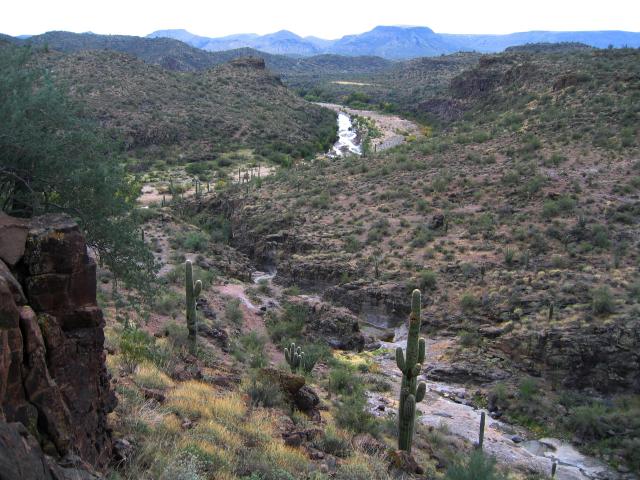
Designated on Jan. 11, 2000, the Agua Fria National Monument encompasses 70,900 acres of public land including expansive canyons, mesas, rolling grasslands, lush riparian habitat, a dormant volcano, and its crowning namesake the Agua Fria River (meaning “cold water” in Spanish), which placidly meanders through the northern reaches of the monument.
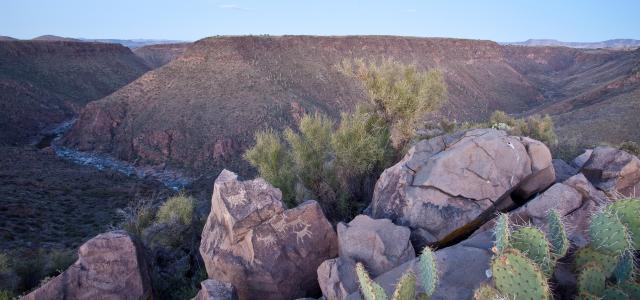
But what makes the monument truly unique is its abundance of history — it contains one of the most significant systems of late prehistoric sites in the American Southwest, including the Pueblo la Plata, a major settlement of stone masonry pueblo, as well as other ancient and historic structures, pueblos, petroglyphs, dinosaur and plant fossils, and more.
Beyond its connection to the past, the landscape itself is an important living resource, encompassing an “expansive mosaic of semi-desert grassland, cut by ribbons of valuable riparian forest," (see footnote) which provide water and support habitat for an abundance of wildlife including coyote, the North American pronghorn, javelina, bobcats, antelope, mule deer, amphibians, reptiles, songbirds, eagles, and more. (Important to note is that many of the wildlife species found within the Monument are disappearing elsewhere in Arizona.)
Looking for things to do? Popular activities within the Monument include:
Hiking. Tips: Try Badger Springs Trailhead. There are no developed trails in the Monument. The terrain is very rough and rocky with steep cliffs, canyons and remote areas. Be prepared with plenty of water, supplies, and proper hiking equipment. Leave No Trace. Please use caution: rattlesnakes are relatively common in the spring and summer months.
Camping.
Hunting. Tip: You must have an Arizona Game and Fish Department license and permit and follow all federal and state regulations.

Birdwatching. Fun fact: The Monument is designated as an Important Bird Area by the Audubon Society. To date, 194 species of birds have been recorded.
Archaeological Site Viewing. Try exploring Pueblo la Plata. Do not disturb artifacts.
Driving and Biking. Tip: Roads in the monument are unpaved. High clearance or four-wheel drive may be required.
So, dig out your hiking boots and explore the Agua Fria National Monument — you just might find it to be the ideal winter escape!
The Agua Fria National Monument is open 24 hours a day, year-round. No fee is required for general visits by the public. Be prepared with plenty of water, supplies, and proper hiking equipment. Visit the resources under related content for additional information and important safety precautions before your visit.
Related Content
Related Stories
- Pipestone Roars to Life as Community Comes Together for National Public Lands Day
- Postcards Become Monthly Creative Tradition at Red Rock Canyon National Conservation Area in Nevada
- A Familiar Stretch of the Green River, a New Step for Seedskadee Lands
- Signs of Collaboration: Protecting Tortoises on Arizona Public Lands
- BLM Showcases Local Recreation Treasures Ahead of National Hunting and Fishing Day
Office
2020 E. Bell Road
Phoenix, AZ 85022
United States