


Desatoya Mountains Habitat Resiliency, Health, and Restoration Project
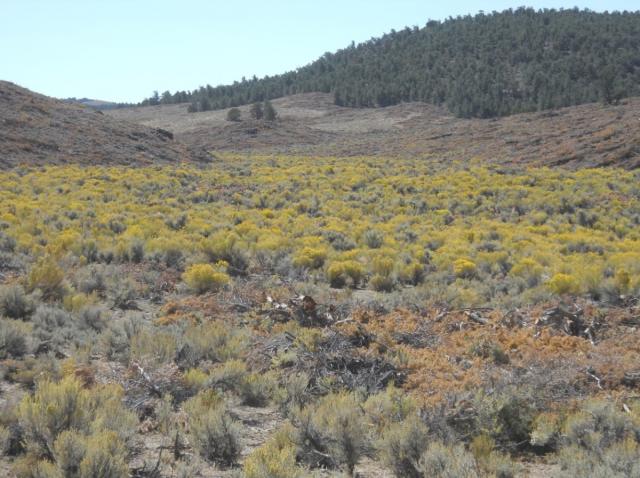
The Bureau of Land Management (BLM)'s Carson City District Stillwater Field Office initiated the Desatoya Mountains Habitat Resiliency, Health, and Restoration Project in 2012.
This project is a landscape-scale level, multi-year habitat improvement project involving multiple partners on BLM lands within the Desatoya Mountains.
Partners include the Nevada Department of Wildlife, Smith Creek Ranch LTD, the University of Nevada, Reno, the Agricultural Research Service, Natural Resources Conservation Services, Great Basin Bird Observatory, Great Basin Institute, and the U.S. Geological Survey.
Since 2012, the BLM’s Healthy Landscapes, Wildlife, and Hazardous Fuels program has supported the U.S. Geological Survey monitoring of greater sage-grouse, the University of Nevada, Reno hydrological research, and a variety of habitat improvement treatments including wet meadow, shrubland, and woodland wildlife habitat restoration. Vegetation treatments are designed to benefit sage-grouse, pinyon jays, mule deer, and a variety of other wildlife that are dependent on sagebrush, woodland, aspen, and riparian habitats typical of the Great Basin ecosystem.
The U.S. Geological Survey has been monitoring the sage-grouse population within the Desatoya Mountains since 2013 through radio and GPS marking of 69 sage-grouse. The telemetry monitoring has allowed the U.S. Geological Survey to study sage-grouse movement patterns (before and after vegetation treatments), nesting and brood-rearing success, and habitat site selection.
University of Nevada, Reno is currently conducting research regarding the hydrological response of pinyon-juniper removal on the riparian areas within Porter Canyon (Porter Canyon Experimental Watershed).
Great Basin Bird Observatory has conducted migratory bird monitoring including using telemetry on pinyon jays.
The Nevada Department of Wildlife has been an integral partner in conducting vegetation monitoring and providing funding, expertise and contracting of vegetation treatments. Currently, approximately 6,000 acres of vegetation treatments have been or are contracted to be completed.
Related Content
Related Stories
- Manatee Awareness Month: Protecting Gentle Giants on BLM Public Lands
- Ryan GosWING Wins BLM’s 2026 Bat Beauty Contest
- Honor Farm Showcases Inmate Horsemanship at Annual Adoption
- Celebrate Halloween with Bat Trivia on BLM-Managed Lands
- BLM Partners and Volunteers Enhance Desert Garden at San Pedro Riparian National Conservation Area
Office
5665 Morgan Mill Road
Carson City, NV 89701
United States