


BLM Announces Fall Fortymile Caribou Federal Subsistence Hunt
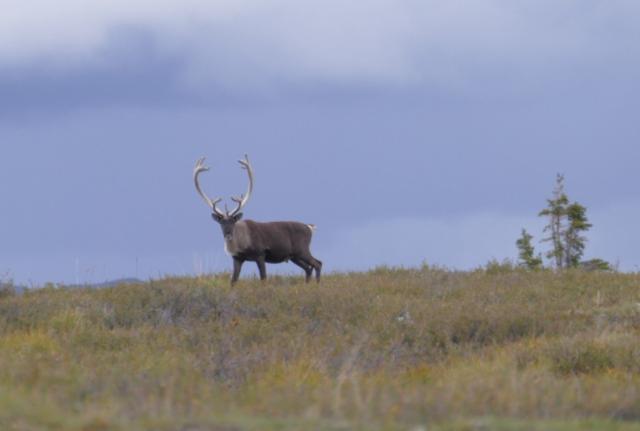
FAIRBANKS, Alaska – The Bureau of Land Management Eastern Interior Field Office will open the Fortymile caribou federal subsistence hunt in Units 20E, 25C and a portion of 20F in August. This hunt is limited to federally qualified rural residents hunting on federal public lands only, including federal public lands accessible from the Steese and Taylor highways.
This year’s hunt establishes different opening dates by Alaska Department of Fish and Game (ADF&G) State Fortymile Caribou Zones, as detailed below, and sets a harvest limit of one bull caribou. This reflects a change in the bag limit and opening dates compared to previous years and comes after the BLM considered State zone quotas to minimize risk of further population decline and to distribute harvest across users.
Zone | Federal Opening Date* |
Zones 1 & 4 combined (Steese Hwy area) | Sunday, August 16 |
Zone 2 (Roadless area) | Wednesday, August 5 |
Zone 3 (Taylor Highway area) | Sunday, August 16 |
*An announcement notifying the public of any zone opening delays or closures will be posted at least three days before.
The scheduled federal subsistence opening dates precede scheduled State zone openings. The federal subsistence hunt will open at 12:01 a.m. on each date listed and close at 11:59 p.m. on September 30, 2026, unless modified by emergency special actions. The BLM may issue emergency special actions to delay opening dates or close zones with short notice to prevent overharvest. The public should closely monitor the Fortymile Hotline at (907) 267-2310 for updates.
Federally qualified subsistence hunters must obtain a RC860 joint State/federal permit issued by the Alaska Department of Fish and Game. Current information on the State zone opening dates and quotas is found in the ADF&G Advisory Announcement. When the State hunt is closed, federally qualified hunters may only harvest on federal public lands. When the State portion of RC860 is open, all registered hunters may hunt on federal and non-federal land. Evidence of sex must remain attached and reporting requirements apply.
Federal subsistence hunting is not allowed on lands selected by Alaska Native Corporations, Native allottees, or the State of Alaska. Maps showing federal public lands open to the hunt near the Steese and Taylor highways are available from the BLM Alaska Public Rooms and in the “Federal Subsistence Hunting Map Series” in the BLM Alaska’s georeferenced PDF map collection. This collection also includes the “Digital Public Information Map Series,” featuring maps with information about BLM recreation sites and motor vehicle access; however, these maps include general land status and do not indicate closures due to land selections.
BLM made the decision to authorize the federal subsistence hunt under authority delegated by the Federal Subsistence Board after consultation with ADF&G, the National Park Service, the U.S. Fish and Wildlife Service, the Office of Subsistence Management, the Eastern Interior Subsistence Regional Advisory Council Chair and representative serving on the Fortymile Harvest Management Coalition, and the Tanana Chiefs Conference Tribal Resources Stewardship Department.
For more information on seasons, harvest limits, methods, and customary and traditional use determinations for the subsistence taking of wildlife, please reference the 2024-2026 Federal Subsistence Management Regulations for the Harvest of Wildlife on Federal Public Lands in Alaska.These regulations are in effect until a final rule is published regarding revised regulations.
The public can call the Fortymile Hotline at (907) 267-2310 for information and updates on the RC860 caribou hunt. For additional information about the federal subsistence hunt, contact the BLM Eastern Interior Field Office at (907) 474-2200 or EasternInterior@blm.gov.
The BLM manages about 245 million acres of public land located primarily in 12 western states, including Alaska, on behalf of the American people. The BLM also administers 700 million acres of sub-surface mineral estate throughout the nation. Our mission is to sustain the health, diversity, and productivity of America’s public lands for the use and enjoyment of present and future generations.