


Wild Horse and Burro Week
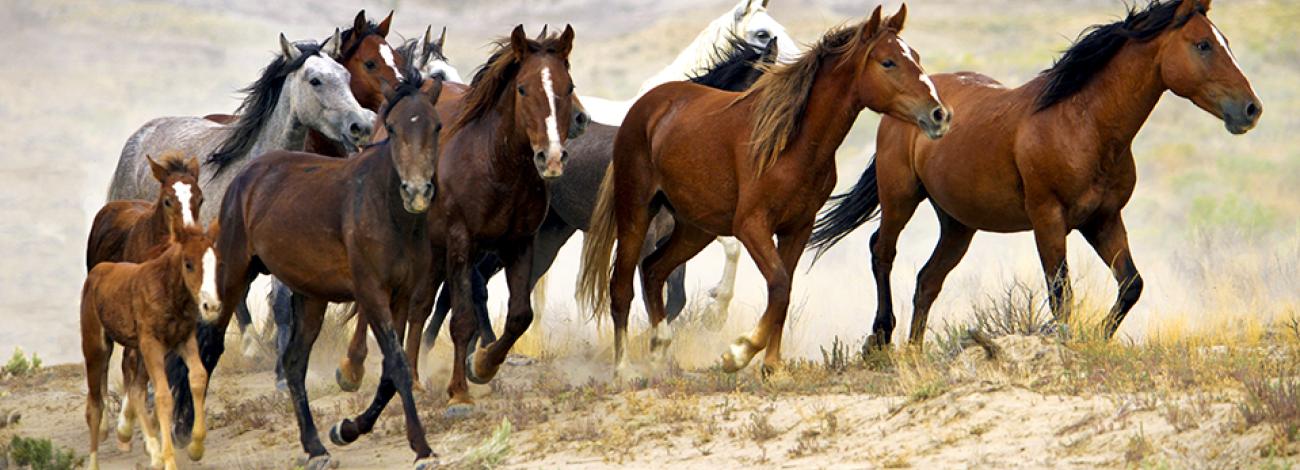
Join the Bureau of Land Management in honoring the legacy of America’s wild horses and burros and recognize the importance of protecting and managing these iconic species. This special week, centered around Velma “Wild Horse Annie” Johnston’s birthday, March 5, is an opportunity to reflect on the past, engage with the present, and inspire action for the future.
Celebrating Wild Horse Annie’s Legacy
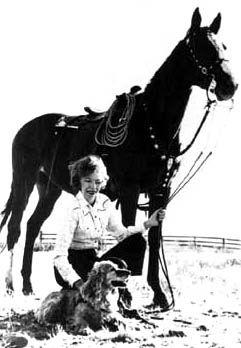
Wild Horse Annie’s dedication to wild horse and burro protection sparked a movement that led to the passage of the Wild and Free-Roaming Horses and Burros Act of 1971. Thanks to her tireless advocacy, these animals became recognized as a vital part of America’s heritage.
Wild Horse Annie also understood the importance of balance—ensuring that wild herds could thrive alongside healthy rangelands. This concept was enshrined into the Act, which combines protection with responsible management to sustain both the animals and their habitat for future generations.
I will remember that I used the word 'Range.'
...we've got to protect the Range.
Management and Protection: A Commitment to Healthy Herds and Healthy Rangelands
Today, the BLM manages 175 wild horse and burro herds across millions of acres of public lands. The BLM remains committed to maintaining the health of wild horse and burro herds while preserving the rangelands they depend on. Rapid population growth and chronic overpopulation poses challenges to both animal welfare and ecosystem health, making proactive management essential to the health and well-being of wild horses and burros on public lands.
To carry out the mission of the Wild Free-Roaming Horses and Burros Act, the BLM employs science-based strategies to support herd health and rangeland sustainability. Additionally, the BLM’s Comprehensive Animal Welfare Program ensures that wild horses and burros receive humane care throughout every stage of management—from the open range to their new adoptive homes.
Tales from the Trails
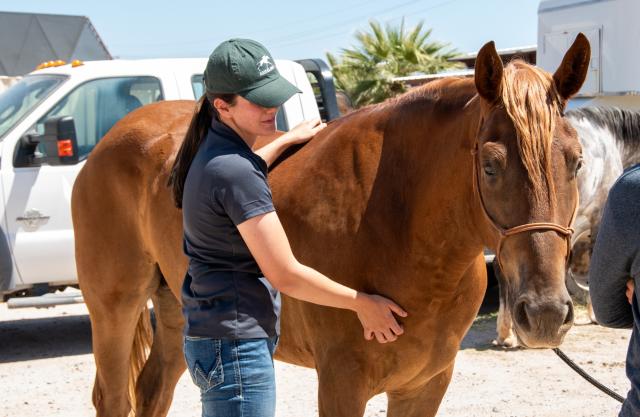
Read about the BLM Wild Horse and Burro Program and hear from adopters who have given a good home to a wild horse or burro