Utah Archaeology
BLM Utah has a responsibility to manage archaeological, historical, and traditional-use sites—commonly referred to as cultural or heritage resources—on public lands. These fragile and irreplaceable resources are an essential part of our Nation’s heritage, and Utah contains an exceptionally rich and diverse record representing more than 13,000 years of human history.
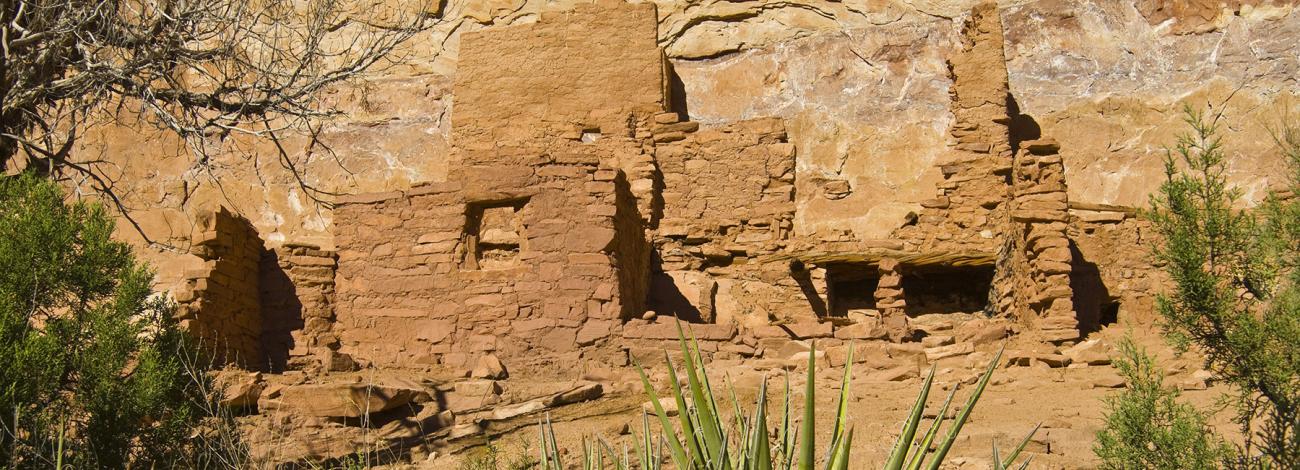
Heritage resources on Utah’s public lands include, but are not limited to, Barrier Canyon Style pictographs, pioneer inscriptions, Ancestral Puebloan cliff dwellings, historic cabins, prehistoric artifact scatters, and historic mining-related features. Together, these resources tell the story of the people who have lived, traveled, and worked across Utah’s landscapes for millennia.
As part of its stewardship responsibilities, BLM Utah identifies and evaluates heritage resources for their potential scientific, traditional, educational, experimental, and public-use values. BLM Utah also works to protect and preserve heritage resources in place on public lands, ensuring they remain available for the benefit and understanding of present and future generations.
Reporting a Discovery
If you find archaeological resources or human remains on public land
- Notify your local BLM Office as soon as possible about archaeological sites or artifacts found on public lands. If human remains are discovered, notify both the local BLM Office and Sheriff's department.
- Help protect the resources by leaving all items in place and not sharing the location with others.
- Remember, all human remains and cultural items should be treated with care and respect.
- Annual Reports
- Public Involvement - National Historic Preservation Act
Public Involvement under the National Historic Preservation Act for BLM Undertakings
BLM Utah uses the BLM National NEPA Register as one way for the public to become involved in National Historic Preservation Act (NHPA) Section 106 process for BLM undertakings in Utah. The ePlanning website contains summary information about the proposed project pertinent documents, maps and other resources. Contact information is also provided for the relevant field office or project lead.
For further information, please contact Lori Hunsaker, Deputy Preservation Officer at lhunsaker@blm.gov or 801-539-4276.
- Permits For Archaeological Investigations
Permit for Archaeological Investigations (PAI)
All persons conducting archaeological fieldwork on BLM managed lands in Utah are required to hold a valid Permit for Archaeological Investigation (PAI) prior to beginning fieldwork. For more information on the types of permits issued by BLM Utah, or for information on the qualifications necessary to obtain a permit, please refer to BLM Utah’s Permits for Archaeological Investigations Application Instructions (February 2025) available in PDF format under the Permit Forms and Guidelines tab.
Permits issued by the BLM Utah state office are only valid for cultural resource investigations on BLM Utah managed lands. Fur cultural resource investigations on Tribal, Utah state, or other Federal lands, a permit must be issued by the appropriate authority.
Application for a Permit
Any individual or company not currently permitted may apply for a Permit for Archaeological Investigations by submitting a DI-1926 form (Application for Permit for Archaeological Investigations) along with the required supporting documentation to the BLM Utah state office. Permit applications sent to field offices will not be processed.
Request for Modification of a Permit
A Request for Modification of a Permit for Archaeological Investigations form is used to add or remove personnel, extend dates for testing or excavation, change curatorial facilities, change addresses or phone numbers, or change the permitted areas of work. Permit modification requests are only accepted at the BLM Utah state office. Permit applications sent to field offices will not be processed.
Submissions
All electronic permit related requests must go to: blm_ut_cr_permits@blm.gov. No permit correspondence addressed to specific individuals will be answered.
Applications or modification quests must include the application or modification forms and all required supporting documentation in WORD or PDF format. When submitting requests for renewals or modifications, please include the permit number in the subject line of the request.
Requests accepted via mail addressed to:
Nicole Lohman, Assistant State Archaeologist
Bureau of Land Management
Utah State Office
440 W 200 S Suite 500
Salt Lake City, UT 84101PDF forms available below.
Please allow 2 to 4 weeks for processing survey permit requests and 6 to 8 weeks for processing of limited testing or excavation permits.
Further questions about permits may be directed to:
blm_ut_cr_permits@blm.gov
(385) 478-0608- Permit Forms and Guidelines
Applying for a Permit
The following materials include instructions on how to request a permit, BLM Utah requirements, and application forms.
Permit Instructions (revised February 2025)
Application Form DI-1926 Instructions
States and Counties for Relevant Experience
Modifications
Use this form for all permit modification requests.
Permit Modification Request Form
Annual Report
Annual reporting guidelines and examples.
Permit Requirements
Mandatory policies
Summary Report of Cultural Resources Inspection
Utah Data Standards (revised March 2024)
Collections
Complete and submit this form for any collections made under a permit.
Deposition of Museum Collections Confirmation
Resources
Handbooks, guidelines, and policies related to fieldwork conducted under a permit.
Fieldwork Authorization Request Form
Contact Us
Lori Hunsaker
State Archaeologist
801-539-4276
Nicole Lohman
Assistant State Archaeologist
385-478-0608
Diana Barg
Curator and NAGPRA Coordinator
801-539-4214
Featured Videos
Flickr Album