


BLM Helps Protect Wild Horses Near Reno as Range Conditions Worsen
Organization:
BLM Office:
Media Contact:
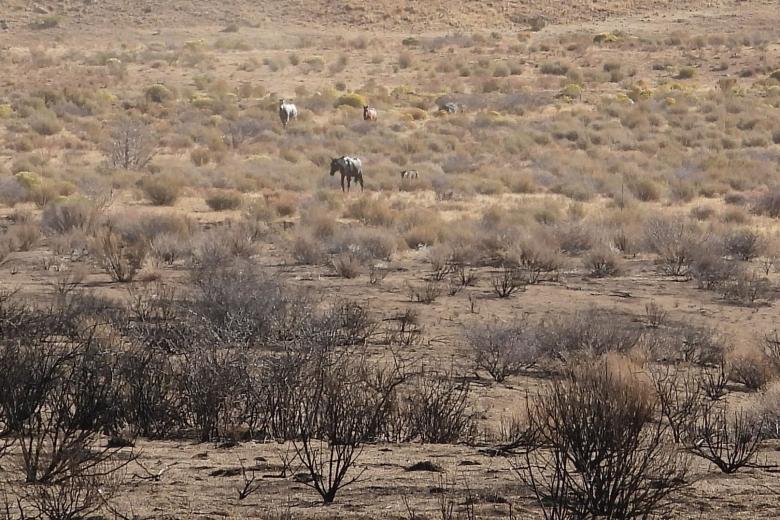
CARSON CITY, Nev. – Wild horse gather operations near Reno concluded Oct. 22, protecting 323 wild horses from conditions where herd numbers had grown beyond what the land could support. When forage and water become limited, wild horses are the first to suffer, facing preventable risks such as hunger, dehydration, exhaustion, and injury as they search for resources. This gather was conducted to protect the animals’ long‑term health and restore healthier range conditions.
In the North Complex, which consists of the Dogskin Mountains, Flanigan, and Granite Peak herd management areas, recent wildfires have further reduced the suitability of these areas to support wild horses. The Bug and Fred Mountain fires burned a combined 93,733 acres, including approximately 4,588 acres within the Dogskin Mountains Herd Management Area and 1,619 acres within the Granite Peak Herd Management Area, significantly reducing available forage and other resources. In addition, ongoing drought conditions have limited forage production and reduced post-fire recovery potential, further reducing the forage resources of the affected area.
Trained gather personnel conducted operations in accordance with the Comprehensive Animal Welfare Program, which promotes safe and humane treatment of all animals. Many of the horses gathered were still in good condition, while some presented as thin. Getting the horses off the range before their conditions further deteriorated was part of the goal.
Wild horse herds can double in size every four to five years. Without active management, populations quickly outgrow available food and water, leading to overgrazing, degraded vegetation, and declining range and herd health. Gathers carried out under the Wild Free-Roaming Horses and Burros Act of 1971 help restore balance on public lands and improve conditions for horses, wildlife, and other permitted uses.
The gather supports significant progress toward achieving the Standards for Rangeland Health identified by the Sierra Front-Northern Great Basin Resource Advisory Council. In addition, by balancing herd size with what the land can support, the BLM strives to protect habitat for other wildlife species such as sage grouse, pronghorn antelope, mule deer, and elk.
All gathered animals are being cared for at the Litchfield Wild Horse and Burro Corrals in Litchfield, Calif., where they are evaluated by a veterinarian and prepared for the BLM’s wild horse and burro Adoption and Sales Program. Wild horses not adopted or sold will be placed in long-term pastures where they will be humanely cared for and retain their “wild” status and protection under federal law. The BLM routinely offers animals from these off‑range facilities for adoption at off-site events and through the Online Corral, and also provides opportunities for the public to tour the facilities and learn more about the program.
The Wild Free‑Roaming Horses and Burros Act of 1971 charges the BLM with managing wild horses and burros on public lands. Federal law prohibits the commercial slaughter of these animals, and the BLM does not sell or send wild horses or burros to slaughter. The agency enforces adoption and sale requirements, strengthened the bill of sale language, and works closely with law enforcement whenever credible information suggests a violation may have occurred.
This commitment to humane care is central to BLM’s mission and guides every action we take to ensure wild horses and burros remain responsibly managed for generations to come. Learn more about the Wild Horse and Burro Program and how qualified adopters can bring home an American living legend.
Additional gather information is available on the 2026 North Complex Gather website.
The BLM manages about 245 million acres of public land located primarily in 12 western states, including Alaska, on behalf of the American people. The BLM also administers 700 million acres of sub-surface mineral estate throughout the nation. Our mission is to sustain the health, diversity, and productivity of America’s public lands for the use and enjoyment of present and future generations.