


Fort Stanton Cave seventh longest cave in the United States
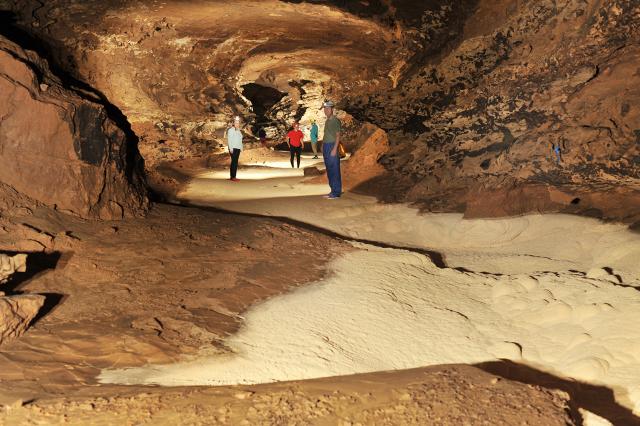
LINCOLN COUNTY, N.M. – It’s official: Fort Stanton Cave has moved up to the seventh longest cave in the United States.
Explorers with the nonprofit Fort Stanton Cave Study Project and other cavers have mapped 56.23 miles of the cave, making its length longer than the 55.01-mile-long Great Savannah Cave System in West Virginia, according to cave-exploring.com, which maintains several rankings for the caving community.
The cave’s only entrance is within the BLM’s Fort Stanton – Snowy River Cave National Conservation Area, but the cave travels beyond the NCA’s boundaries under U.S. Forest Service, municipal and private land as well.
Warren Kasper, manager of the Fort Stanton – Snowy River Cave NCA, said ongoing exploration is important because we cannot know what is in the further reaches of the cave until we get there. Past exploration has yielded at least one big surprise.
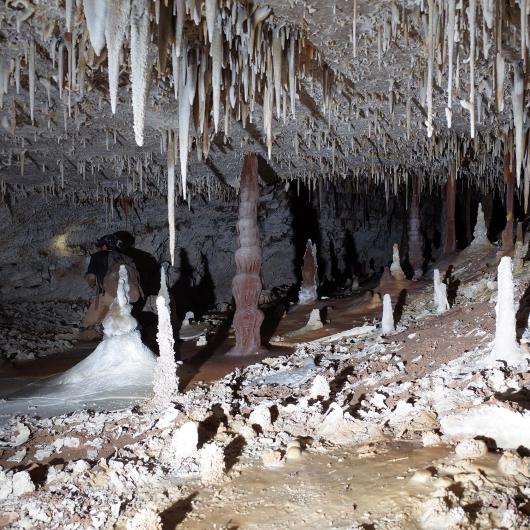
“If people had not made the effort to explore the cave in the past, we would never have known about the Snowy River Formation, and everything that has been discovered since then,” Kasper said. The Snowy River Formation, the longest known cave formation in the world, consists of water-deposited calcite, and resembles a frozen, white river.
Knutt Peterson, cave specialist for the BLM Roswell Field Office, which manages the cave, said exploration of Fort Stanton Cave dates back more than 170 years, and the cave is unique in the world because of the Snowy River Formation, which is more than 12 miles long.
“Exploration of Fort Stanton Cave is crucial to acquiring a better understanding of this world-class cave system,” Peterson said. “Caves are natural archives, and exploration provides the opportunity to reveal cultural history, paleoclimate data, unique biodiversity, and many other unknowns. These fragile underground realms offer insights into local geology, hydrology, biology, while serving as models for extreme life and potential extraterrestrial habitats.”
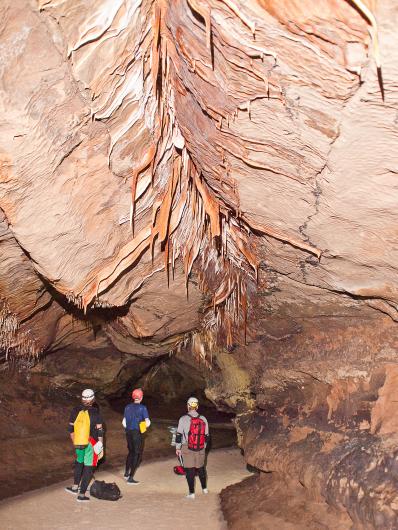
For example, studying the hydrology of this cave system is important to understanding the recharge of local groundwater systems, filtering and storing water that becomes drinking water for local communities and livestock, Peterson said.
Kasper also noted that Fort Stanton Cave is a world-class cave resource.
“The portions of the cave that have been discovered in this century, and that are still being explored now, provide opportunities for scientific research in a cave environment that has been largely untouched by people,” Kasper said.
The explorers aren’t sitting on their laurels, however, and emphasize that the ranking could change at any time since cavers are exploring other caves all the time. In addition, they always prioritize safety over mileage increases.
Peterson said he appreciates the highly experienced cavers who volunteer their time and skills to explore the depths of the cave.
“A round trip to the frontier in Fort Stanton Cave can cover nearly 30 miles of travel and last up to four days,” Peterson said. “Cavers manually survey (no GPS underground), sketch, inventory, and document new passages and discoveries in new unexplored areas.”
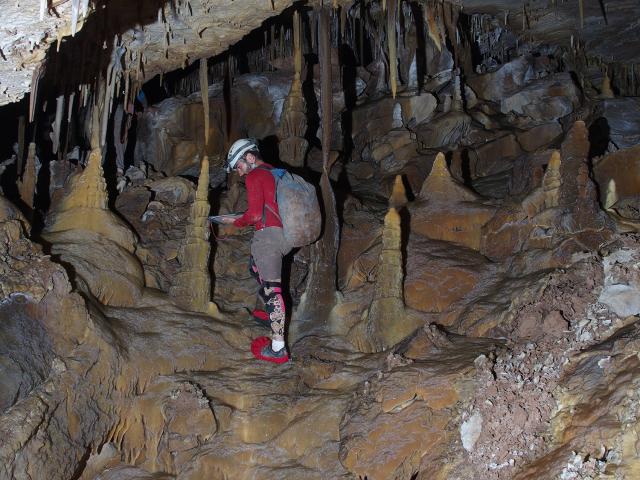
Fort Stanton Cave, which is closed to the public due to the threat of white-nose syndrome, limits entries into the cave each year via permits for educational and scientific purposes. In addition, the Snowy River Formation is off-limits to the public due to scientific significance and fragile nature.
Kasper and Peterson said they look forward to more discoveries within the cave.
“I find myself curious about what discoveries might come from the next trips into the cave, whether that is new cave passages, distinctive formations, fossils, or something entirely different and exciting,” Kasper said.
The longest cave in the United States is the Mammoth Cave System in Kentucky at 426 miles, according to cave-exploring.com, and the longest cave in New Mexico is Lechuguilla Cave, near Carlsbad, at 152.11 miles.
Learn more at https://cave-exploring.com/index.php/long-and-deep-caves-of-the-world/usa-long-cave-list/ and https://www.fscsp.org.
Related Stories
- Celebrating 30 Years of California Condor Recovery at Vermilion Cliffs National Monument
- Fossils, furs and a few sparks at Kemmerer Outdoor Discovery Day
- BLM National Public Lands Day tradition continues in Roswell, New Mexico
- Signs of Collaboration: Protecting Tortoises on Arizona Public Lands
- BLM Arizona and Arizona Association of Conservation Districts: A Model Partnership for Landscape Conservation
Office
2909 West Second Street
Roswell, NM 88201-1287
United States