


BLM hosts fire investigation training course to strengthen wildland fire investigation capacity across Arizona and the West
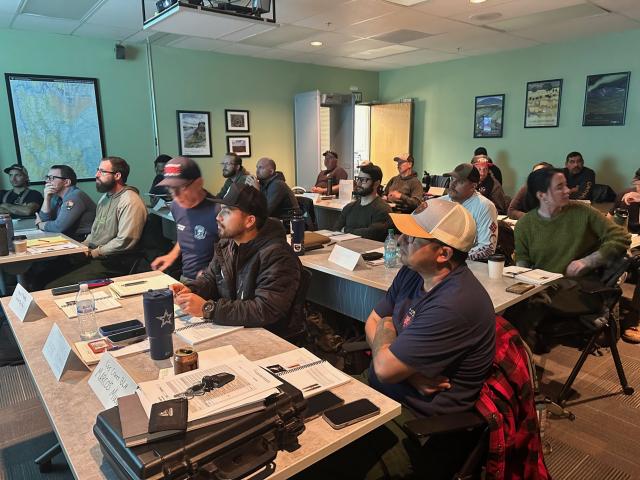
The Bureau of Land Management (BLM) Colorado River District (CRD) recently hosted the Wildland Fire Origin and Cause Determination (FI-210) course, a critical training aimed at expanding the number of qualified wildfire investigators needed to meet federal requirements for examining and investigating every wildfire to determine the cause and source of the ignition. The course was held during the first week of December at the Kingman Field Office, which provided students with hands-on field exercises conducted in the Pine Lake area of the Hualapai Mountains.
Addressing human-caused wildfires
Federal law requires federal agencies, such as the BLM, to investigate all wildland fires to determine their cause. The Kingman location allowed students from not only Arizona but surrounding states to attend the training. There is a critical need for more fire investigators.
Determining the cause of fires helps agencies determine how to best address the causal factors, implement educational programs, and work to prevent future human caused ignitions. It also allows law enforcement to pursue cases and seek restitution for damages and suppression costs in cases where malicious intent or negligent actions have been a factor in the fire.
“Our obligation is clear but meeting it depends on having trained investigators ready to respond. This course helps ensure we can fulfill that mission,” said Greta Goff, course coordinator.
Expert instructors and a newly updated curriculum
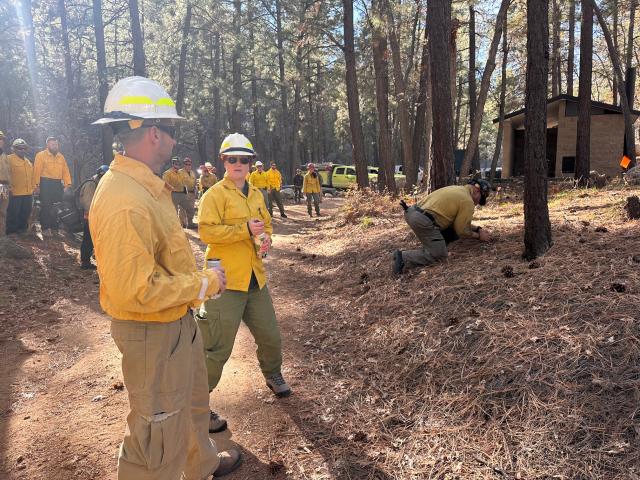
The course was led by experienced wildland fire investigator, Teresa Rigby, who also serves as the State Fire Mitigation and Trespass Lead for BLM in New Mexico. The instructional cadre included other experienced wildland fire investigators:
- Nick Howell, BLM Utah
- Jesse Vooz, BLM Arizona (Law Enforcement)
- Andrew Atkinson, BLM Arizona
- Aaron Casem, Arizona State Forestry and Fire Management
This session utilized the newly released national curriculum, giving students one of the first opportunities to train under the updated standards for wildfire investigation.
A broad mix of students from across the West
A total of 21 students attended, representing municipal, state, and federal agencies across the Southwest — including several U.S. Forest Service personnel. Six participants came from law enforcement backgrounds, and some traveled from as far away as Oregon to complete the course.
Funds collected as a result of a wildfire trespass case on BLM Arizona’s Gila District were used to provide each of the trainee investigators with a fully equipped fire investigation kit, ensuring they left the course with the knowledge and tools needed to begin real-world application.
Hands-on training with real burn plots
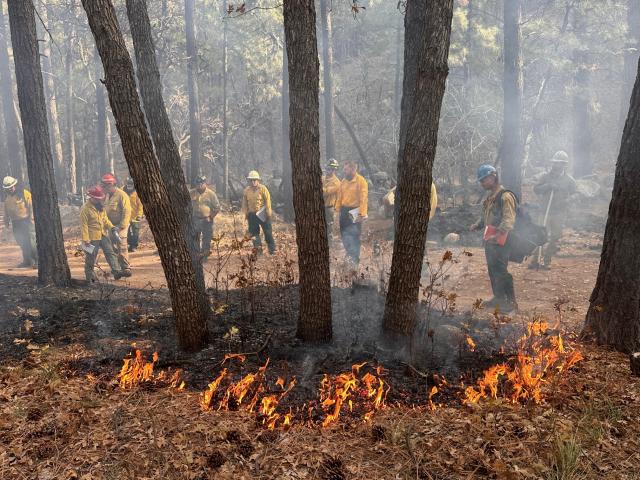
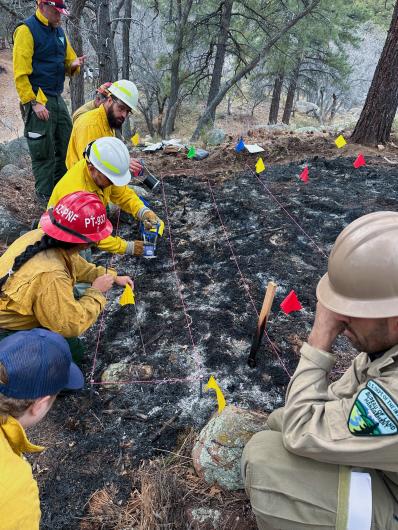
Students spent three days conducting origin and cause investigations at Wild Cow Campground in Pine Lake. Each day presented a new ignition scenario and causal component:
- Day 1: Matches
- Day 2: Sparklers
- Day 3: Improvised incendiary devices
They also participated in a live burn, observing fire behavior, vegetation response and the resultant burn pattern — key experience for accurately reading fire indicators in actual investigations.
On the final day of the course, students presented their findings from all three burn plots, demonstrating their applied skills and investigative reasoning.
Preparing tomorrow’s fire investigators
Wade Reaves, Fire Management Officer serving the BLM Arizona’s Colorado River District, described the class as “a great group of motivated students,” noting that many plan to initiate their task books after leaving the class and begin gaining field experience as they move toward becoming fully qualified as wildland fire investigators.
By hosting FI-210, BLM Arizona and the Colorado River District is taking proactive steps to help their own agency and others meet mandatory investigative requirements, strengthening fire management capabilities across Arizona and the western U.S., and support safer, more informed decisions on public lands throughout the region.
Related Stories
- Nails and Tires Don’t Mix
- Signs of Collaboration: Protecting Tortoises on Arizona Public Lands
- BLM Arizona and Arizona Association of Conservation Districts: A Model Partnership for Landscape Conservation
- Celebrate National Public Lands Day with BLM Arizona
- Commemorating the Sonoran Desert National Monument’s 25th Anniversary
Office
1785 Kiowa Ave.
Lake Havasu City, AZ 86403
United States