


BLM Begins Antelope Complex Wild Horse Gather in Northern Nevada to Protect Herd Health as Winter Approaches
Organization:
Media Contact:
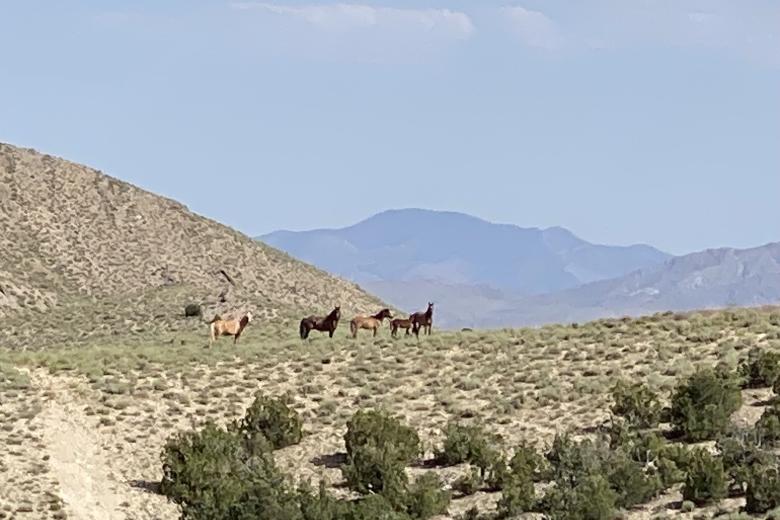
ELY, Nev. – The Bureau of Land Management began a wild horse gather Nov. 14, in and around the Antelope Complex Herd Management Area in northern Nevada, to protect the health of the herd as late season forage declines and winter approaches. The gather will help reduce the risks wild horses face when the range can no longer support the current population.
The Antelope Complex includes the Antelope, Antelope Valley, Goshute, and Spruce-Pequop Herd Management Areas. Horses may appear healthy at the start of the fall, but forage and water resources are limited. With far more wild horses on the landscape than the range can sustain, competition intensifies, creating conditions that can lead to malnutrition, dehydration, and long-distance travel in search of food and water as winter sets in.
The Antelope Complex’s healthy, sustainable herd size is 437 to 789 wild horses, but the 2026 population is estimated to be nearly 4,362 wild horses within and just outside the complex; more than five times what the land can support. Removing excess horses is necessary to relieve pressure on limited food and water resources, support long-term herd stability, and prevent winter suffering.
With seasonal change already underway, lowering herd numbers now ensures the remaining horses have access to the food and water they need to make it through winter safely. A balanced herd size also helps protect sensitive wildlife species such as sage grouse, pronghorn antelope, and mule deer and a healthy range.
The BLM’s Ely and Elko district offices will co-manage the gather. BLM staff and contractors will follow the Comprehensive Animal Welfare Program, which uses proven, science-based practices to ensure humane care. Crews maintain a controlled approach that keeps horses moving at a steady pace. All gathered animals will be transported to the Palomino Valley Wild Horse and Burro Corrals to receive veterinary evaluation and care and then prepared for placement through the BLM’s Adoption and Sales Program.
In accordance with 43 C.F.R. § 8364.1, the public lands within a five-mile radius surrounding drive trap sites and temporary holding facilities will be temporarily closed to all forms of public access and all public lands within the gather area will be closed to camping. This ensures that the gather is effective and safe for wild horses, BLM employees and contractors, and members of the public.
However, the BLM will provide public observation opportunities during the gather. Members of the public are welcome to view the gather operations provided that doing so does not jeopardize the safety of the animals, staff and observers, or disrupt gather operations. The BLM will escort the public to gather observation sites located on public lands. Those wanting to view the gather operations must RSVP by calling 775-753-0299 no later than 5 p.m. the day before they want to observe gather operations. Callers will be contacted with specific instructions on each day’s meeting location and time by 9 p.m. the evening before.
The gather documents can be viewed on the BLM National NEPA Register. Gather reports and additional information can be found on the 2026 Antelope Complex Gather webpage.
The Wild Free‑Roaming Horses and Burros Act of 1971 charges the BLM with managing wild horses and burros on public lands. Federal law prohibits the commercial slaughter of these animals, and the BLM does not sell or send wild horses or burros to slaughter. The agency enforces adoption and sale requirements, strengthened the bill of sale language, and works closely with law enforcement whenever credible information suggests a violation may have occurred.
Information on how to adopt or purchase a wild horse or burro can be found on the BLM Wild Horse and Burro Program webpage.
The BLM manages about 245 million acres of public land located primarily in 12 western states, including Alaska, on behalf of the American people. The BLM also administers 700 million acres of sub-surface mineral estate throughout the nation. Our mission is to sustain the health, diversity, and productivity of America’s public lands for the use and enjoyment of present and future generations.