


Life in the Sage: Native Americans During Westward Expansion
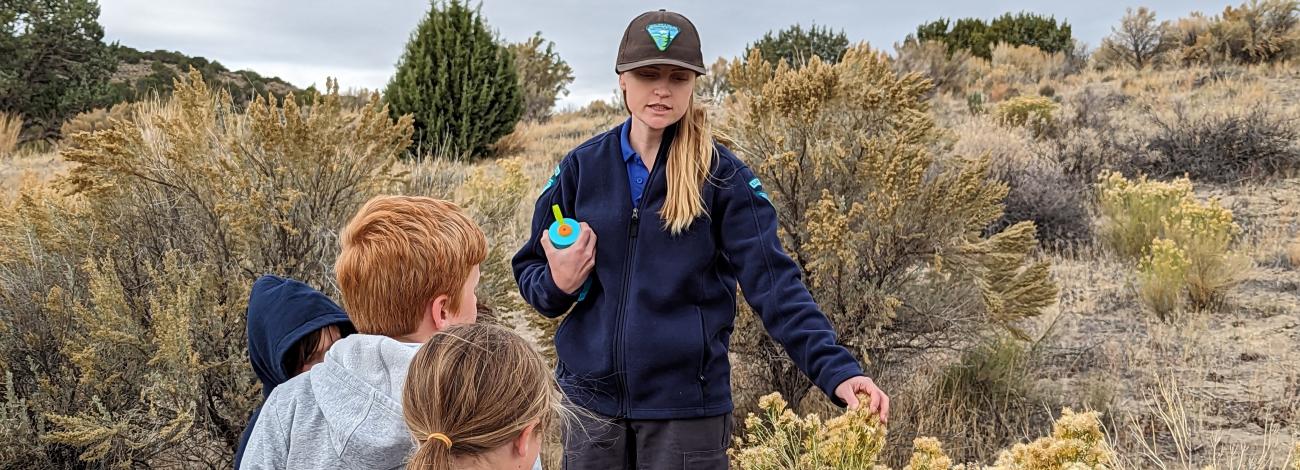
What was life like for Native Americans as pioneers moved west? Students will explore Native traditions and contributions, practice cord making and trade using Indian Sign Language, and experience how hunting was done with an atlatl.
Field Trip Length and Grade Range
This school field trip is designed for students in grades 4 and 5. The program is two hours long and can be supplemented by additional activities such as a ranger-guided hike, a scavenger hunt through the exhibit area, or a teacher-led educational activity. Groups are also welcome to bring a picnic lunch.
How to Participate
Visit School Field Trips for program dates and a registration link.
Life in the Sage - Teacher's Guide
Program Objectives
Students will:
- Explore Native American Life and Skills: Learn about Native American communities in Nevada and along the California Trail, including traditional practices like making cord and using Indian Sign Language for trade.
- Experience Indigenous Tools and Hunting Methods: Discover how Native Americans used the atlatl for hunting and practice throwing it in a safe, hands-on activity.
- Connect Through Authentic Sources and Empathy: Use real artifacts and displays to make inferences about life on the trail and develop empathy by imagining the choices faced by migrants and Indigenous peoples.
- Engage in Interactive, Memorable Activities: Participate in discussions and hands-on experiences that emphasize personal connections and understanding over rote memorization.
Vocabulary and Concepts Covered
Biography: A description of someone else who experienced an event, such as information about someone who traveled the California Trail written by someone in the modern day.
Diorama: A three-dimensional replica of a scene; at the Trail Center, dioramas represent what travelers might have been doing at different points along the Trail
Emigration: Moving away from home to settle elsewhere; ‘emigrant’ is a common term used for travelers on the California Trail
Encampment: A temporary settlement made by a group of wagons, which travelers would often circle into corrals for the night
First-hand account: A record of a personal experience of an event, such as a journal entry or original map or drawing
Indigenous Americans: People who lived in the Americas before European colonization and their descendants. Other common terms include Indigenous Peoples, Native Americans, American Indians, and Tribal Nations.
Before the Field Trip
- Assign or read aloud the California Trail Overview student reading.
- Optional: Show this 26-minute overview video, "Preserving Gravelly Ford"
- Ask the students to reflect on their own ideas about land. There’s no right or wrong answer—just thoughts and experiences.
- What does it mean to “own” land? Imagine someone gives you a piece of land today. Would you let your friends or classmates walk across it, or hunt or grow food there? Would you build a fence around it? Would you share it or keep it private? Why? Now imagine you're an Indigenous American living in the west in the 1800s – how might your answers be different?
- How does your community think about land? Consider the people around you – your neighbors, your town, or your local government. How do they treat land? Do you agree with their ideas about ownership and use? If not, what is a different way of thinking about the land that makes more sense to you?
- Encourage students to think of questions to ask during the field trip.
- Assign students and chaperones to three wagon teams that will rotate through stations throughout the exhibit area. Carefully consider social dynamics, including whether to assign students to groups for which their guardian is a chaperone.
During the Field Trip
- Materials needed: None! We will provide leader guides with instructions and answers for the adults.
- Teachers and chaperones are responsible for facilitating activities and discussions at the learning stations. This includes fostering engagement with the material and managing student behavior.
- Example Field Trip schedule:
- 9:00: Arrive, use bathrooms, introduction
- 9:15: Station Rotations (three stations, 30 minutes per station)
- 10:45: Conclusion
- 11:00: Depart or transition to optional additional activities
- Lunch: 30 minutes recommended
- Guided Hike: 45 minutes
After the Field Trip
- Email us your questions and feedback. We love hearing ways that we can continue to improve our programs!
Related Nevada Social Sciences Standards
From Nevada Academic Content Standards for Social Studies
- SS.4.17. Analyze the impact of Native people on the culture of Nevada.
- SS.4.13. Analyze the diverse population of Nevada’s Native Americans and settlers of this state and discuss their unique experiences and contributions.
- SS.4.17. Analyze the impact of Native people on the culture of Nevada.