


K2-Play Completes Final Phase of North Fruita Desert Trails Master Plan
FRUITA, Colo. – Over the past eight years, the North Fruita Desert has changed in ways riders can see as soon as they arrive. There are more miles of singletrack, more places to camp and dedicated space for races and other large events, all part of a broader effort by the Bureau of Land Management and community partners to keep pace with one of western Colorado’s busiest recreation areas.
This fall, the final trail in the North Fruita Desert Trails Master Plan is complete.
K2-Play winds for about three miles along the base of the Book Cliffs and completes the final phase of a roughly 30-mile expansion of the 18 Road trail system. Its completion caps years of planning and construction involving the BLM Grand Junction Field Office, Colorado Plateau Mountain Bike Trail Association, Mesa County, City of Fruita, local businesses, professional trail builders and volunteers.
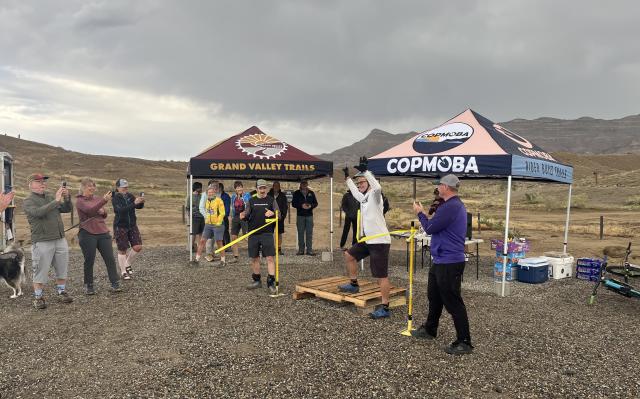
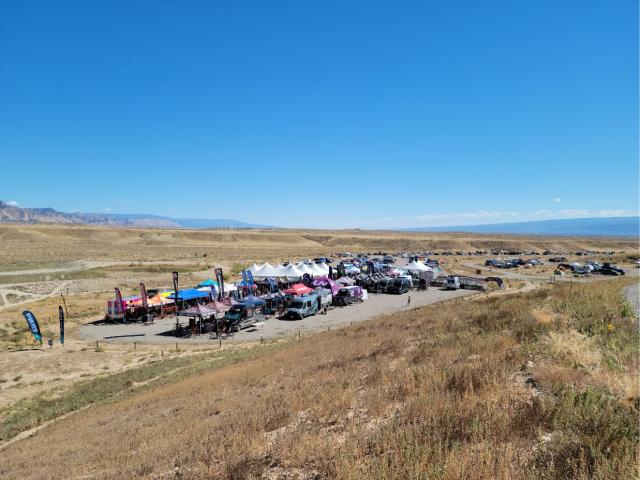
On Oct. 10, COPMOBA brought the community together to celebrate with a ribbon cutting, rides on K2-Play and a trail workday.
The trail system visitors know today grew from much humbler beginnings.
Many of the original trails and camping areas at 18 Road were created by users beginning in the early 1990s. Riders were drawn to the rolling desert terrain below the Book Cliffs, and over time the North Fruita Desert developed a reputation well beyond the Grand Valley.
As more people came to ride and camp, BLM and its partners began looking more closely at how the recreation area was working as a whole.
By 2024, BLM estimated the North Fruita Desert was receiving about 107,000 visitors a year, with a system of about 30 miles of singletrack trails. That level of use brings practical questions with it. Where will people camp? Where can large races stage without overwhelming a trailhead? Which trails need to be rerouted or repaired? Where can new trails go without creating unnecessary impacts to wildlife, vegetation, cultural resources or other uses of the public land?
In 2017, the City of Fruita, COPMOBA, BLM and local businesses worked together on a successful Colorado Parks and Wildlife grant application to develop a trails master plan.
The planning process included public and stakeholder input, field assessments and a close look at the existing trail system. The resulting plan identified new trails, reroutes and other improvements intended to create more riding opportunities, address problem areas and better distribute use across the system.
At the same time, BLM was working on another piece of the recreation area.
A separate 2018 environmental review authorized new camping and event facilities at 18 Road. BLM began implementing that decision in 2020, building a 3.5-acre gravel parking and event staging area and 68 campsites in the lower campground.
Getting to 18 Road is much smoother now, too, following a multi-year project to pave approximately seven miles of what had been a bone-jarring gravel road. The project was funded by a Federal Lands Access Program grant obtained by Mesa County in 2016 and completed in fall 2025.
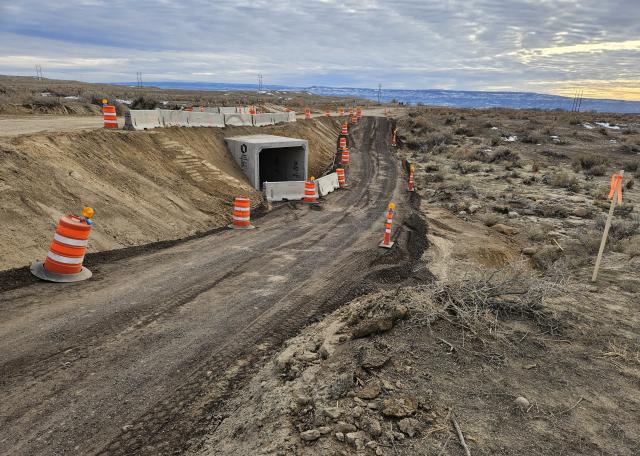
The upgraded road and new facilities made access easier, gave visitors more room to stay at 18 Road and created dedicated space for races, festivals and other large gatherings. The campground sits within the trail system, allowing riders to leave camp and reach singletrack within minutes. Concentrating that use in planned locations also gives BLM more ability to manage recreation while limiting unnecessary disturbance elsewhere on the landscape.
The trail expansion followed.
BLM completed its environmental review of the trails master plan in 2022, and construction began that year. Mesa County trail crews, professional trail builders, conservation crews and volunteers worked through the plan over the next several years.
Some trails were built to add mileage and new riding experiences. Others improved connections or replaced routes that were less sustainable. The work also included the less-visible pieces of a functioning trail system, including signs, maintenance and rehabilitation of routes that were no longer needed.
“Trails don’t just appear on their own. There’s a lot of work that goes into it,” former BLM Outdoor Recreation Planner Chris Pipkin said in a 2024 interview about the 18 Road expansion.
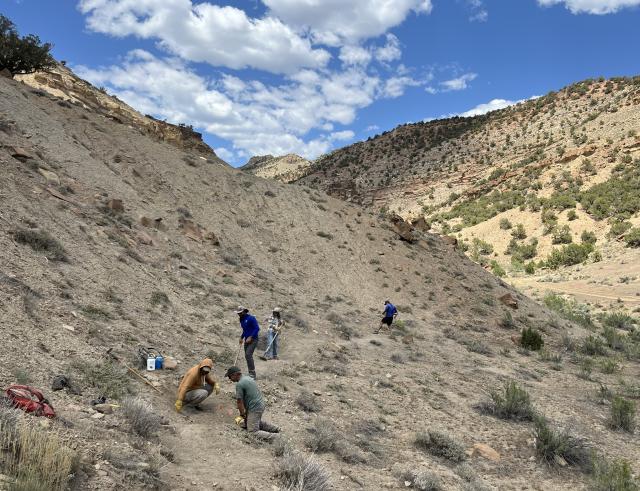
Much of that work happened one section at a time, with people on the ground using hand tools and following routes that had already gone through surveys and environmental review.
K2-Play brought years of trail planning and construction to a close. The trail is named in honor of Kristina Kittleson, a longtime COPMOBA leader and former coordinator who helped promote cycling in the Grand Valley and left a lasting impression on the local riding community.
Building K2-Play was another team effort. Work began in November 2024 and included volunteer trail workdays organized by COPMOBA and Volunteers for Outdoor Colorado, along with professional trail construction by the four-person Mesa County Trail Crew. In addition to managing the trail crew, Mesa County’s Trail Program Coordinator secured a Colorado Parks and Wildlife non-motorized trail construction grant to contract with Summit to Sea Trails for some of the more technical and labor-intensive sections.
Over the years, COPMOBA volunteers has maintained a long history of local riders helping build and care for trails on public lands. That work does not end when construction does.
More riders mean more maintenance. Trails erode, corners widen and riders sometimes create paths around difficult or muddy sections. Campgrounds, toilets, parking areas and event facilities all require upkeep.
John Howe, a longtime COPMOBA leader and past president, described that shared responsibility in an earlier interview about trail stewardship.
“We need everyone, from individual trail users to local agencies and government, to contribute to taking care of our trails,” Howe said.
For BLM, recreation management at 18 Road also happens alongside the other things the agency is responsible for across the North Fruita Desert. Wildlife habitat, cultural resources, vegetation, livestock grazing and other public land uses all have to be considered as recreation grows. That balance helped shape where trails were built, where camping was concentrated and how the overall system was designed.
Work on the broader recreation area is still continuing. The next major piece is Phase 4 of the lower campground, another multi-year project that would add about 25 reservable fee sites, including individual campsites, a group campsite and a double-vault toilet facility.
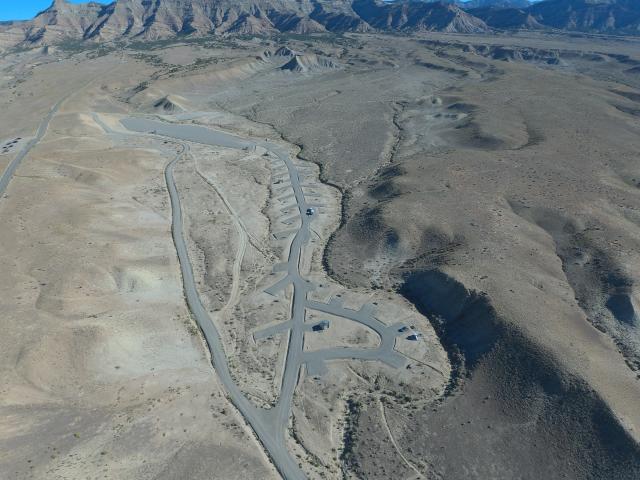
The project would convert a portion of existing dispersed camping into managed sites, helping accommodate growing visitor demand while improving sanitation, visitor services and resource protection.
For visitors, all of the 18 Road area work may simply look like a good day outside – a place to camp, trails that are easy to find and follow, room to ride without every trail feeling crowded, and a landscape that still feels like the North Fruita Desert. The benefits also show up a few miles south in Fruita.
People traveling to ride, camp or attend events buy meals, stay overnight, visit shops and spend money at other local businesses. Grand Valley residents, meanwhile, have a large public recreation area close to home.
That local impact is part of a much larger picture. Recent BLM economic estimates show recreation on BLM-managed public lands generates about $2 billion in economic activity and supports nearly 12,000 jobs in Colorado.
BLM’s management direction for the North Fruita Desert has long recognized that relationship, calling for quality mountain biking opportunities that contribute to quality of life and the local economy while encouraging stewardship of natural and cultural resources.
The work at 18 Road provides a tangible example of that approach. The Trails Master Plan is now complete, while campground and visitor-service improvements continue as recreation use grows.
It also lines up closely with BLM’s new All Americans Outside initiative, launched in September to create more opportunities for people to explore, learn, serve and work on public lands while strengthening partnerships with communities and organizations.
COPMOBA’s Oct. 10 event put that idea into practice. The morning began with a ribbon-cutting ceremony celebrating K2-Play and the years of work behind the trail system, followed by rides on the new trail and a dig day where volunteers helped prepare other 18 Road trails for future use.
Related Stories
- BLM Fishing Derby brings Americans Outside for recreation and stewardship in Imperial Valley, California
- Fossils, furs and a few sparks at Kemmerer Outdoor Discovery Day
- One Mile Closer
- Celebrating National Public Lands Day across the High Desert District in Wyoming
- Pipestone Roars to Life as Community Comes Together for National Public Lands Day