


Plugging the Past Bodes Wells for Future Development
Oil and gas site reclamation begins long before the completion of operations at an oil and gas site. Rather, it is an ongoing process, beginning before site construction and continuing through the life of an oil and gas production well site.
The process begins with natural resource specialists as soon as an operator submits a notice to stake or application for permit to drill. They take the surface use plan, conduct an environmental assessment, and ensure the operator has any required permits. The legal instrument examiner then verifies the operator has a complete package to apply for an APD then the BLM conducts an onsite inspection with the surface owner, resource specialists, other applicable agencies, and the operator. After completing these inspections, the BLM, together with any other relevant agencies, conducts a NEPA analysis, and then approves, modifies, denies, or defers action on the APD.
“The various locations for a permit can be both the most interesting and challenging part of working on an application,” said Rodney Roy, natural resources specialist for the Casper Field Office. “The NRS is the liaison between the interdisciplinary team and the applicant. There are often many moving parts and pieces of the puzzle to consider when looking at an APD for approval —the terrain, which could require engineered roads or even hydrology studies, from the habitats used by big game and sage grouse to everything in between.”
It takes the village to take a site from development to reclamation. For one drilling project, a legal instrument examiner, petroleum engineer, natural resource specialist, wildlife biologist, geologist, realty specialist, paleontologist, archeologist, range conservationist, forester, and sometimes staff like the National Environmental Policy Act coordinator or civil engineers are all involved in the review and approval process.
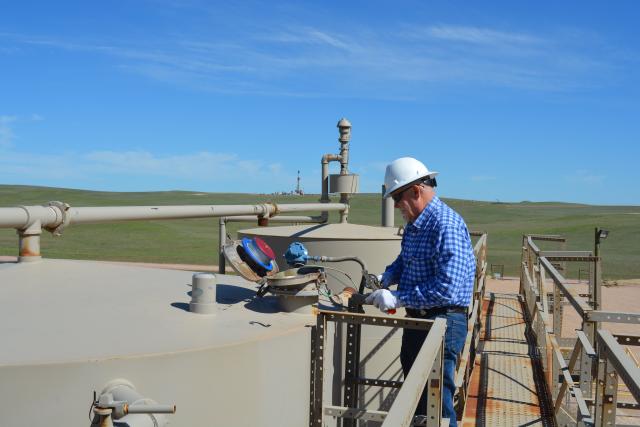
“The interdisciplinary team is probably the most dynamic part of this process,” Roy said. “It’s analogous to a chain, if one link fails the entire team fails. Keeping track of important milestones and effectively communicating with the team is the most important aspect of the process. Much of the time spent in this process is how quickly the applicant and BLM respond to one another for required information. When an operator submits an application, the location is visited in the field by the NRS and any specialist with concerns, along with the surface owner (if applicable) and the operator.”
The application at this point has passed through the IDT checklist and specialist review. The NRS determines the NEPA to prepare, completes all associated documents, and then sends for authorization for the project.
But no oil and gas project is approved without a reclamation plan. It is reviewed as part of the surface use plan of operations and shows how the operator will restore the site to how it was before construction and the lifetime of operations around the well.
“That visit is the time when any resource concerns are discussed and plans to mitigate any adverse effects are added to the proposal to help ensure successful reclamation,” Roy said. “Successful reclamation helps to ensure the continuation of multiple use.”
Operators will also partially restore areas while still producing oil.
“This work is important to both the field office and the operators, as it supports balanced resource management across the landscape,” said Amelia Savage, acting manager of the Casper Field Office. “These companies are committed to being good neighbors and strive to maintain production levels that benefit everyone involved.”
Once a well is no longer producing, the operator starts plug and abandonment procedures monitored by BLM inspectors, then reclamation begins. A final abandonment notice is approved for the site when it is re-contoured, re-vegetated, free of weeds and equipment, and stable. If the well is on split estate, where the subsurface minerals are federal but the surface is private, that abandonment notice also includes the landowner’s acknowledgment that the operator followed the terms of a surface use agreement.
Reclamation is successful when it has established a self-sustaining, vigorous, diverse, native plant community that will control erosion and non-native plant invasion and support wildlife habitat or forage production.
“The goal is to ensure the land is returned to near natural conditions, thus allowing continued multiple use whether it be for wildlife, grazing, recreation or even back into mineral production,” said Roy.
The Casper Field Office has plugged 50 idle wells since 2023 by taking steps to work with operators or previous record title owners. But the reclamation process is not always straightforward, which is why the BLM must sometimes take matters into its own hands. If a company goes out of business and cannot complete reclamation, BLM must go through the steps to declare it orphaned.
“We exhaust every avenue possible before designating wells as orphaned,” said Greg Earl, assistant field manager of minerals and lands for the Casper Field Office. “If a company goes out of business, we try to find past record title owners who have benefitted and save the taxpayer money. The wells we are plugging now are around 2,000 feet deep and can cost around $145,000 each to plug.”
Orphaned wells are abandoned oil and natural gas wells that do not have a financially able, or identifiable, past record title owner responsible for plugging and reclaiming. These neglected facilities can leak toxic fluids into groundwater or vent methane into the air, and old surface equipment can leak, collapse or cause explosions. Not only is leaving orphaned wells unplugged dangerous to the environment, but it is harmful to the BLM multiple-use mission.
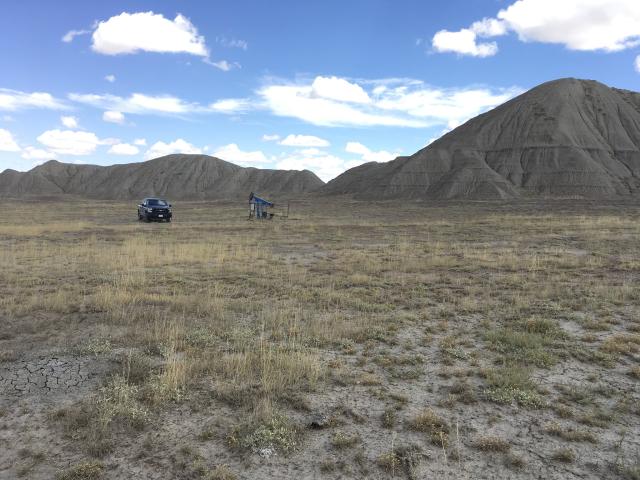
“More often than not, these legacy wells were drilled prior to the Mineral Leasing Act, NEPA or the Federal Land Policy and Management Act ever existed,” Roy said. “Orphan wells often present issues that require thinking outside the box. There definitely is not a cookie cutter approach when it comes to the challenges, but with that said there is a lot of satisfaction that comes with plugging these fields and returning the land back to near natural conditions for all to enjoy.”
The BLM Wyoming Casper Field Office is dealing with an unusual challenge this year as it begins a well plugging project near the East Teapot Field — part of an oil-rich geologic area where the ground is structured like a dome and features a nearby prominent sandstone rock that once looked like a teapot but has since eroded.
There are 13 orphan wells that have been idle for nearly 100 years, and their age tells the team a lot about how much work will be needed to successfully plug them. If and when wells were plugged in the late 1800s and early 1900s (according to the National Petroleum Council), workers would simply fill them with any material that could be pushed into it — such as brush, wood and even paper sacks and linen — to form a base for some sacks of cement to be dumped in from the surface.
“You don’t know how deep these old wells are, what is downhole, whether the right of way or access is in good shape, and sometimes these older wells have even self-reclaimed with vegetation that has to be cleared,” explained Earl. “One of the old well bores we are planning to plug has water coming up through it, and our goal with plugging is to protect usable water, aquifers and different mineral resources. The plug from the '40s or '50s was done with the best they had at the time, but now it is failing so we will pump hundreds of feet of cement slurry into the well bore.”
Preventing this environmental hazard is BLM’s responsibility if the wells have been declared orphaned and plugging them makes mineral and energy development more appealing to future potential leaseholders.
“The potential for an environmental hazard if the wells are open to a formation will still be there unless we get them properly sealed, and we want to also be protecting any usable water, aquifers and other different mineral resources,” said Earl. “We are also dealing with these wells being on split estate — private surface but federal minerals — so we also are coordinating with the landowners to get a surface agreement in place to access the sites on their property and ensure their standards are being met for reclamation. We have been very fortunate to have good relationships working with them, and they are happy the landscape will be restored.”
The same area that was using less-developed resource management practices 100 years ago now shows how energy development has evolved – and how teamwork is one of the strongest tools when it comes to managing public resources for multiple use that benefits current and future generations.
-BLM-
The BLM manages about 245 million acres of public land located primarily in 12 western states, including Alaska, on behalf of the American people. The BLM also administers 700 million acres of sub-surface mineral estate throughout the nation. Our mission is to sustain the health, diversity, and productivity of America’s public lands for the use and enjoyment of present and future generations.
Related Stories
Office
2987 Prospector Drive
Casper, WY 82604-2968
United States