


BLM Arizona and Arizona Association of Conservation Districts: A Model Partnership for Landscape Conservation
For more than 15 years, the Bureau of Land Management’s Arizona State Office and the Arizona Association of Conservation Districts (AACD) have built a robust partnership, improving conservation efforts across Arizona’s diverse rangelands. Through a series of statewide agreements beginning in 2010, BLM Arizona and AACD have coordinated efforts with cooperating agencies, mining operations, cattle grower associations, and individual producers to maximize the impact of conservation investments.
Together, the partnership has accomplished:
- Thousands of acres of brush removal and grassland restoration inside and outside of wildland urban interfaces,
- Pre- and post-treatment monitoring,
- Removing downed brush that can be used for erosion control and wildlife habitat treatments,
- Controlling invasive species, and
- Cultural clearances and National Environmental Policy Act compliance to keep projects moving forward.
Our collaborative conservation efforts have improved watershed health, wildlife habitat, and rangeland productivity, demonstrating how local partnerships can achieve large-scale results.
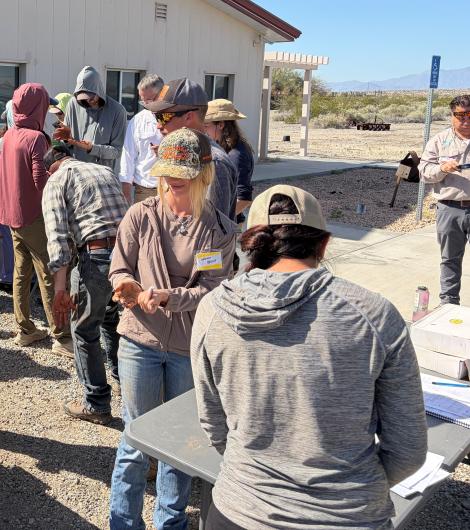
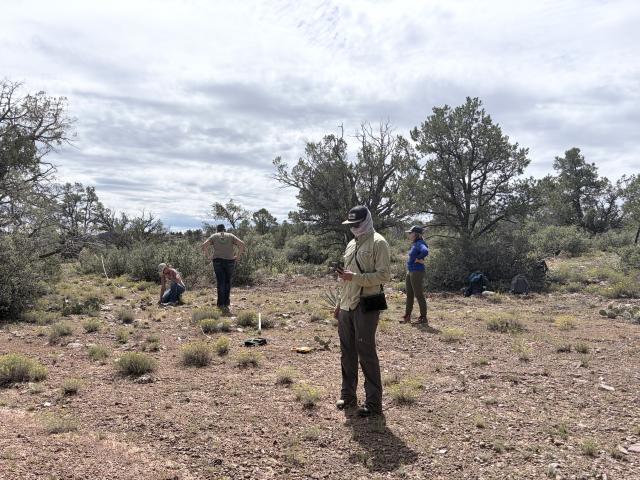
In 2024, the partnership expanded with the BLM Assessment, Inventory, and Monitoring (AIM) program. AIM provides the BLM with a holistic, adaptive approach to rangeland stewardship, using vegetation and soil resource assessments to guide treatments, plan future management needs, and improve land health. AACD monitoring teams have collected upland AIM data across hundreds of BLM acres. The data provides standardized information that supports agency decision-making and improves our understanding of landscape conditions.
In the Gila District, our partnership with AACD, local natural resource conservation districts, and local stakeholders helped manage ongoing juniper treatments on BLM lands across both Navajo and Apache counties. These treatments improve watersheds, control invasive species, reduce hazardous fuels, and enhance wildlife habitat and livestock forage.
In the Colorado River District, this partnership along with the Arizona Game and Fish Department and a grazing permittee worked to restore and enhance pinyon-juniper woodlands and grasslands on the Crozier Canyon grazing allotment. The partnership supported cultural and vegetation resource inventories ahead of brush removal that would improve mule deer habitat and watershed function while reducing fuels and wildfire risk.
This long-term partnership reflects BLM Arizona’s commitment to practical, local conservation and efficient project delivery. As new projects emerge, the partnership is well-positioned to advance resilient rangelands, strengthen wildfire preparedness, expand monitoring efforts, and support the BLM’s multiple-use mission across Arizona.
BLM and the National Association of Conservation Districts signed a new memorandum of understanding in March 2026 to continue these strong, locally rooted relationships. As seen in Arizona, these collaborations drive effective public land management and create lasting benefits for present and future generations.
Related Stories
Office
One North Central Ave., Suite 800
Phoenix, AZ 85004-4427
United States